Aínsa & Zona Zero: Spain's Best Kept MTB Secret
A medieval walled village above the confluence of two Pyrenean rivers, 40 trails through protected landscapes, and the best-preserved town in Aragón. Zona Zero is what you find when you stop following everyone else.
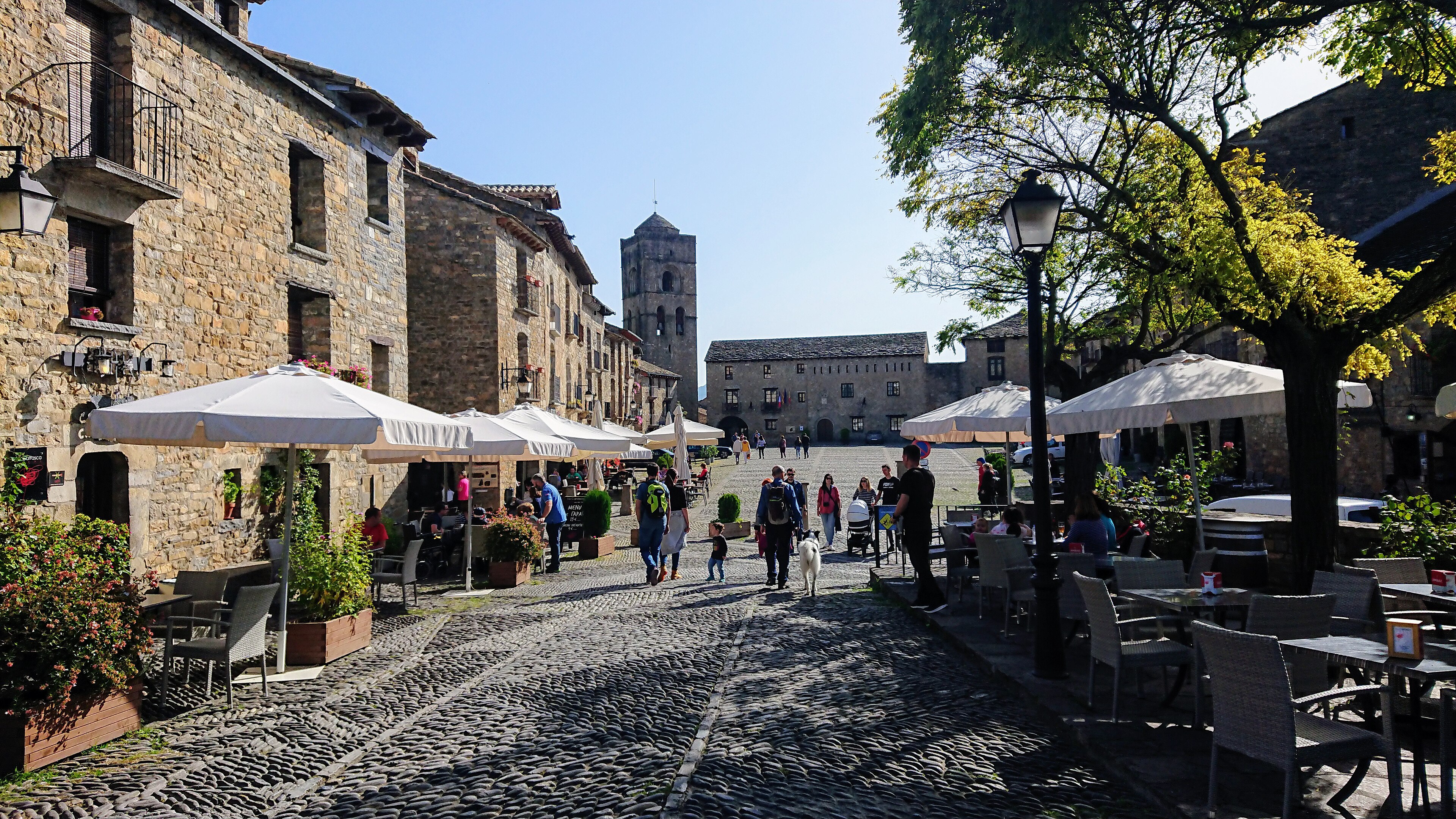
Most European riders have not been to Aínsa. Those who have tend not to advertise it. This is partly territorial — the quiet that comes from limited international visitor numbers is one of the things that makes Zona Zero special — and partly because the destination does not have the marketing infrastructure of the major alpine resorts. There is no gondola company with a social media manager. There is a comarca (regional authority) that manages trails, a local guide association that knows every trail better than any app, and a medieval town that has been there since the 11th century and is not particularly interested in changing itself for visitors.
Aínsa sits on a limestone promontory 500 metres above sea level, at the confluence of the Ara and Cinca rivers. The Pyrenean peaks are visible to the north — Monte Perdido (3,355m), the highest peak in the Pyrenees outside of the Maladeta massif, is the backdrop to riding in the upper trail network. The town's Plaza Mayor, surrounded by Romanesque arcading and unchanged for centuries, is where riders end their days with local wine and the ternasco lamb that defines Aragonese cooking.
Zona Zero — the trail network
The Zona Zero Sobrarbe network covers the entire Sobrarbe comarca — a protected natural area that includes the Ordesa y Monte Perdido National Park buffer zone. The trails range from smooth gravel paths suitable for hardtails to technical enduro descents requiring full suspension and serious bike handling. The network is waymarked; the major routes are on Trailforks and Komoot. Local guide certification is not required but adds significant value.
Key trails: the Peña Montañesa loop (panoramic ridge riding, 30km with 1,800m elevation, a full day); Las Gorgas Negras (descent into the black gorge — technical, committing, extraordinary); the Enduro de Sobrarbe race tracks (fast, purpose-built enduro lines with EWS-quality construction). The 2019 EWS round at Zona Zero introduced these trails to the international community; the network has grown since.
Spring in the Sobrarbe
April and May in Zona Zero are the best weeks of the year for trail riding. The Pyrenean meadows above Aínsa are carpeted in wildflowers — orchids, gentians, and species found nowhere else in the Iberian peninsula. The temperature in the valley is 18–24°C; the upper trails may still have snow above 1,800m but the lower network is fully open. The light quality in the late afternoon — the sun dropping behind the Sierra Ferrera, the Pyrenean peaks catching the last hour of colour — is the kind of thing that makes riders stop mid-descent to look.
The EWS connection
The 2019 EWS (Enduro World Series) round at Zona Zero was the breakthrough moment for international awareness of the destination. The race used trails across four valleys — the longest EWS stages of that season. Footage from the race showed the Pyrenean landscape in conditions that made every viewer want to book a flight to Zaragoza. The Spanish Enduro Series continues to use Zona Zero for an annual round (typically October); attending as a spectator is free and the atmosphere in Aínsa on race evening is one of the best in Spanish mountain biking.
Combining Aínsa with Benasque
Benasque is 45 kilometres east of Aínsa via the Congosto de Ventamillo gorge road — one of the most dramatic drives in Spain, through a narrowing limestone canyon that barely allows two cars to pass. Benasque is the base for the Aneto massif and has its own trail network (the Pirineo Bike network) focused on high-altitude natural riding above the tree line. A 5-day trip combining Zona Zero (3 days) and Benasque (2 days) gives a complete picture of Pyrenean mountain biking across two very different landscapes.
Food, wine, and Aragonese culture
The food in Aínsa is the best argument for staying an extra night. Ternasco de Aragón — milk-fed lamb from the Pyrenean foothills — is the signature dish and appears on every menu in multiple forms. The local cheese, queso de Benabarre, is aged in mountain caves and has nothing in common with supermarket products. The wine is Somontano DO — the Aragonese appellation that produces some of Spain's most interesting reds. The Plaza Mayor in the evening, with the castle and Romanesque church behind you and a glass of Somontano in hand: this is why people return to Aínsa.
Find a hotel in Aínsa
Same prices as Booking.com. 1 tonne CO₂ retired per stay. €5 credit on signup.
Search now →