Zermatt MTB Guide: Trails, Lifts and Matterhorn Flow Lines
Beneath the Matterhorn's north face sits one of the Alps' most underrated lift-served networks: roughly 100 kilometres of singletrack, three numbered flow trails and a car-free village reached entirely by rail.
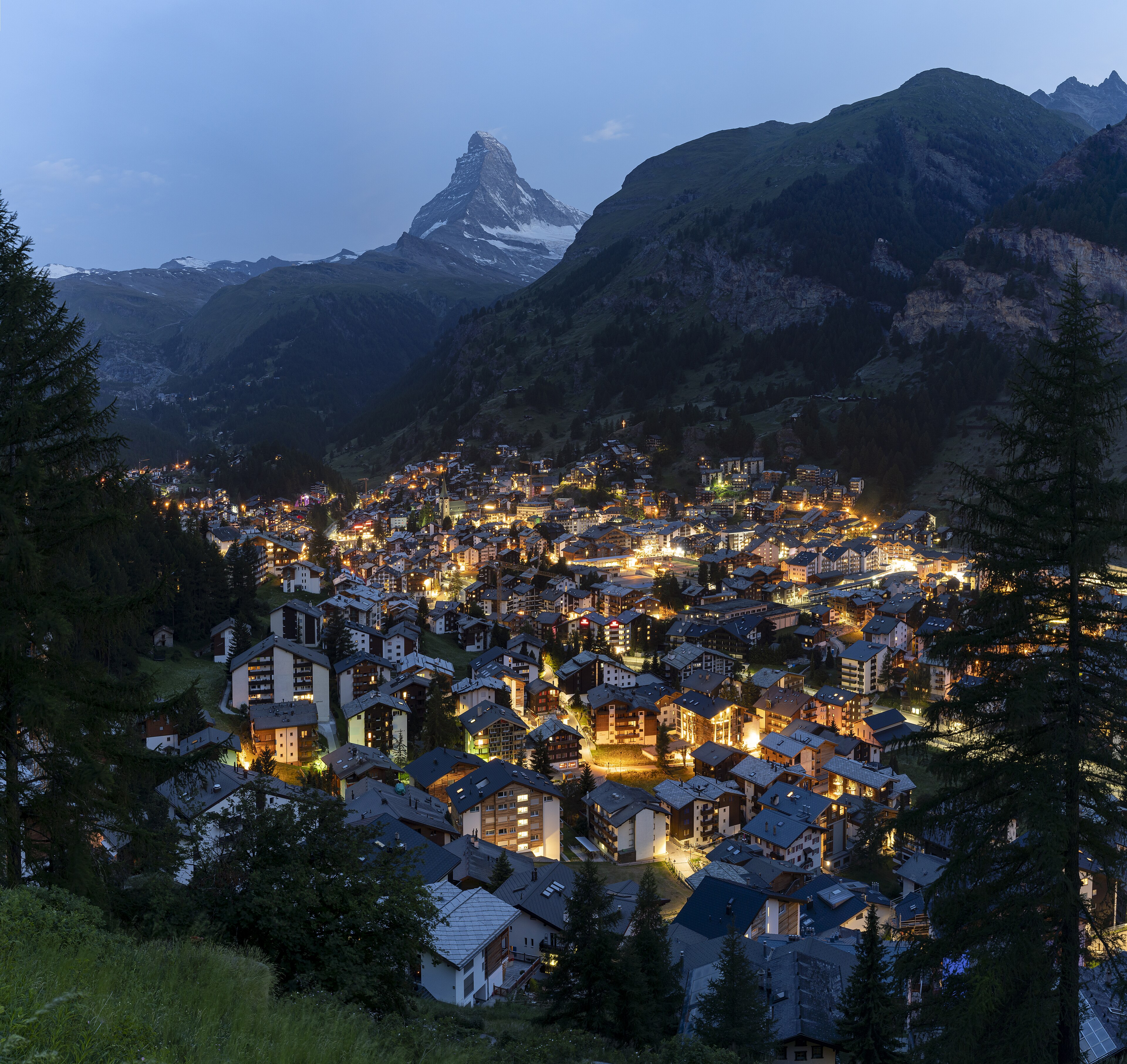
The Sunnegga Flow Trail drops roughly 680 vertical metres in under nine kilometres of buffed, banked singletrack, and on a clear July morning the Matterhorn sits framed in every third berm. That juxtaposition, lift-served flow against one of the most photographed mountains on earth, is what separates Zermatt from the usual French-Alpine bike-park circuit. The trail network here was not built for World Cup downhill spectacle. It was stitched into an existing alpine farming landscape, and it rewards riders who treat a week in Valais as a touring trip with descents attached, rather than a pure park holiday.
The Signature Descents
Zermatt's lift-accessed riding centres on three numbered flow trails maintained by Zermatt Bergbahnen. Sunnegga Flow Trail (F2) is the headline act: graded easy on the official scale but engaging at speed, running from the Sunnegga funicular top station via Patrullarve and Haueten down to Riedstrasse and into the village. Moos Trail (F1) is a short, family-friendly 1.3-kilometre flow line from Furi back to Zermatt, useful as a warm-up or a last lap. Riffelberg Flow Trail (F3) is the longest and most committing of the numbered set, linking the high alpine meadows below the Gornergrat railway into the Moos Trail for a sustained descent toward the valley floor.
Beyond the flow series, the Kalbermatten Yo-Yo (around 12.8 kilometres, 975 metres of climbing) is the classic local enduro loop, blind corners and exposure included. The Stafel-Schoenbielhuette route pushes into genuinely advanced terrain with hike-a-bike sections approaching the hut. None of these are bike-park groomers; expect alpine grit, occasional hikers and weather that can flip in an hour.
How the Lift System Works
Three lift corridors carry bikes: Zermatt-Sunnegga-Blauherd-Rothorn, Zermatt-Furi-Schwarzsee-Trockener Steg, and Zermatt-Furi-Riffelberg. The Sunnegga funicular is the workhorse for flow-trail laps, with a single-day bike pass covering unlimited uplifts on that line. The Bike Pass Pro opens up the wider network, including the Gornergrat rack railway and the Schwarzsee cable car, which is where the Matterhorn-framed descents and higher-altitude singletrack begin. Lift altitudes range from the village at roughly 1,600 metres up to around 3,100 metres at Rothorn, giving a temperature buffer on heatwave days that lower Alpine resorts cannot match.
Season Window and Conditions
The bike season is shorter than most riders assume. Zermatt Bergbahnen typically opens lifts for biking from late June and runs through to mid-October, with peak conditions from mid-July through early September. Early-season runs can hit residual snow above 2,500 metres; late-September laps reward riders with cool air, empty trails and the first larch colour, but lift hours contract. Outside that window, lifts close for the autumn shoulder before winter ski operations begin in late November.
Getting There Without a Car
Zermatt is car-free, and the logistics genuinely favour the train. Direct services from Zurich Airport to Zermatt take roughly three and a half hours, changing at Visp onto the Matterhorn Gotthard Bahn for the final climb up the Mattertal. Drivers must stop at Taesch, twelve minutes downvalley, and shuttle in. SBB carries bikes on most intercity routes with a bike reservation, and the MGB regional trains accept bikes without booking outside peak summer Saturdays. The carbon arithmetic is straightforward: a return rail trip from Western Europe runs at a fraction of the emissions of flying into Geneva or Zurich and connecting by car, and the village's car-free status means an MTB holiday here genuinely operates without internal-combustion miles.
Shoulder Versus Peak Season
July and August deliver the longest lift hours and the full alpine bloom across the Five Lakes plateau, but also school-holiday traffic on the Sunnegga funicular. Early July and the first three weeks of September are the sharper picks: trails are dry, hut bookings open up, and the high-altitude routes off Rothorn and Trockener Steg are reliably snow-free. October laps are possible in dry years, but riders should check daily lift bulletins, as autumn snow can shut the upper sections without warning.
Where to Base
The village clusters tightly along the Mattervispa, and most accommodation sits within five minutes of either the Sunnegga funicular or the Gornergratbahn station. Riders prioritising flow-trail laps tend to base near the Sunnegga end of the village. Those mixing bigger alpine days with hut nights at Schoenbielhuette or Trift will want closer access to the Schwarzsee gondola. Bike-friendly hotels typically offer secure storage, wash stations and route advice, which matters in a destination where weather can rewrite a day's plan by mid-morning.
Practical Notes
- Trail map: Pick up the official Zermatt Bike Map at the tourist office or download the Matterhorn Paradise digital version.
- Etiquette: Yield to hikers on shared paths and respect signed walking-only routes, particularly on the Five Lakes circuit.
- E-bike rules: E-MTBs are permitted on most bike-marked trails; check the Bergbahnen site for any seasonal closures.
- Weather: Afternoon thunderstorms are common in July and August; an early start is the local default.
Zermatt is not the place to chase Crankworx-style spectacle. It is the place to ride a full week of lift-served singletrack under the most recognisable mountain in the Alps, arriving and leaving without ever touching a steering wheel.
A full POV run of the Sunnegga Flow Trail (F2), from the funicular top station down through larch forest to the village floor.
Find a hotel in Zermatt
Same prices as Booking.com. 1 tonne CO₂ retired per stay. €5 credit on signup.
Search now →