Yangshuo Mountain Bike Guide: Karst Singletrack in Guangxi
Limestone towers, bamboo singletrack and Ming-dynasty stone bridges on a 30-minute bullet train from Guilin. Yangshuo is one of the few sub-tropical MTB destinations that rides best in winter.
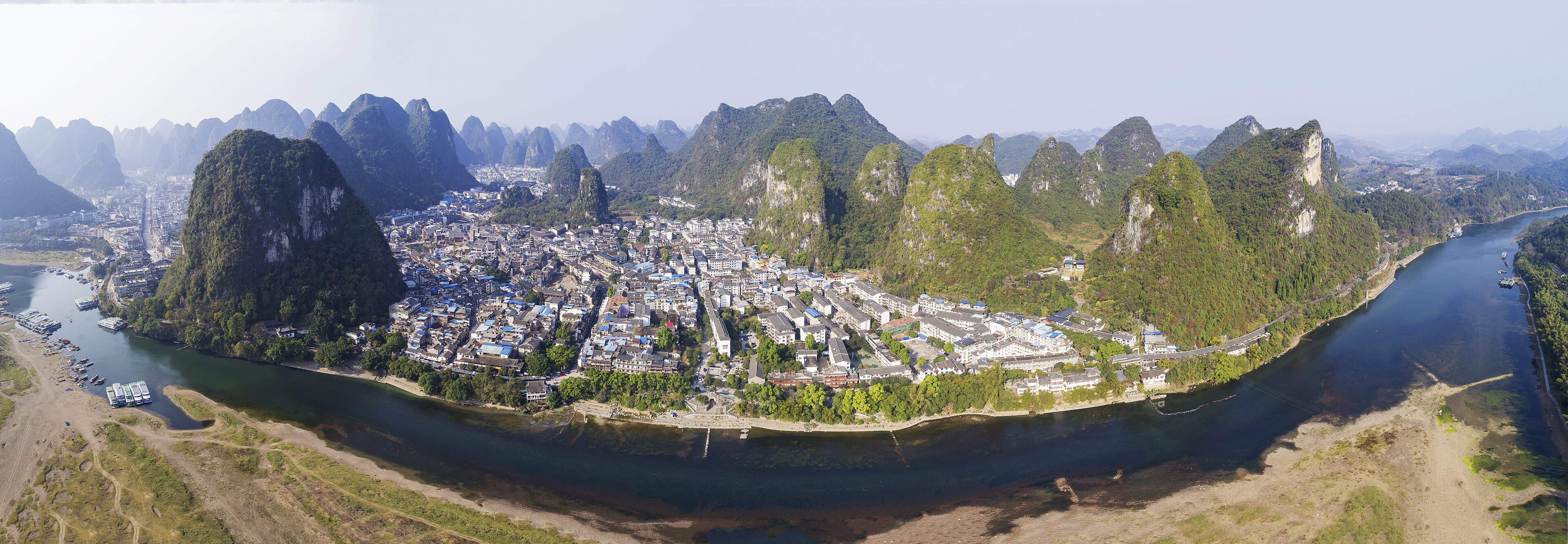
From the saddle of a hardtail above Gaotian village, around 1,200 limestone karst peaks fan out across the Li River basin, each one a near-vertical tooth of weathered stone laced with bamboo. This is the landscape that put Yangshuo on the back of every Chinese 20-yuan note, and it is the same landscape riders thread through on a network of farm tracks, irrigation paths and genuine singletrack that locals and a small expat scene have stitched together over the past two decades.
Yangshuo is not Whistler. There is no chairlift, no purpose-built bike park, no berm shaper on staff. What it is, however, is one of the most visually extraordinary places to ride a mountain bike on the planet, and on a high-speed train map it now sits just 30 minutes from Guilin and around three hours from Guangzhou.
Signature trails and zones
The Yangshuo Karst Trail Network is informal — a stitched-together patchwork rather than a signposted park — but four zones define it.
Yulong River Valley (green-blue)
The classic introduction. Around 29 km of flat to rolling doubletrack and farm path follows the Yulong from Baisha Town down to Yulong Bridge and the Shuangliu Ferry. Rice paddies, water buffalo and Ming-dynasty stone arches; technical demands are low but the scenery does the heavy lifting.
Ten-Mile Gallery and Moon Hill (blue)
A roughly 19 km ribbon south of Yangshuo town past Big Banyan Tree and the natural arch of Moon Hill. Surfaced backroad in places, hard-pack farm track in others, with side spurs climbing into the foothills.
Gaotian hills singletrack (red-black)
The reason serious riders fly in. Beyond the Moon Hill tourist strip, hard-pack ribbons disappear into pine and bamboo, traversing the saddles between karst towers with steep, rooty climbs and rocky, technical descents. Bike Asia's published mountain-bike rides range from 30 to 70 km and explicitly describe "muddy single track, killer climbs and rocky downhills" through this sector.
Xingping and Li River (red)
An epic 41 km countryside loop runs from West Street out to Yong Village and a Li River ferry crossing near Xingping — the panorama on the back of the 20-yuan note. Expect a full day, a 20-minute ferry, and one of the great cycling vistas in Asia.
Access and the missing lift question
There is no cable car, gondola or chairlift servicing the riding zones. Every metre of climbing is earned in the saddle, which is the honest reality of Asian MTB outside of Japan's resort networks. Trailheads are reached by spinning out of Yangshuo town along the West Street to Gongnong Bridge corridor, or by short shuttle taxi to Baisha or the Yulong Bridge put-in.
Bike hire is straightforward. Town-centre shops charge around 20-30 CNY per day for a city bike and 50 CNY for a hardtail mountain bike. Quality varies; Bike Asia and a handful of dedicated MTB operators rent better-spec hardtails and full-suspension bikes for serious riders, and guide the unmarked Gaotian lines that are effectively impossible to find solo.
Getting there
The transport story is the single biggest reason Yangshuo has become accessible to international riders.
- By high-speed train: Yangshuo has its own bullet-train station around 6 km from the old town. Guilin to Yangshuo runs about 30 minutes on roughly 40 daily services at CNY 22-34 second class. Guangzhou South to Yangshuo is around three hours, and Hong Kong West Kowloon is reachable on a single ticket.
- By air: Guilin Liangjiang International (KWL) is the gateway. Direct airport shuttle buses run to Yangshuo for 50 CNY in roughly 90 minutes, departing through the day from 09:30 to 22:30.
- Sustainability angle: The Guangzhou-Guilin-Kunming high-speed corridor makes a rail-only trip from Hong Kong genuinely viable, sidestepping a short-haul flight. Bikes travel boxed as oversize luggage.
Season window
Yangshuo sits in a humid sub-tropical zone, and the riding calendar is the inverse of an Alpine resort. Avoid May-August: monsoon rains, with June regularly logging 20 rainy days, plus heat and humidity that turn the karst clay greasy and unrideable. Autumn (October-November) brings 18-28°C, dry air and golden rice paddies — the peak window. December through March is cool (12-18°C by day, 5-10°C at night), dry, quiet and ideal for technical riding once the rice has been harvested and the lines through the fields open up. February to early March is the connoisseur's pick.
Where to stay and ride culture
Yangshuo town is the dense, walkable hub around West Street; quieter and better positioned for daily rides are the village guesthouses around Yulong River, Baisha and Moon Hill, where rooms front directly onto cycling country. Yangshuo Mountain Retreat is the established climber- and rider-friendly option on the Yulong.
A short language note: English is workable in tourist-facing businesses but thin in the villages. Cash payments have given way almost entirely to Alipay and WeChat Pay; international visitors should link a card to one of these apps before arrival. The riding scene is small, friendly and overwhelmingly guide-led — solo navigation of Gaotian without GPX files is not recommended. Wikiloc hosts the most reliable user-logged tracks.
Verdict
Yangshuo will not satisfy a rider chasing 1,500 m descents or shaped jump lines. It will, however, deliver something almost no other MTB destination can: technical singletrack between 200-metre limestone towers, a 30-minute bullet train from a major airport, and a riding window that opens precisely when European bike parks are closing for winter.
Karst Peak heaven, Yangshuo - aerial and ground footage of the limestone towers riders thread between on the Yulong and Gaotian trails.
Find a hotel in Yangshuo
Same prices as Booking.com. 1 tonne CO₂ retired per stay. €5 credit on signup.
Search now →