Vallnord Bike Park: Mountain Bike Guide to Pal Arinsal, Andorra
A two-time World Championship host with more than a kilometre of vertical and a Maxiavalanche pedigree, the Andorran park rewards riders who time the season and pack tougher tyres than they think they need.
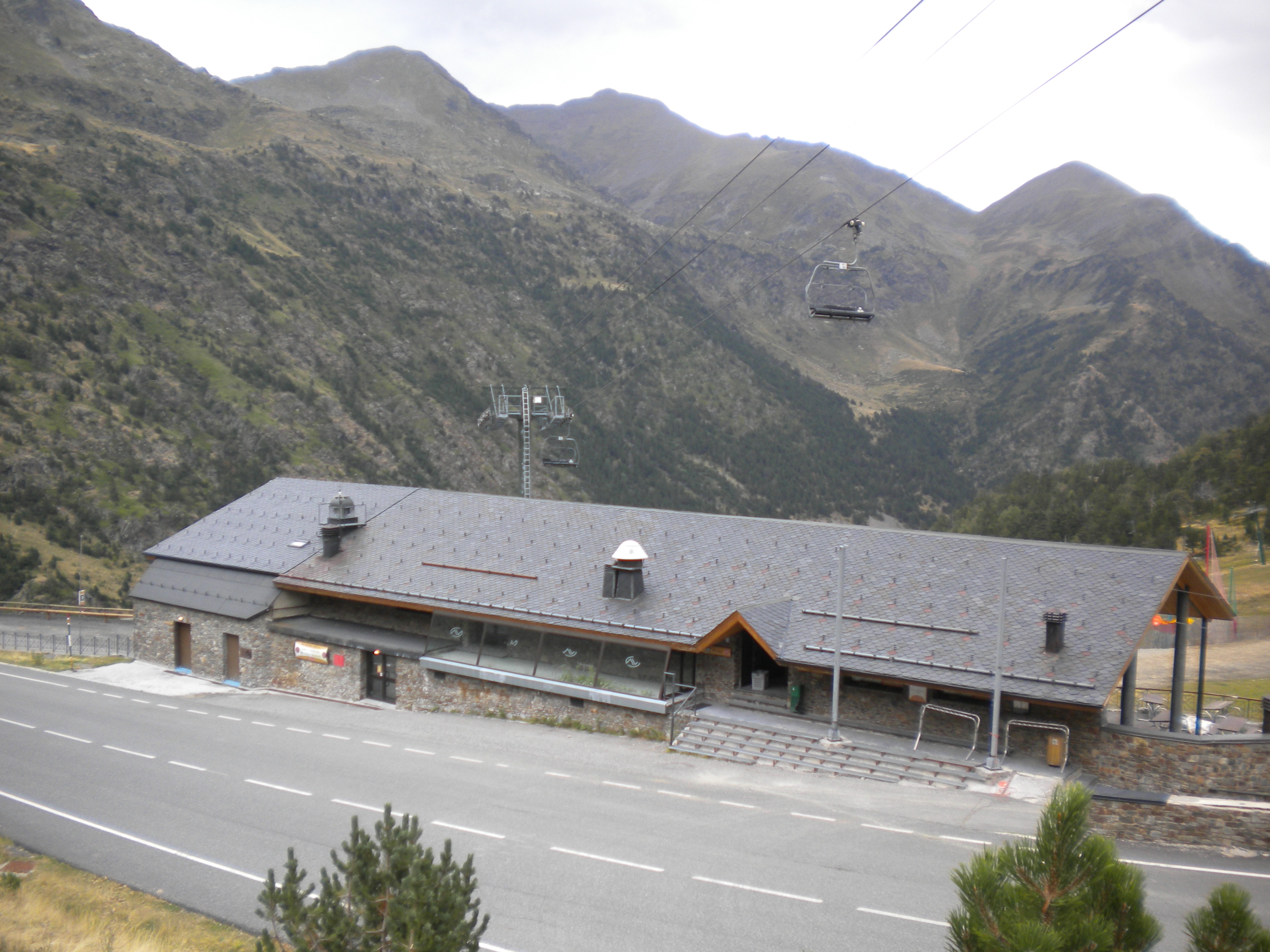

The first thing that catches most visitors out at Vallnord is not the gradient — it is the altitude. The top of the lift system at El Cubil sits at 2,350 metres, and the air thins enough that a rider who can manage three top-to-bottom runs at Morzine will often find themselves gasping after two here. That altitude, paired with a vertical drop of more than 1,000 metres back down to La Massana at 1,300 metres, is what built the park's reputation on the UCI Mountain Bike World Series circuit. Pal Arinsal — the bike park's current operating name, still widely known as Vallnord — has hosted Downhill and Cross-Country World Cups regularly since 2008, plus the World Championships in 2015 and again in 2024.
The Avet line and the Maxiavalanche heritage
The park's signature run is Avet, the black-graded World Cup downhill course that drops from El Cubil to La Caubella. It is the line every visiting racer wants to tick off: sun-baked open turns up high, then a sequence of rough, root-laced rock gardens through the pines that has decided more than one World Cup season. Pinned-on PoV runs from Jackson Goldstone and Tahnee Seagrave have given it a cult following on YouTube, but on a normal park day it is open to anyone with the bike — and the forearms — to handle it.
The other defining line is the Maxiavalanche race route, sister to the Megavalanche at Alpe d'Huez. The mass-start enduro descent traditionally kicks off the Andorran summer in late June, beginning at 2,358 metres and running close to 14 kilometres back to town. The lower third turns aggressively natural — black-graded tech through loose Pyrenean schist — and is the section most riders remember.
How the bike park is structured
Vallnord runs roughly 40 km of descent across around 30 marked trails. The split skews heavily towards gravity: about 21 downhill lines, two enduro routes, four cross-country loops, a four-cross track, a dedicated e-bike trail, a pump track and a kids' zone. Grades run the full spectrum, but the park is honest about its bias — even some of the blue runs carry roots and exposed rock that would be red elsewhere.
Three lifts do the heavy lifting:
- La Massana gondola — village floor at 1,300 m up to La Caubella at 1,950 m. The main artery in and out.
- La Serra II chairlift — mid-mountain repositioning across the Pal sector.
- El Cubil chairlift — the high lift to 2,350 m and the access point for Avet and the top of Maxiavalanche.
Standout intermediate flow lines worth queuing for include Cubil (a berm-and-tabletop run through alpine meadow) and the two timber-rich Wood Park sections, which sit at opposite ends of the technical spectrum and reward repeat sessions.
Season window — and when to actually go
Lifts spin from mid-May through mid-October, but the usable window is narrower than the calendar suggests. Weekend-only operation runs from late May into mid-June and again from mid-September into mid-October. Full daily operation lands roughly from 15 June to 9 September, with extended evening hours (until 8 p.m.) during the late July to mid-August peak.
July and early September are the sharper picks. August delivers the longest opening hours but also the heaviest crowds and the highest chance of an afternoon Pyrenean thunderstorm shutting the upper chairs. Shoulder-season weekends in September often offer the cleanest grip of the year as the dust settles out.
Getting there without flying
Andorra has no airport and no railway station — which, awkwardly for a destination guide, makes the lowest-carbon route also the simplest. The standard approach is to take a train to Barcelona Sants or L'Hospitalet-près-l'Andorre (on the French side, served by SNCF from Toulouse) and connect by direct coach.
- Barcelona to Andorra la Vella: Andbus and Direct Bus run multiple daily services, journey time around 3 hours 15 minutes.
- L'Hospitalet-près-l'Andorre to Andorra: a short shuttle bus of around 45 minutes connects the French rail terminus.
- Toulouse-Blagnac is the nearest practical airport for those who must fly, around 3.5 hours by direct coach.
From Andorra la Vella, La Massana sits ten minutes up the valley by local bus, with the gondola base inside the village. Bikes travel free on Andbus services with prior booking, which makes a train-and-coach itinerary genuinely competitive with driving.
Where to base, and how long to stay
Most riders stay in La Massana itself for direct gondola access, or in nearby Arinsal for cheaper apartments and a slightly livelier après scene. Andorra la Vella is bigger and better connected by coach but adds a daily shuttle. Three to five days is the working sweet spot: enough to learn the Avet line properly, session the Wood Parks, and still keep a rest day for the lower-altitude enduro loops.
The sustainability footnote
Andorra's lift-served riding is unusually well-suited to a no-fly itinerary thanks to the Barcelona and Toulouse rail connections. The trade-off is climate exposure: as snowlines retreat, lower park sections increasingly open earlier and dry harder, which is shifting the prime window towards the shoulders of the season. Riders willing to skip peak August often find both quieter lifts and better trail conditions.
Jackson Goldstone's UCI World Cup POV down the Avet downhill course — the line that defines Pal Arinsal's reputation.
Find a hotel in Vallnord
Same prices as Booking.com. 1 tonne CO₂ retired per stay. €5 credit on signup.
Search now →