Vall de Núria MTB Guide: Rack-Railway Singletrack in the Pyrenees
A 1,964-metre Catalan cirque reached only by cog train, with a black-graded descent off Puigmal and a relentlessly rocky drop to Queralbs. This is high-alpine singletrack, not a chairlift bike park, and the season is short.
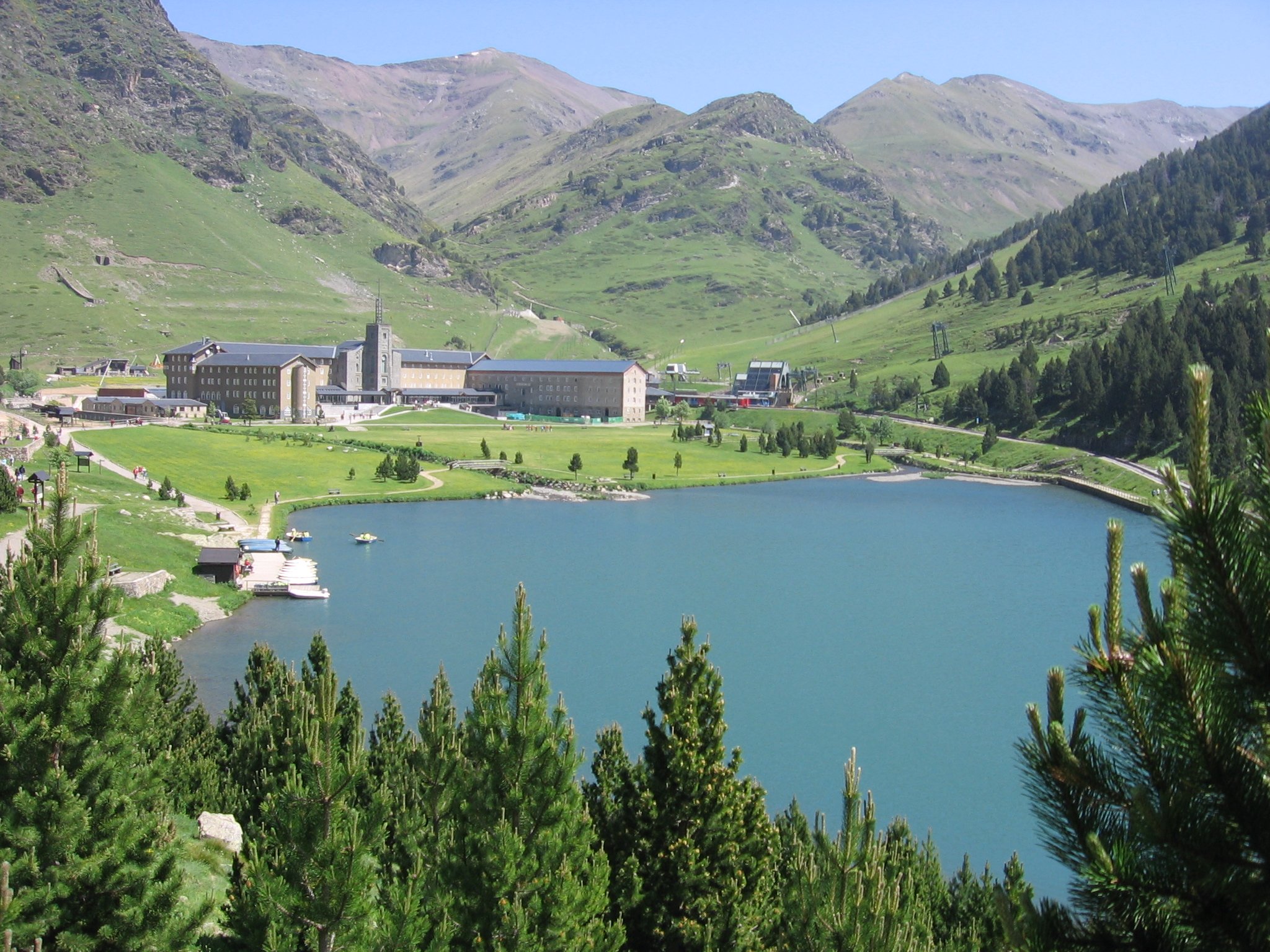

The first thing riders notice about Vall de Núria is that they cannot drive there. The road ends at Queralbs, and the only way into the 1,964-metre cirque at the head of the valley is the Cremallera de Núria, a rack-and-pinion railway that grinds 12.5 kilometres up the gorge in roughly forty minutes, climbing more than a thousand metres of elevation along the way. Bikes ride in the luggage car. By the time the train clears the upper tunnel and the meadow opens out beneath Puigmal, the asphalt feels several worlds away.
This is what makes Vall de Núria unusual among Pyrenean MTB destinations. It is not a lift-served bike park in the style of La Molina or Vallnord. There are no graded jump lines, no shuttle vans queuing at the base, no podium stickers from World Cup downhills. What it offers instead is a small, high-alpine trail network reached by Europe's most cinematic approach, and a handful of descents that punch well above the valley's quiet reputation.
The signature descent: Puigmal to Núria
The reference trail in the area is Puigmal-Núria, catalogued on Trailforks as a black-graded singletrack of roughly 4.5 kilometres. It drops off the shoulder of Puigmal de Segre (2,910 m), the highest summit ringing the cirque. The opening section is brutally direct: steep, loose, scree-strewn ribbon that demands a low saddle and a soft touch on the rear brake. Lower down it eases into rolling grass benches before funnelling back into the sanctuary at Núria. It is a true mountain descent rather than a manicured trail, and weather can turn it from grippy to ungovernable inside an hour.
Núria to Queralbs: the rock garden
The other essential ride is the Núria-Queralbs descent, which shadows the rack railway down the Gorges de Núria. Riders describe it as a near-continuous rock garden, technical and unrelenting, with tight switchbacks above the void and frequent dabs on the steepest pitches. It rewards good line choice and punishes hesitation. Strong riders link it from the top of Puigmal for a long, demanding day that ends at the lower station, where the train can be taken back up or a transfer arranged.
Lifts, structure and what to expect
Vall de Núria is best understood as a cog-train uplift plus two small summer lifts rather than a bike park proper. The Coma del Clot cable car operates from late June through September, weather permitting, and lifts riders and walkers from the cirque floor onto the upper ridges with 360-degree views over the Catalan and French Pyrenees. The La Pala chairlift runs roughly July to September. Neither is a downhill lift in the bike-park sense; both are summer sightseeing infrastructure that resourceful riders use to shortcut climbs. Trailforks maps around 17 trails in the immediate Vall de Núria zone, with the wider Vall de Ribes network extending the options downvalley toward Ribes de Freser.
Getting there without a car
The sustainability case for Vall de Núria writes itself. Barcelona's main station, Barcelona Sants, connects to Ribes de Freser on Renfe's R3 line in just over two hours. From Ribes-Enllaç the Cremallera takes over, stopping at Ribes-Vila, Queralbs, and finally Núria. The full chain from central Barcelona to the cirque is a sub-four-hour rail journey with one transfer. For European riders the nearest international airport is Barcelona-El Prat (BCN); Girona-Costa Brava (GRO) is closer geographically but less useful for onward rail.
Season: a short, sharp window
The riding season is genuinely tight. Snow lingers on the upper north-facing aspects of Puigmal into June, and the high singletracks usually only firm up by early July. September delivers the most stable conditions: cool mornings, dry rock, low cloud risk. By mid-October the cirque shifts back into shoulder mode as the railway prepares for ski-season operation. Riders chasing the best surfaces should aim for mid-July through mid-September, and avoid August weekends when the rack railway runs full with day-trippers.
Where to stay
Accommodation inside the cirque is concentrated at the Santuari de Núria itself, a converted sanctuary hotel beside the lake that allows riders to wake up already at altitude. Queralbs, a stone-built village clinging to the cliff below, offers smaller guesthouses and a shorter morning train. Ribes de Freser, on the valley floor, has the broadest hotel choice and the easiest evening logistics for groups arriving by rail.
A different kind of Pyrenean trip
Vall de Núria will disappoint anyone arriving expecting Whistler-style berms or Andorran race tracks. It rewards riders who want high-alpine character, technical singletrack with consequence, and an approach by mountain train that reframes the entire ride. For three to four days of riding linked with the broader Vall de Ribes network and a quiet sanctuary at altitude, there is nothing else in Catalonia quite like it.
An on-bike descent from Vall de Núria down to Queralbs, capturing the rocky, technical character of the cog-train trail.
Find a hotel in Vall de Núria
Same prices as Booking.com. 1 tonne CO₂ retired per stay. €5 credit on signup.
Search now →