Squamish MTB Guide: Half Nelson, Loam and Granite in BC
Half Nelson made it famous, but Squamish is really 300-plus kilometres of SORCA-built singletrack threaded through coastal rainforest. A guide to the trails, the season, and how to reach the valley by bus from Vancouver.
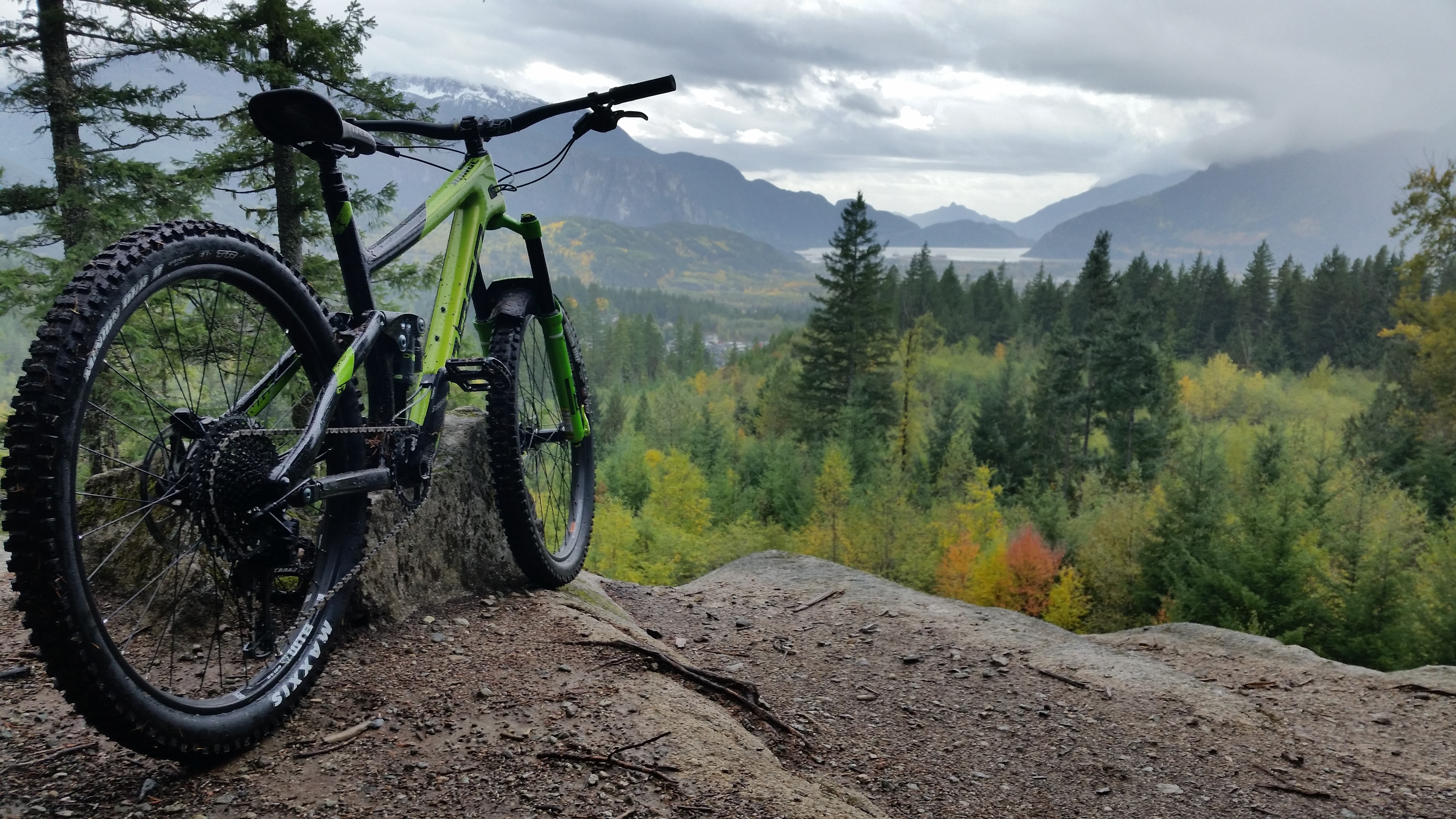

The first 90 seconds of Half Nelson tell a rider everything they need to know about Squamish. The trail leaves the access road in the Diamond Head zone, drops onto a machine-shaped berm carved through second-growth Douglas fir, and never asks the brakes a hard question for the next ten minutes. Pseudo-Tsuga, lower down the same hillside, picks up where it leaves off. Together they have become the calling card of a network that, despite Whistler sitting an hour up the road, has built a quietly stronger reputation among riders who care less about lifts and more about lines.
Squamish is not a bike park in the chairlift sense. It is a valley wedged between Howe Sound and the granite walls of the Stawamus Chief, threaded with more than 300 kilometres of singletrack maintained almost entirely by the Squamish Off-Road Cycling Association (SORCA). The terrain shifts within a single ride from coastal-rainforest loam to slab granite to root-laced old growth. That variety, more than any single trail, is the reason riders return.
Signature trails
Half Nelson (blue) remains the most-ridden descent in the valley, a roughly 3.5 km flow line of bermed corners and tabletops that is rideable by a confident intermediate and still fun for an expert. Linked into Pseudo-Tsuga (blue, three parts) it forms the classic introduction loop, climbed via the Legacy Climb Trail from the Diamond Head trailhead and accumulating roughly 580 metres of climbing and descent.
Harder terrain sits in the Alice Lake and Highlands zone, where rock slabs, polished roots and steeper gradients define trails such as Rupert (black) and the descents that drop toward Quest University. Valleycliffe and Crumpit Woods, on the south side of town, offer tighter, switchbacked black-graded lines through dense forest. Beginners and families gravitate to Brackendale and the Cheekeye Fan, where Ray Peters and Miki's Magic provide flat, rooty green-graded miles.
The network structure
There is no lift. Riding in Squamish is pedal-access or shuttle-access, and most loops involve a fire-road or singletrack climb in exchange for the descent. Local outfitters run uplift vans to the upper Diamond Head trailhead on busy summer weekends, which is the closest the valley comes to bike-park economics. Riders chasing alpine descents above 2,000 metres can also book heli-drops from operators based in nearby Whistler.
Trail signage is consistent and SORCA's mapping is mirrored in Trailforks, which most locals treat as the default navigation app. A day pass donation or annual SORCA membership funds the trail-crew work that keeps the network rideable.
Season window
Squamish is technically rideable year-round, but the meaningful season runs from mid-May through October. July and September are the riders' sweet spot: trails are dry, daylight is long, and the worst of the August heat has either passed or not yet arrived. June often still holds wet roots at higher elevations, and November onward delivers the Pacific Northwest's signature rain. The annual OneUp Squamish Enduro, billed as Canada's largest enduro race, runs in early May and is a useful pre-season benchmark for trail conditions, though it is a standalone event rather than a UCI World Cup or former Enduro World Series round.
Getting there without a rental car
The lowest-carbon way in is the bus. YVR Skylynx and the Squamish Connector both run daily coaches between Vancouver International Airport, downtown Vancouver and Squamish along the Sea-to-Sky Highway. The airport-to-Squamish leg takes roughly two hours and most operators allow one boxed or bagged bike per ticket, with a small surcharge for additional bikes. For riders flying in with a bike bag, this is a credible alternative to a rental SUV and removes the parking question at trailheads entirely. Local taxis, e-bike rentals and the in-town BC Transit network cover the short hops between accommodation, the Adventure Centre and the main trailheads.
Where to stay and how to plan a trip
Most visitors base themselves in central Squamish or in Garibaldi Highlands, within a short pedal of the Diamond Head trails. A three-to-five-day trip is enough to ride the Half Nelson and Pseudo-Tsuga classic, a full Alice Lake day, a Valleycliffe day and one alpine or shuttle day, with a rest morning for the Sea-to-Sky Gondola or the Chief. Booking accommodation that sits on the bus route into town keeps the carbon footprint of the trip closer to a European rail-and-ride itinerary than the typical North American fly-and-drive.
Practical notes
- Mid-travel trail or enduro bikes suit the network; downhill rigs are overkill without a shuttle plan.
- Bear awareness is required. Riders should carry spray on remote loops and check SORCA notices for active closures.
- Trail etiquette is taken seriously. Uphill riders have right of way on shared climbs, and tread should be avoided when wet to protect the loam.
- Support local: a SORCA membership costs less than a single uplift in many European bike parks.
A roughly ten-minute POV descent of Half Nelson in the Diamond Head zone, the trail most riders use to benchmark Squamish flow.
Find a hotel in Squamish
Same prices as Booking.com. 1 tonne CO₂ retired per stay. €5 credit on signup.
Search now →