Rotorua MTB Guide: Whakarewarewa Forest, Skyline Park & Crankworx
Geothermal steam, Californian redwoods and free-draining volcanic soil have turned a former state forestry block into the southern hemisphere's busiest mountain-bike network. A guide to riding Whakarewarewa Forest beyond the Crankworx hype.
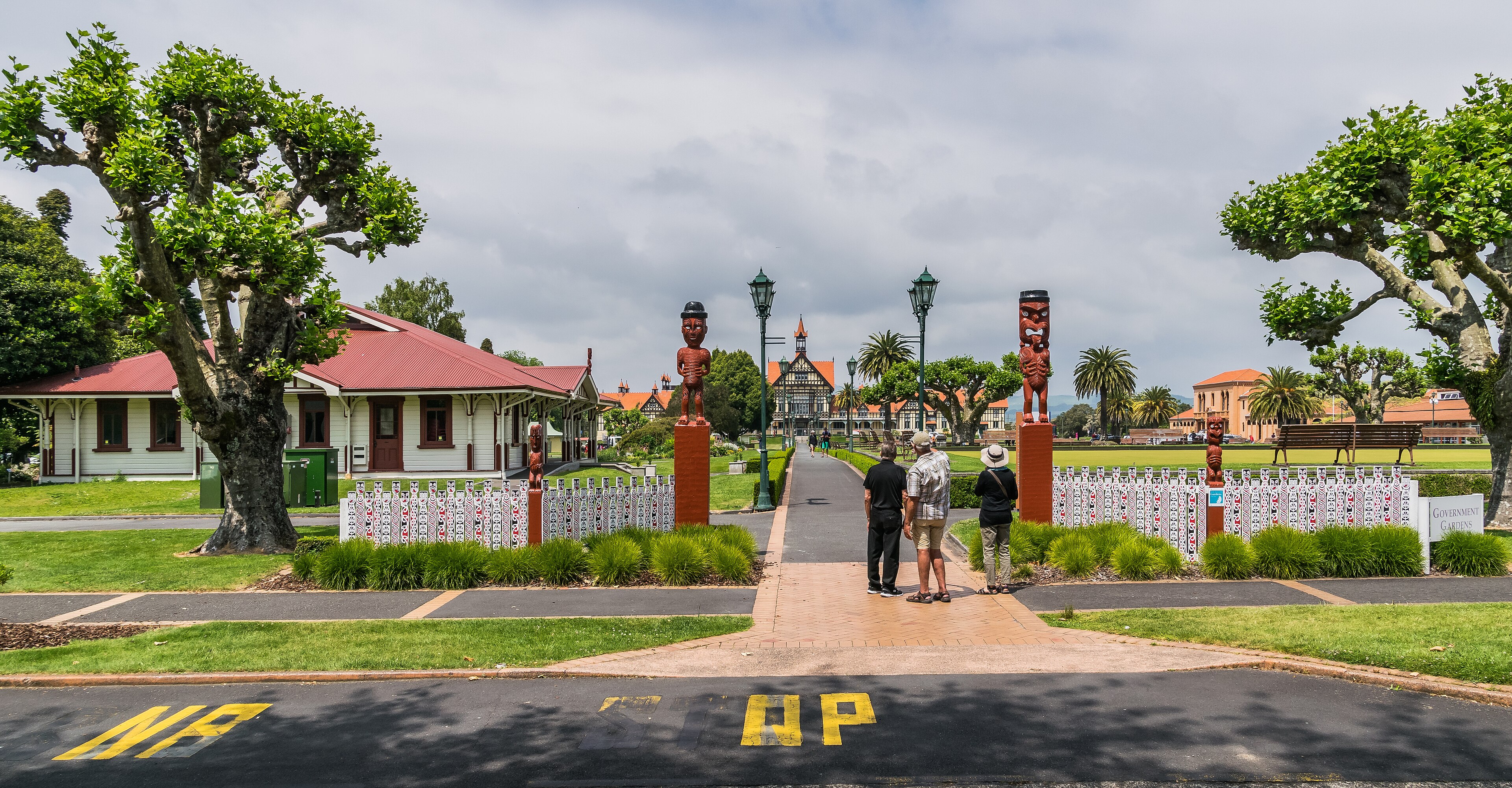
Rain falls on Rotorua roughly 140 days a year, and almost none of it stays on the trail. The pumice-and-rhyolite soil under Whakarewarewa Forest drains so fast that locals routinely ride the morning after a storm, slithering over loam that would close a network anywhere else in the world. That single geological accident, layered on top of a Crown Forestry block planted with Californian coast redwoods in 1901, is the reason a city of 57,000 people now hosts the southern hemisphere's most concentrated mountain-bike scene.
The Redwoods: roughly 180km of singletrack, sorted by colour
Whakarewarewa Forest, branded locally as The Redwoods, covers about 5,600 hectares and carries somewhere between 150km and 200km of dedicated mountain-bike trails depending on which official count is used. Trails are graded 1 (green, family) through 6 (double black, pro). Beginners typically warm up on Te Tihi-o-Tawa and the wide-bermed Creek Rd. Grade 3 flow is where Rotorua's reputation was built: Te Ruru, Te Poaka, Tahi and the immaculate Hot Cross Buns all weave between redwood trunks on perfectly shaped berms.
Move up to grade 4 and the menu expands sharply. Corners, Mad If You Don't, Genesis and Tuhoto Ariki are the trails most international visitors cite as career highlights. Expert riders head for Taniwha, with its river-gap jump line, and the grade 5/6 race tracks used during Crankworx week. The famous Whakarewarewa Forest Loop, a 33km mostly clockwise grade 2 circuit signposted as one of New Zealand's Great Rides, links almost every trailhead and is the single best way to understand the forest's geography in one ride.
Skyline Rotorua: the gondola park on the other side of the lake
Whakarewarewa is pedal-access only. For lift-served gravity, riders cross town to Skyline Rotorua MTB Park on Mount Ngongotaha, the only year-round gondola-served bike park in the country. The cabin lift gains roughly 200 metres of vertical in seven to eight minutes and feeds about 12km of trails graded 3 to 6. Lines such as Tihi-o-Tawa Express, Mr Black and the World Cup-pedigree Skyline DH sit alongside flow tracks for less-confident riders. Unlike European chairlift parks, Skyline runs every day of the year, weather permitting, with hours flexing from roughly 10:00-16:30 in mid-winter to extended evening sessions in summer.
Getting there without flying domestic
Most international riders land at Auckland (AKL). The bike-friendliest overland option is InterCity coach: services depart Stop E at Auckland Airport's international terminal and reach Rotorua's central Fenton Street stop in around four-and-a-half to six hours depending on connections. Door-to-door shared shuttles run the same route in about four hours for around NZD 100. Domestic flights from Auckland to Rotorua (ROT) take 40 minutes but carry a far heavier carbon load per passenger for a journey already well served by ground transport. Once in town, the Mountain Bike Hub on Waipa State Mill Road and the Te Pūtake o Tawa hub on Tarawera Road both sit on the trail network itself, so a taxi from the bus stop is often the last motorised leg required for a week.
Season, weather and the Crankworx window
Rotorua rides 12 months a year, but the experience changes sharply with the calendar. The southern-hemisphere summer, roughly November through April, delivers long evenings, warm pumice and the lowest rainfall. March is the headline month: Crankworx Rotorua runs 11-15 March 2026, opening the Crankworx World Tour with Downhill (incorporating the New Zealand DH Nationals), Air DH, Dual Slalom, Pump Track, Whip-Off, Slopestyle and the night-time Rotorua Roulette. Winter (June-August) is colder and wetter but rarely freezes; the volcanic soil keeps draining, and Skyline's gondola keeps spinning. Spring shoulder months (September-October) tend to deliver the best surface-to-crowd ratio.
Where to base for a riding week
The natural base is the strip between the lakefront and Fenton Street, putting riders within a 10-minute drive of both Waipa and Skyline. Self-catering apartments suit groups travelling with bike boxes; the Ngongotaha side of the lake is quieter and closer to Skyline; properties around Tikitapu (Blue Lake) sit directly on the southern edge of the forest and allow trail access from the front door. Geothermal hot pools, both private and public, are a Rotorua signature and a genuinely useful recovery tool after back-to-back days at Skyline.
Sustainability notes
The forest is managed by Timberlands and Rotorua Lakes Council in partnership with CNI Iwi Holdings and local hapū; trail fees and trust funding cover maintenance and Māori cultural protection of sites within the forest. Riders are asked to stay on signposted trails, respect rāhui (temporary closures, occasionally placed after bereavements or cultural events), and avoid riding wet grade-1 commuter paths that share alignment with walking tracks. Choosing the coach over a domestic flight, hiring rather than freighting a bike, and basing in town rather than driving daily from Taupō or Tauranga all materially reduce a trip's footprint without diluting the riding.
A trail-by-trail tour of the Redwoods' flow, jump and tech lines from the Whakarewarewa Forest network.
Find a hotel in Rotorua
Same prices as Booking.com. 1 tonne CO₂ retired per stay. €5 credit on signup.
Search now →