Pokhara MTB Guide: Annapurna Foothills, Sarangkot & Begnas
Phewa Lake, Sarangkot ridgelines and the 5,416 m Thorong La pass — Pokhara is the gateway to Himalayan mountain biking, from half-day singletrack above the World Peace Pagoda to two-week Annapurna Circuit expeditions.
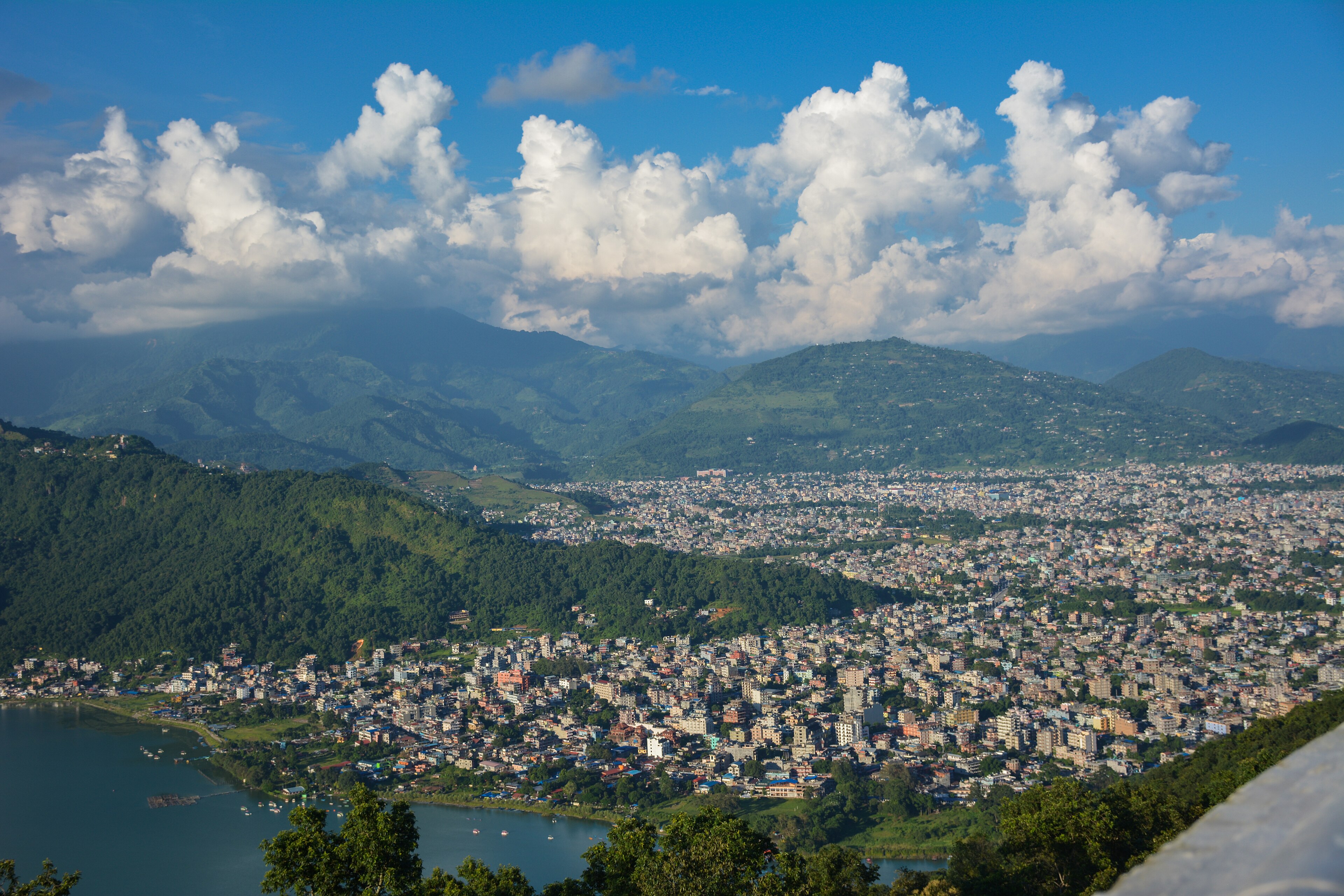
From the World Peace Pagoda above Phewa Lake, the descent drops 352 vertical metres in just four kilometres of singletrack — past stone stairways flanked by langurs, through moss-slick forest, and out across a suspension bridge into the rice terraces of the Pokhara Valley. Behind the rider, the 6,993-metre fishtail summit of Machhapuchhre frames the skyline. Pokhara is not a manicured bike park. It is an emerging Himalayan riding hub built on jeep roads, ancient walking trails and a small but determined community of local guides who have spent two decades stitching village paths into rideable loops.
Signature trails: Sarangkot, the Peace Pagoda and Begnas
The Annapurna foothills around Pokhara offer roughly half a dozen well-established routes. The headline descent is the Pokhara Downhill from the World Peace Pagoda, graded black on MTB Project at 4.0 km and 352 m of vertical, with a maximum gradient near 27 percent through staircase sections. It is 100 percent singletrack, technical, and unforgiving when wet.
The Sarangkot Rock & Roll is the regional classic — a cross-country and enduro-style loop climbing to the 1,600 m Sarangkot viewpoint and dropping back through farmland singletrack, typically 30 to 40 km with around 1,400 m of accumulated climb. It is the same hillside used for the annual Pokhara Enduro race, which has built a small but credible competitive scene.
Gentler options include the Sweet Pame Valley shore loop (26 km, 880 m, blue-grade) along Phewa Lake, and the Royal Trek to Begnas and Rupa lakes — a Prince-Charles-era walking route now ridden as a flowing day or overnight via terraced villages and the single-stone bridge at Dhungesanghu. For multi-day appetites, the Panchase overnight and the Australian Camp route (65-70 km, 2,100 m) link Pokhara to the lower Annapurna sanctuary via Dhampus.
Expedition-grade: the Annapurna Circuit
Riders chasing the full Himalayan experience use Pokhara as the start or finish of the Annapurna Circuit MTB — a 12-to-15-day, 200 km-plus expedition that crosses the Thorong La pass at 5,416 m, the highest rideable pass on the route. It demands acclimatisation, an Annapurna Conservation Area Permit (ACAP) and a TIMS card, both mandatory and easily arranged in Pokhara or Kathmandu.
Access, "lift" and shuttling
There is no chairlift, gondola or dedicated bike park infrastructure. Climbs are earned on jeep roads or, more commonly, on a 4WD shuttle. Most operators offer jeep uplift to Sarangkot (1,600 m) or the World Peace Pagoda trailhead for a modest fee, turning long climbs into pure descents. Hardtail rentals run roughly USD 25-35 per day, full-suspension USD 40-70 per day, and guided day tours USD 85-200. Quality varies — booking a reputable Pokhara operator rather than a generic Lakeside shop is worth the premium.
Getting there
Pokhara opened its Pokhara Regional International Airport (PKR) in January 2023, though most international arrivals still route through Kathmandu (KTM). Domestic flights from Kathmandu to Pokhara take around 25 minutes via Buddha Air or Yeti. The overland tourist bus from Kathmandu takes 6 to 8 hours on the Prithvi Highway, and the recently improved expressway has shortened the drive. There is currently no passenger rail to Pokhara — Nepal's rail network is minimal — so the lower-carbon option remains the public bus rather than a flight, with frequent departures from Kathmandu's Gongabu terminal.
When to ride
The riding window is dictated by the monsoon. October to November is the standout: skies clear after the rains, the Annapurna wall is visible most mornings, daytime temperatures sit in the low twenties Celsius, and trails dry out fast. March to April offers a second window with rhododendron bloom and warming days, though afternoon haze can blunt the high peaks. December to February is rideable at valley altitude but cold above 2,000 m. June to September is monsoon — leech-infested, landslide-prone, and not recommended outside the hands of an experienced local guide.
Where to stay and ride from
Most riders base in Lakeside (Baidam) on the eastern shore of Phewa Lake, where rental shops, cafes and trailheads are all walkable. Quieter alternatives sit around Begnas Lake, closer to the Royal Trek singletrack and away from the main tourist strip. Accommodation is plentiful and inexpensive by Alpine standards — guesthouses from around USD 15, mid-range boutique lodges around USD 50-100. Cash in Nepalese rupees is essential outside Lakeside, English is widely spoken in the trekking trade, and tipping local guides and porters is the cultural norm rather than the exception.
Reality check
Pokhara is not Finale Ligure and the Annapurna foothills are not Whistler. There are no signed trail networks, no patrolled descents, and rescue infrastructure thins quickly above the valley floor. What it offers instead is something the Alps cannot: a riding day that ends with a view of the eighth-highest mountain on Earth from the saddle, on trails that were paths between villages long before they were lines on Strava. Hire a local guide, ride within the conservation-area rules, and treat the high Himalaya with the respect its altitude demands.
POV race footage from the 2024 Pokhara Enduro on the Sarangkot hillside.
Find a hotel in Pokhara
Same prices as Booking.com. 1 tonne CO₂ retired per stay. €5 credit on signup.
Search now →