Nozawa Onsen Mountain Bike Guide: Japan's Onsen Bike Park
A traditional hot-spring village at the base of Mount Kenashi opens its ski lifts for summer riding. Two long descents, a hand-built natural network and a soak in 13 public bathhouses afterwards make Nozawa Onsen one of Asia's most distinctive lift-served bike trips.
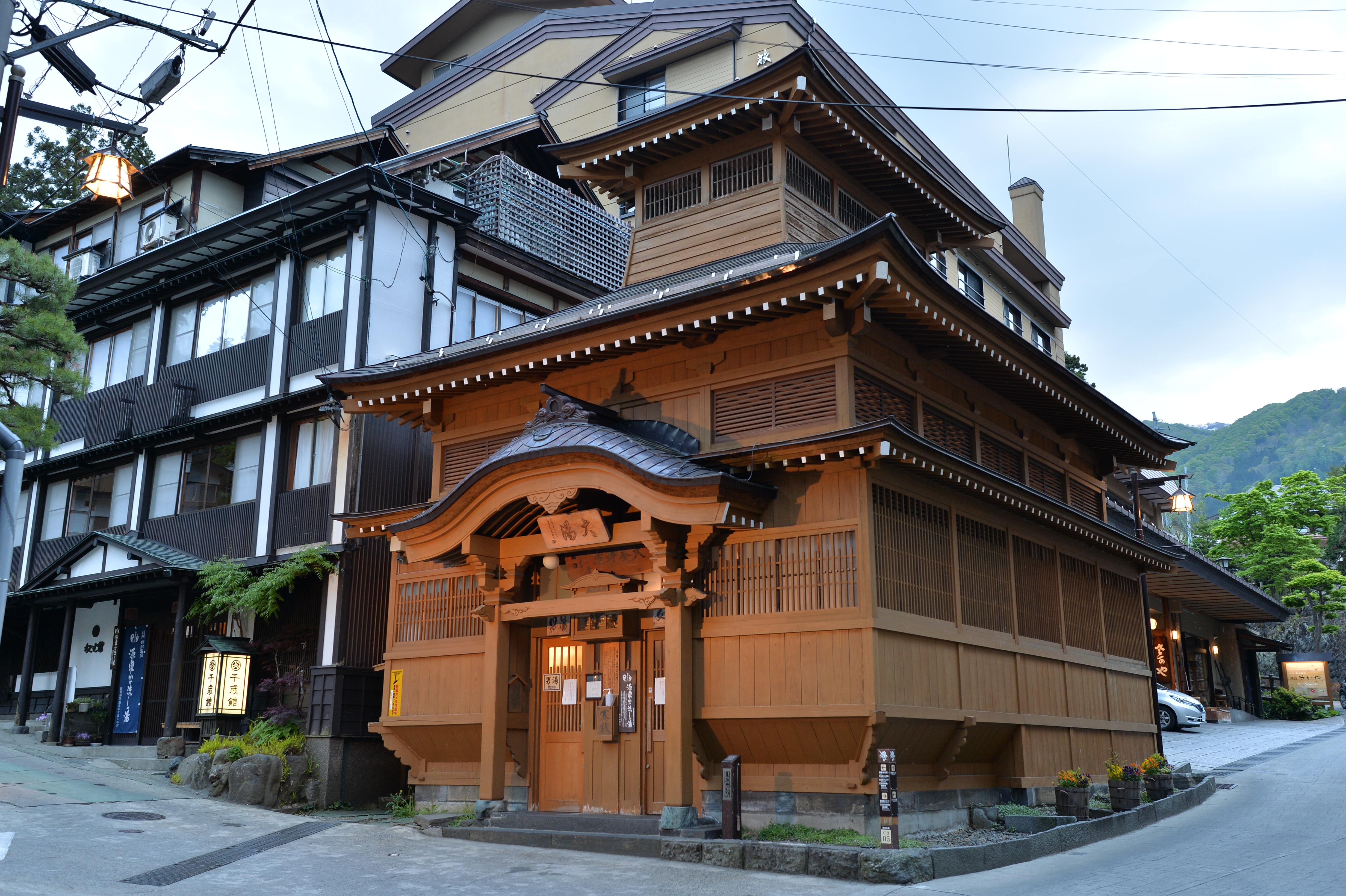

The Nagasaka Gondola at Nozawa Onsen was built for skiers chasing one of Japan's most reliable powder dumps. From mid-July to late October it does a second, quieter job: hauling mountain bikers eight minutes up to Yamabiko Station on the shoulder of Mount Kenashi (1,650 m), the springboard for roughly 10 kilometres of downhill terrain. The village waiting at the base is the real twist — a 1,300-year-old hot-spring town with thirteen free public bathhouses, narrow lanes that smell of sulphur and grilled corn, and ryokan inns that still serve dinner on the floor. There is no bike park in the world quite like it.
The signature trails
Nozawa's two flagship descents both start at Yamabiko and drop all the way to the resort base, taking riders 20 to 30 minutes per lap.
- Alpine — 6.9 km. The longer, mellower line. Flowy forest singletrack with rolling gradients, ferns, and the occasional shrine staircase glimpsed through the cedars. Best classed as intermediate.
- Kamikaze — 3.5 km. Steeper, faster, more committed. The name is honest: tight switchbacks, loamy off-camber and a few natural drops that ask for proper travel and a confident front wheel. Comfortably advanced.
Both trails are predominantly natural, hand-built singletrack rather than the bermed, machine-cut flow of an Alpine bike park. Expect roots, pine duff and a forest floor that turns greasy after rain. The resort has been adding small ramps, berms and rollers near the base to introduce beginners, but the headline experience is old-school forest descending.
How the lift works
The Nagasaka Gondola runs the 2026 MTB season from 18 July to 25 October, 09:00 to 16:30 (last uplift 16:00). Between 25 August and 17 September the lift closes Tuesday to Thursday, so plan around weekends in that window. A one-way uplift is ¥2,000 and an unlimited day pass is ¥5,000 — roughly a third of European bike-park lift prices. Bikes must be hosed down at the base wash before boarding; the staff will turn dirty bikes away.
Getting there: the Shinkansen advantage
This is the part that quietly sells Nozawa over the Alps. From Tokyo Station, the Hokuriku Shinkansen reaches JR Iiyama in about 1 hour 40 minutes at up to 260 km/h. From Iiyama, a direct Nozawa Onsen Liner bus covers the final 25 minutes to the village for ¥600. A bike-and-rider can be in the onsen ringing the lift bell by lunch on arrival day, with a carbon footprint a fraction of a European hire car. Travellers flying in usually route through Tokyo Narita or Haneda; the Nagano-Shinkansen leg is the same regardless.
Compass House, the village's main bike outfitter, rents full-suspension trail and downhill bikes, runs guided tours, and will deliver kit to most accommodation. Trail signage in English is patchy, marked trails on the wider mountain are sparse, and a half-day with a local guide is genuinely worth it for first-timers.
Season window and weather honesty
Nagano is humid in midsummer. July and early August can be hot and sticky at the base, and the Japanese rainy season (tsuyu) lingers into mid-July most years. Typhoon season runs August through September and occasionally shuts the lift for a day. The riding window that consistently delivers the best conditions is mid-September through late October, when the air cools, the trails dry out and the maples on Kenashi turn red — koyo season turns Alpine into one of the prettiest descents on the continent. After 25 October the gondola flips back to ski-resort prep and the trails close until next July.
Where to stay, and the onsen factor
The village itself is the accommodation. Traditional ryokan dominate, most within a five-minute walk of the gondola base, and many include futon bedding, tatami floors and dinner. Western-style lodges and a handful of hostels fill the gap for budget riders. The thirteen soto-yu public bathhouses are free for guests staying in the village and open from 05:00 to 23:00 — a hot mineral soak after Kamikaze is included in the trip whether riders plan for it or not. Oyu in the village centre is the most photographed; Kuma-no-tearai-yu, tucked uphill, tends to be quieter.
The sustainability angle
Japan's rail network makes Nozawa a credible low-carbon bike-trip destination. Riders can reach the trails from central Tokyo entirely by train and bus, and most ryokan source food within Nagano Prefecture. The resort itself, like much of rural Japan, draws meaningful power from regional geothermal and hydroelectric sources — the same geology that fills the bathhouses also powers the lift.
Reality check for Alps-trained riders
Nozawa is not Whistler and it does not pretend to be. The trail network is smaller than Hakuba's, signage is thinner than anything in Austria or France, and the bike-park culture is still emerging. What it offers instead is something the Alps cannot: a 6.9 km descent into a working hot-spring village, sushi for dinner, and a 09:00 shinkansen home. For a four-to-seven-day trip combined with Hakuba (90 minutes by car) or Madarao (45 minutes), it is one of the most rewarding lift-served weeks in Asia.
POV from the Alpine descent off the Nagasaka Gondola, showing the loamy forest singletrack that defines Nozawa's summer riding.
Find a hotel in Nozawa Onsen
Same prices as Booking.com. 1 tonne CO₂ retired per stay. €5 credit on signup.
Search now →