Mayrhofen MTB Guide: Bikepark, Penken & Zillertal Trails
High in the Zillertal, the Penken gondola hauls riders to 1,790 metres in eight minutes — depositing them at the head of two of Austria's steepest sanctioned descents and a network of singletrack that punishes overconfidence.
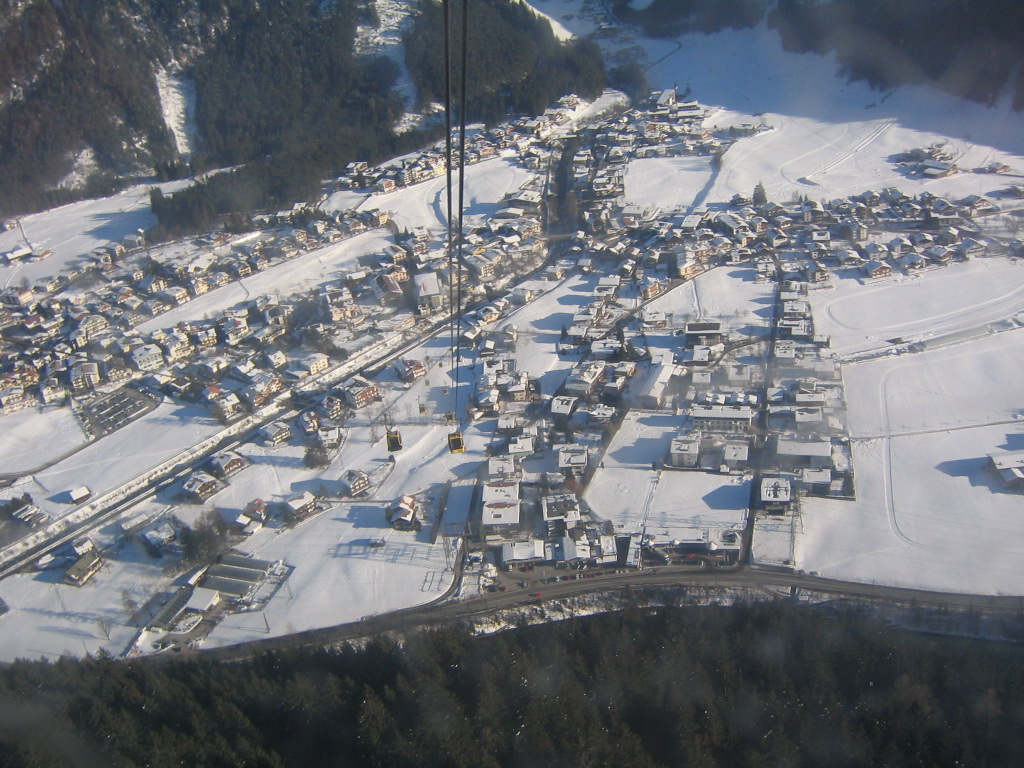

The Höllenritt drops 675 vertical metres in 3.9 kilometres of root-knotted forest, hairpin switchbacks and stream crossings — a gradient profile that explains why Mayrhofen tends to vet riders by what they ride down, not what they ride up. The Zillertal village sits at roughly 630 metres in the eastern Tirol, surrounded by limestone walls and accessed by one of Austria's most efficient narrow-gauge railways. For mountain bikers, the centre of gravity is the Penkenbahn — a 3S gondola that lifts riders and bikes from the village to 1,790 metres in about eight minutes, then unloads them into a compact, technical bike area on the Action Mountain.
The two signature descents
Mayrhofen's bikepark identity rests on two purpose-built downhill trails, both starting near the top of the Penken: Himmelfahrt and Höllenritt — "Ascension" and "Hell Ride", a deliberately theological pairing.
- Himmelfahrt (blue/red): 2.4 km, around 330 m of descent. Flowing berms, smaller tabletops and chicken-lines around the bigger features. Designed as the warm-up loop and the trail intermediate riders will return to most often.
- Höllenritt (black): 3.9 km, around 675 m of descent. Tight switchbacks, steep root sections, stone steps and long forest passages. Among the steepest sanctioned descents in the Austrian Alps and not a first-week trail.
The two trails are designed to be lapped together: warm up on Himmelfahrt, commit to Höllenritt when the legs and brain are calibrated to the terrain. Both finish in the valley near the lift base, which keeps the lap rhythm short.
Lift system and trail network
The Penkenbahn does the main work, but the network is wider than a single gondola. The Horbergbahn and the Lärchwald lift on the Penken plateau make repeat laps of the upper sections of Himmelfahrt and Höllenritt practical without descending all the way to Mayrhofen each run. Bikes ride inside the cabins on the 3S gondola; the older open chairs require a bike-specific cradle.
Beyond the two flagship descents, the Penken side opens onto longer cross-country and enduro-style singletrack — including the Pfitscherjoch and Tuxerjoch lines, which connect into the broader Zillertal network of more than 1,200 km of marked mountain bike routes. The neighbouring Ahornbahn does not permit bikes on the gondola, and cycling on Mount Ahorn itself is prohibited — a distinction worth memorising before buying a ticket.
Season window
The Penkenbahn typically runs for summer operations from late May through early October, with the 2026 window advertised as 23 May to 4 October. The bike-specific infrastructure — including the upper Penken lifts that turn Himmelfahrt and Höllenritt into rideable laps — comes online slightly later, generally by mid-June, and the trails can close earlier if autumn snow arrives at altitude.
July and early September are the most reliable windows. High summer brings afternoon thunderstorms that turn the rooty steeps of Höllenritt into something closer to a ski run; early September often delivers the cleanest, driest dirt of the year alongside thinner lift queues.
Getting there without flying
Mayrhofen is one of the easier Alpine bike destinations to reach by rail. The Zillertalbahn — a narrow-gauge line running up the valley from Jenbach — terminates in the village itself, putting a rider with a bagged bike within walking distance of the Penkenbahn base station.
- From Innsbruck Hbf: ÖBB regional services to Jenbach, then the Zillertalbahn to Mayrhofen. About 1 hour 15 minutes total, roughly half-hourly departures.
- From Munich Hbf: EuroCity south to Jenbach, change to the Zillertalbahn. Around 2 hours 45 minutes door to door for the fastest connection.
- From Vienna: Railjet to Jenbach, then the Zillertalbahn. About 5 hours.
The closest functional airport is Innsbruck (INN), 90 minutes by train. Munich (MUC) is the more frequently connected gateway and adds roughly an hour to the journey, with the carbon penalty of a short-haul flight that the train alternative makes harder to justify.
Where to base
Mayrhofen itself is the obvious base — the Penkenbahn is in the village, bike shops and rental fleets line the main street, and most accommodation lets riders walk to the lift in cycling shoes. Riders chasing quieter rates and longer evenings sometimes base in Finkenberg, a few kilometres up the valley, with a shuttle or short pedal to the gondola.
Hippach, one stop down the Zillertalbahn, is a softer-priced alternative for groups; the train turns it into a five-minute commute. For multi-day stays, booking accommodation that explicitly handles muddy bikes and offers a secure overnight wash-down area is worth the small premium — Höllenritt produces a lot of laundry.
Events worth timing around
Mayrhofen does not currently host a UCI World Cup round or a Crankworx stop — the European Crankworx event is held in Innsbruck, about 90 minutes west by rail, and many riders combine the two. The Zillertal hosts the Zillertal Bike Challenge, a three-day marathon-style event finishing at the Hintertux Glacier at around 2,700 metres, which falls in early summer and is worth a calendar check for riders who enjoy combining a destination trip with a mass-participation event.
A top-to-bottom run down the Höllenritt, the steeper of Mayrhofen's two sanctioned descents off the Penken.
Find a hotel in Mayrhofen
Same prices as Booking.com. 1 tonne CO₂ retired per stay. €5 credit on signup.
Search now →