Madonna di Campiglio MTB: 5 Lakes Trail & Brenta Dolomites Guide
Italy's Brenta Dolomites hide one of the country's largest lift-served bike networks. The 5 Lakes route off the Cinque Laghi gondola is the headline ride, but Madonna di Campiglio's real strength is its breadth.
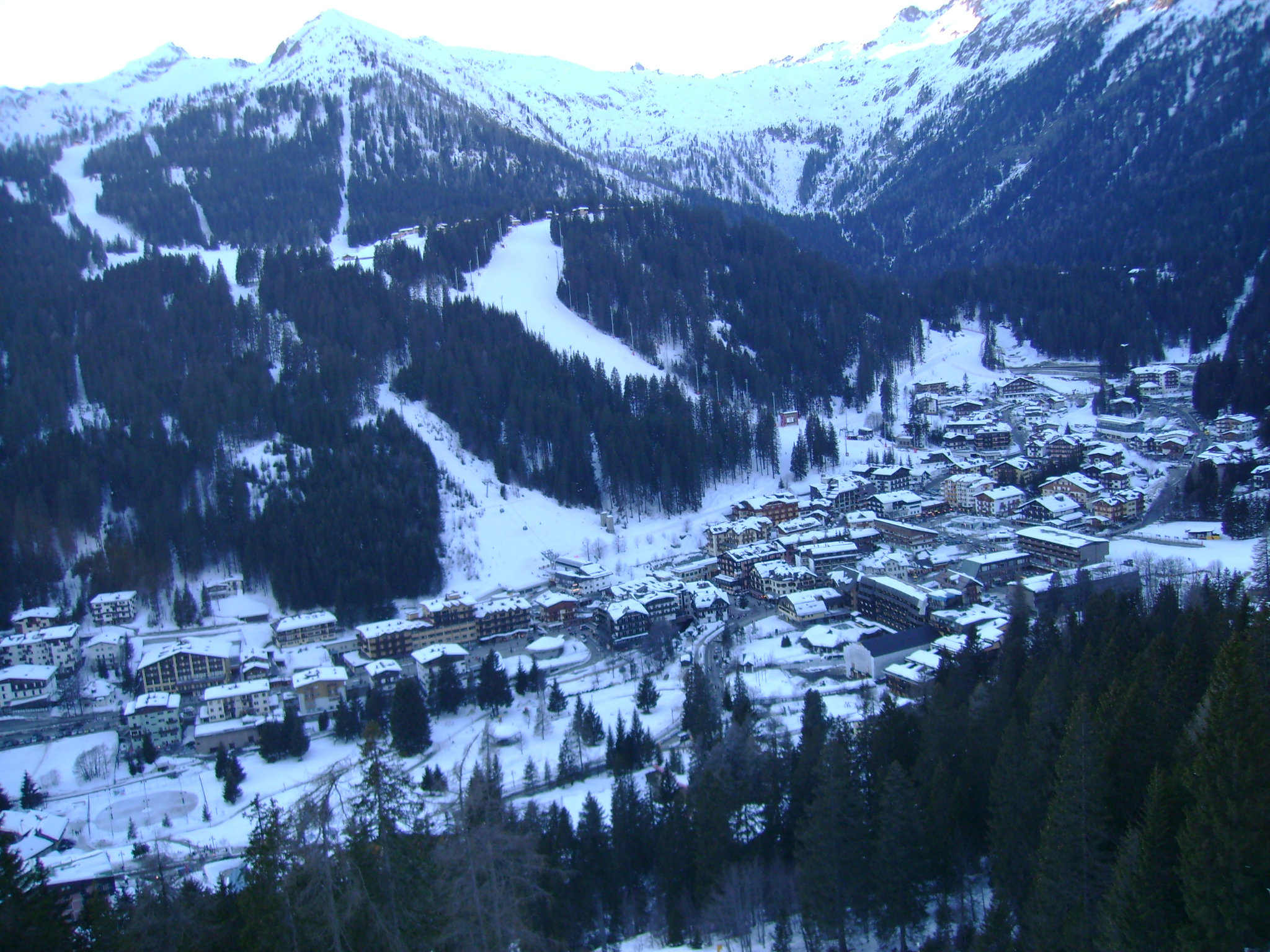

Madonna di Campiglio sits at 1,550 m in a saddle between the granite Adamello-Presanella and the pale limestone teeth of the Brenta Dolomites, and that geological collision is the reason the riding here is so varied. On one side of the valley, gondolas climb toward alpine lakes and pine-shaded singletrack; on the other, they open onto raw, rocky enduro lines under cliffs that look more like the Marmolada than a bike resort. The lifts run a tight summer window, roughly mid-June to mid-September, so the planning conversation usually starts with the calendar before it gets to the trails.
The 5 Lakes Bike Trail
The signature ride loads onto the Cinque Laghi (5 Lakes) gondola from the village and tops out near Rifugio 5 Laghi at around 2,064 m. From the upper station, riders traverse toward Lago Ritort, the largest of the chain, before peeling off onto the descent toward Malga Ritort and back to Campiglio. It is a flow-oriented intermediate line by Dolomite standards, technical in places but rideable on a capable trail bike, with a near-constant view across the valley to the Brenta wall. Most of the route is graded blue to red on local signage, with a few rockier red sections lower down. Strong riders link it into a longer enduro day by climbing higher into the Adamello-Brenta Natural Park before dropping in.
Lifts, bike parks and the wider network
Three lift systems carry bikes in summer. The 5 Laghi gondola is the engine of the headline route. The Spinale Express from Campiglio Laghetto and the Grostè cabinovia open the limestone side of the valley, feeding descents past Rifugio Graffer and the high pastures below Cima Grostè. Pradalago rounds out the network on the granite side. Around them sit two purpose-built bike areas: the Skill Park Prà Rodont above Pinzolo, a progression park with jump lines and a pump track, and the Doss Bike Area closer to the village. Marketing materials describe the combined territory as Italy's largest Bike Land, and while that figure is hard to verify trail by trail, the published menu of cross-country, enduro and downhill options with lift-assisted access is genuine.
Connecting to the Brenta loop
Riders with multiple days should look at the Dolomiti di Brenta Bike, a ring tour around the Brenta massif. The Country variant runs roughly 136 km with 4,600 m of climbing across cycle paths, gravel and quiet asphalt; the Expert variant pushes to about 171 km and 7,700 m. Most riders split it over three days, often on e-bikes, with Madonna di Campiglio sitting on the descent from the Campo Carlo Magno pass.
Getting there by train and bus
There is no station in Campiglio itself. The standard rail approach is to Trento, around 70 km away on the Verona-Brennero mainline, then a Trentino Trasporti coach from the bus station next door. The transfer runs roughly two hours with several services a day; bikes are accepted but capacity is limited, so booking ahead in July and August is sensible. From the north, riders coming through Munich or Innsbruck can also drop into Trento via the Brenner corridor. For travellers weighing the climate cost of a short-haul flight to Verona or Bergamo against a Eurocity from Munich or Zürich, the rail route into Trento is almost always the lower-carbon option and lands closer to the lifts.
Shoulder versus peak season
Summer lifts at Madonna di Campiglio typically operate from the third week of June to around 20 September, with exact dates shifting year to year. Mid-July through mid-August is the warmest, busiest and most reliable window, but it overlaps with Italian school holidays and prices climb accordingly. Late June can deliver empty trails and wildflowers but also lingering snow on the higher Grostè lines. Early September is the connoisseur's pick: stable weather, cool mornings, full lift service and a fraction of the August crowds. By the last week of September the network winds down quickly.
Where to base
The village itself is compact and walkable, with lift stations at either end, which makes car-free trips workable. Riders who want to be on the bike inside ten minutes of breakfast tend to stay near Campiglio Laghetto for Spinale access or up the road toward Campo Carlo Magno for the Grostè side. Pinzolo, eight kilometres down-valley, is quieter and cheaper and links into the network via a shuttle bus and the Pinzolo-Campiglio Express cable car. Bike Friendly is a labelled standard locally, indicating secure storage, wash bays and trail information at participating hotels.
Practical notes
- Bike pass: a multi-day lift card covers the Skiarea Madonna di Campiglio summer lifts; Val di Sole sells a separate but connectable pass for riders heading north to the Daolasa downhill side.
- Bike type: a 140-160 mm trail or enduro bike covers almost everything; e-MTBs are widely rented and unlock the Brenta ring without lift dependency.
- Park rules: the area sits inside the Adamello-Brenta Natural Park, so riders are expected to stay on signed routes and yield to walkers on shared sections.
Campiglio rewards riders who treat it as a network rather than a single bike park. Pick one lift system per day, ride the 5 Lakes route on a clear morning, and leave time to sit outside a refuge with a view of the Brenta wall before the last gondola down.
A rider's-eye descent from Rifugio Graffer back to Madonna di Campiglio, on the Grostè side of the network.
Find a hotel in Madonna di Campiglio
Same prices as Booking.com. 1 tonne CO₂ retired per stay. €5 credit on signup.
Search now →