Lermoos MTB Guide: Bikepark Lermoos & Blindsee Trail, Tirol
Tucked under the north face of the Zugspitze, Lermoos pairs a compact lift-served bike park with one of the Alps' most photographed singletracks. Quieter than Innsbruck or Saalbach, easier to reach by train than most assume.
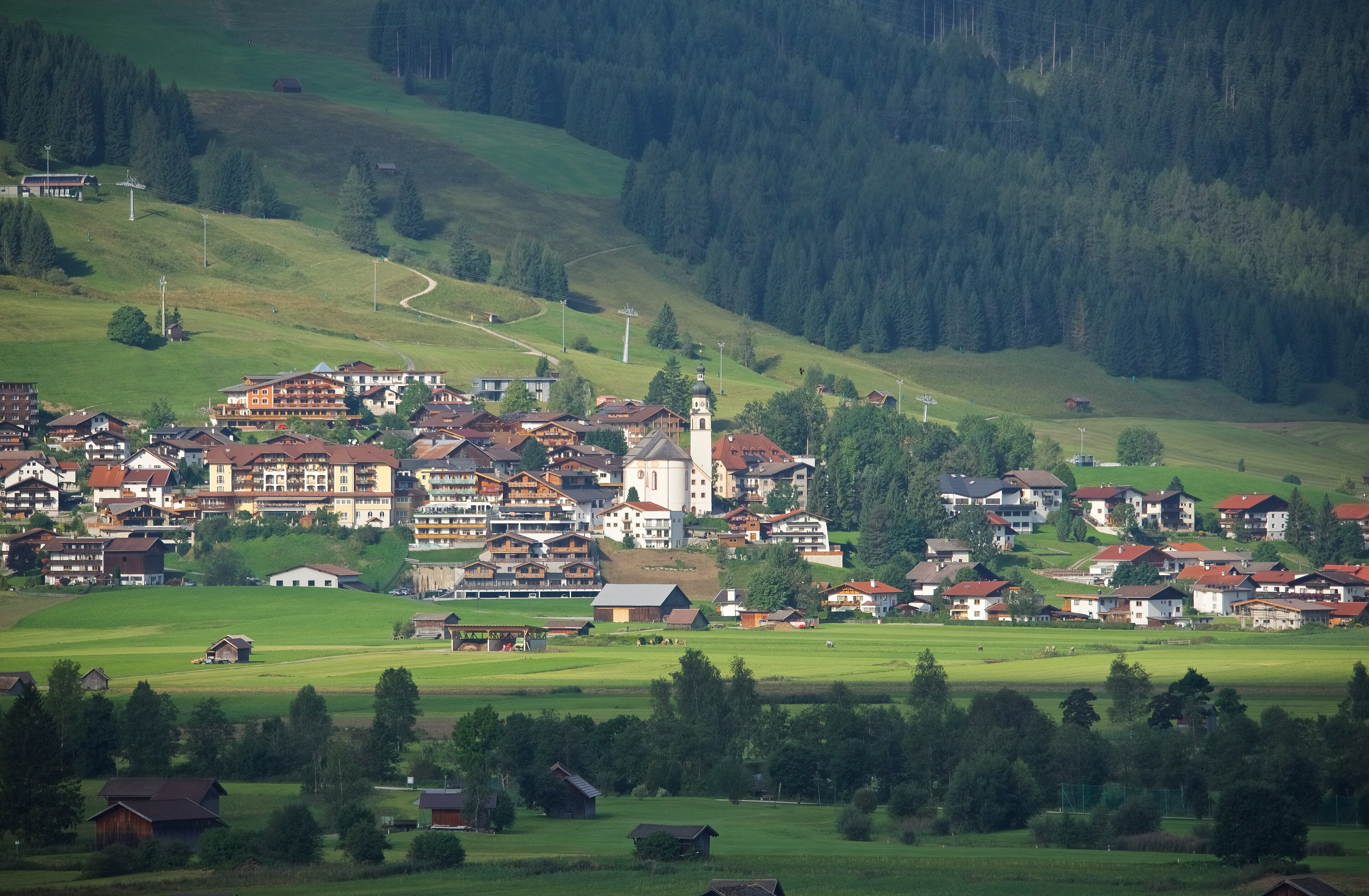
The first thing that registers on the Grubigsteinbahn ride out of Lermoos is the scale of the wall across the valley: the Zugspitze massif fills the cabin window for the entire eight-minute lift up, and by the time the gondola tops out near 2,030 metres, the Wetterstein limestone is close enough to read. The second thing that registers, once boots clip back into pedals at the mid-station, is how quiet it is. Bikepark Lermoos sits on the Tirolean shoulder of Germany's highest mountain, an hour and change from Innsbruck by train, and somehow it has stayed off the marquee list that runs Saalbach, Leogang, Innsbruck and Schladming. That is the appeal.
The Blindsee Trail: the reason most riders come
The signature descent here is not technically inside the bike park. The Blindsee Trail drops from near the top of the Grubigstein lifts down towards the Blindsee, a small alpine lake on the road over the Fernpass, and finishes near Biberwier. It runs roughly 8 km with around 750 m of vertical and rates a sustained S3 on the Singletrail-Skala — rocky, partially exposed, with sections of loose scree in ruts that punish a poor line. It is not the hardest trail in Tirol, but it earns its reputation: a flowing, view-saturated descent that rewards solid fundamentals and a clean front wheel. A swim in the Blindsee on the way down is the local ritual.
Bikepark Lermoos: lift-served gravity
The park itself is built around two gondolas — Grubigsteinbahn I (a six-person cabin) and Grubigsteinbahn II (a ten-person cabin) — linking the village at roughly 1,000 m to the top station at around 2,030 m. That is over 1,000 metres of liftable vertical, which is a serious number for a park this size.
The two headline park trails are Forest Two (freeride, red) and Forest One (downhill-flavoured, red-to-black). Forest Two runs 3.3 km from the Grubigalm mid-station and feeds into Forest One, which adds another 2 km to the valley. Together they offer a sustained 5+ km of bermed turns, tabletops, ramps and rollers. Around them sits a broader network of more than twenty marked trails: easier options like the Family Trail, the Bachtl Trail and the cross-valley Marienberg Trail (blue); the Grubigalm Trail and Wolfratshauser Trail as red intermediates; and the technical Schlägle Singletrail at the black end. Cable-car bike carriage is included in the lift ticket. Recent day-pass pricing has run around €42 adult / €36 youth / €24 child.
Getting there without a car
Lermoos is one of the easier Alpine bike destinations to reach by rail. The cross-border Werdenfelsbahn regional service runs daily from Innsbruck via Garmisch-Partenkirchen and Reutte, stopping at Lermoos and Ehrwald stations inside the Zugspitz Arena. From Munich the journey runs roughly three hours by train; from Innsbruck it is about 90 minutes. The Regio-Ticket Werdenfels remains one of the better-value group rail products in the Alps.
For flights, Innsbruck is the closest airport at around 75 km, Munich sits about 110 km north, and Memmingen offers a low-cost alternative. Overnight guests receive the Tiroler Zugspitz Arena guest card, which covers regional buses free of charge — useful for shuttling between Lermoos, Ehrwald and Biberwier without firing up a hire car. For travellers willing to make the train work, the carbon arithmetic on a long weekend here is meaningfully better than most lift-served destinations in the Alps.
Shoulder season vs peak
The official bike-park season runs roughly mid-May to early November, with daily lift operation from 08:30 to 17:00. In practice, the park reads best in two windows. Late June to mid-July delivers long daylight, fully open trails and meltwater-fresh lakes. September is the local secret: stable high pressure, hard-packed dirt, fewer riders on Forest One and clear sightlines to the Zugspitze. Avoid the first weeks after the bike opening if crowds matter — the May launch event pulls a regional crowd. August can run hot and busy.
The natural-terrain trails — Blindsee, Schlägle, the Grubigalm singletrack — depend on dry conditions. After heavy rain the scree on Blindsee turns marbly and the upper sections sketch out fast. Locals will steer riders onto the park-built Forest trails on wet days; that is the right call.
Where to stay, and what else to ride
Lermoos village itself is small and walkable, with most lodgings within a five-minute spin of the Grubigsteinbahn base station. Neighbouring Ehrwald and Biberwier feed the same lift and trail network and tend to be quieter. Beyond the park, the Tiroler Zugspitz Arena publishes a deep catalogue of marked MTB tour routes — including classic links to the Fernpass, Coburger Hütte and Seebensee — that turn a gravity trip into a genuine multi-day enduro itinerary. Three to five nights is the sweet spot: long enough to lap Forest One until it clicks, ride Blindsee in dry conditions, and still have a day for a backcountry loop under the highest mountain in Germany.
Raw POV of the Blindsee Trail from the Grubigstein, descending towards the lake under the Zugspitze massif.
Find a hotel in Lermoos
Same prices as Booking.com. 1 tonne CO₂ retired per stay. €5 credit on signup.
Search now →