La Bresse MTB Guide: Riding the Vosges Bike Park, France
Tucked into the granite folds of the Vosges, La Bresse hides a 18-trail downhill park with genuine World Cup pedigree, a long lift-served summer, and a rare luxury for European MTB destinations: it is reachable by train.

The opening straight of La Bresse's Schuss freeride line drops away beneath the chairlift in a rhythm of berms and step-downs that telegraphs exactly what kind of bike park this is: built for speed, sculpted out of granite and pine root, and unapologetically aimed at riders who like the lifts to do the climbing. Set on the eastern flank of the Hohneck massif in the French Vosges, the Bikepark La Bresse-Hohneck Labellemontagne is one of the largest lift-served downhill venues in France, and one of the few that has hosted a UCI Mountain Bike World Cup downhill round in the modern era.
The signature trails
The park groups 18 marked descents into three families. Four freeride trails (two red, two black) carry the headline reputation, threaded with jumps, wooden modules, hip transfers and rock rolls. Eight technical trails (two green, two blue, two red, two black) hold the natural lines: roots, off-camber slabs and the loose granite chips that give Vosges riding its distinctive feel. A further six cross-country and enduro routes (two green, three blue, one red) ring the resort for riders who prefer to earn the descents.
Names worth knowing on arrival: the red freeride Schuss as a confidence-builder, the natural-line black Chitelet for technical riders, and the green Famille sectors for first lift-served laps. A pump track at the base completes the layout.
How the lift system works
The bike park rides off the existing alpine-ski infrastructure of the Labellemontagne resort. The Vologne Express chairlift is the workhorse and the only lift from which every coloured trail can be reached without pedalling. From its top station, riders can scope the entire trail map before committing. Bikes ride on dedicated carriers; lift staff load and unload.
Operating hours run 09:45 to 17:30. On-site rental covers more than 40 downhill bikes, 20 e-MTBs and a full kit of pads, helmets and neck braces, which removes the awkward question of how to fly a 17 kg DH rig across Europe.
Getting there without flying
La Bresse is genuinely accessible by rail, which is uncommon for a serious downhill park. From Paris Gare de l'Est, a TGV-then-TER combination via Nancy reaches Remiremont in roughly three and a half hours. From Remiremont, the Fluo Grand Est interurban bus (line operated in correspondence with SNCF) connects to La Bresse Place du Champtel in about 54 minutes, with around five departures per day. Bikes are accepted on the buses, though space is limited and reservation is recommended in peak weeks.
Total Paris-to-trailhead time by public transport is comfortably under five hours door-to-door, which compares favourably to the airport-and-shuttle combinations required to reach most Alpine parks. For travellers from the UK, Eurostar to Paris plus the Remiremont leg keeps the carbon footprint of a riding week well below a flight to Geneva or Lyon plus a transfer.
Shoulder season vs peak season
The lifts run from 1 May until 20 September, weekends and French public holidays first, then daily through the summer school holidays (early July to late August). The riding season is therefore longer than most Alpine equivalents but defined by Vosges weather, which tilts wet.
July delivers the most consistent dry, hard-pack conditions and the largest event calendar, but also the longest lift queues. Early September is the connoisseur window: cool air, dry soils after the August thunderstorms, near-empty lifts and forests turning copper. May and June trade quiet trails for the risk of mud and the chance of low cloud sitting on the summit ridge; serious freeride lines like Chitelet can be heavy work after rain.
World Cup pedigree
La Bresse returned to the UCI Mountain Bike World Cup downhill calendar in 2018 as the season-closing round, won by Martin Maes in the elite men's category in the unusual circumstance of an enduro specialist beating the downhill field. The hill had previously hosted World Cup racing in 2011 and earlier years, with past winners including Greg Minnaar and Tracy Moseley. Sections of the World Cup track are integrated into the park's black-graded technical descents, which is part of the appeal for visiting racers.
Where to base
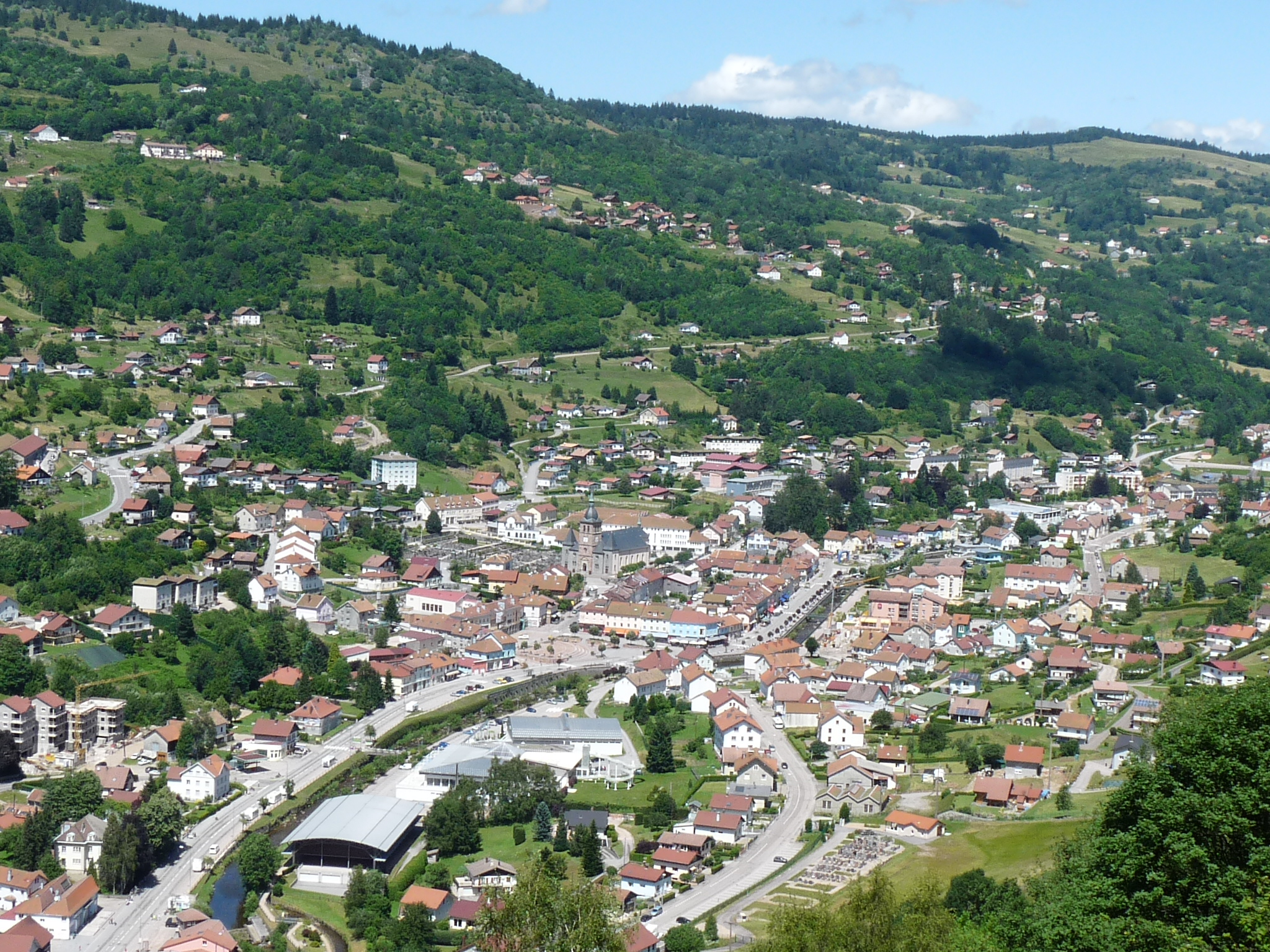
The village of La Bresse itself sits at the foot of the lifts and concentrates accommodation, bike-friendly cafés and a small cluster of workshops carrying spares for European DH brands. Nearby Gerardmer, fifteen minutes by road, offers a lakeside alternative with a wider restaurant scene for non-riding partners. Booking ahead matters in July and August; September stays are routinely available a few days out.
Practical notes
- Helmet, gloves and back protection are mandatory on lift-served descents.
- Cell coverage is patchy on the upper mountain; download the trail map offline.
- Mid-mountain refuges sell water and basic food, but card payment is not guaranteed.
- Trail surfaces are granite and root, not the dust of southern France; tyre choice should lean toward grip over speed.
A full POV run down La Bresse's Schuss freeride line, showing the park's signature jump-and-berm character.
Find a hotel in La Bresse
Same prices as Booking.com. 1 tonne CO₂ retired per stay. €5 credit on signup.
Search now →