Hakuba MTB Guide: Iwatake Bike Park, Japanese Alps
Hakuba Iwatake turns the 1998 Olympic ski host into a gondola-served bike park each summer, with 521 metres of vertical, a 6.9km top-to-bottom flow line, and one of the cleanest train-and-bus approaches in Asia.
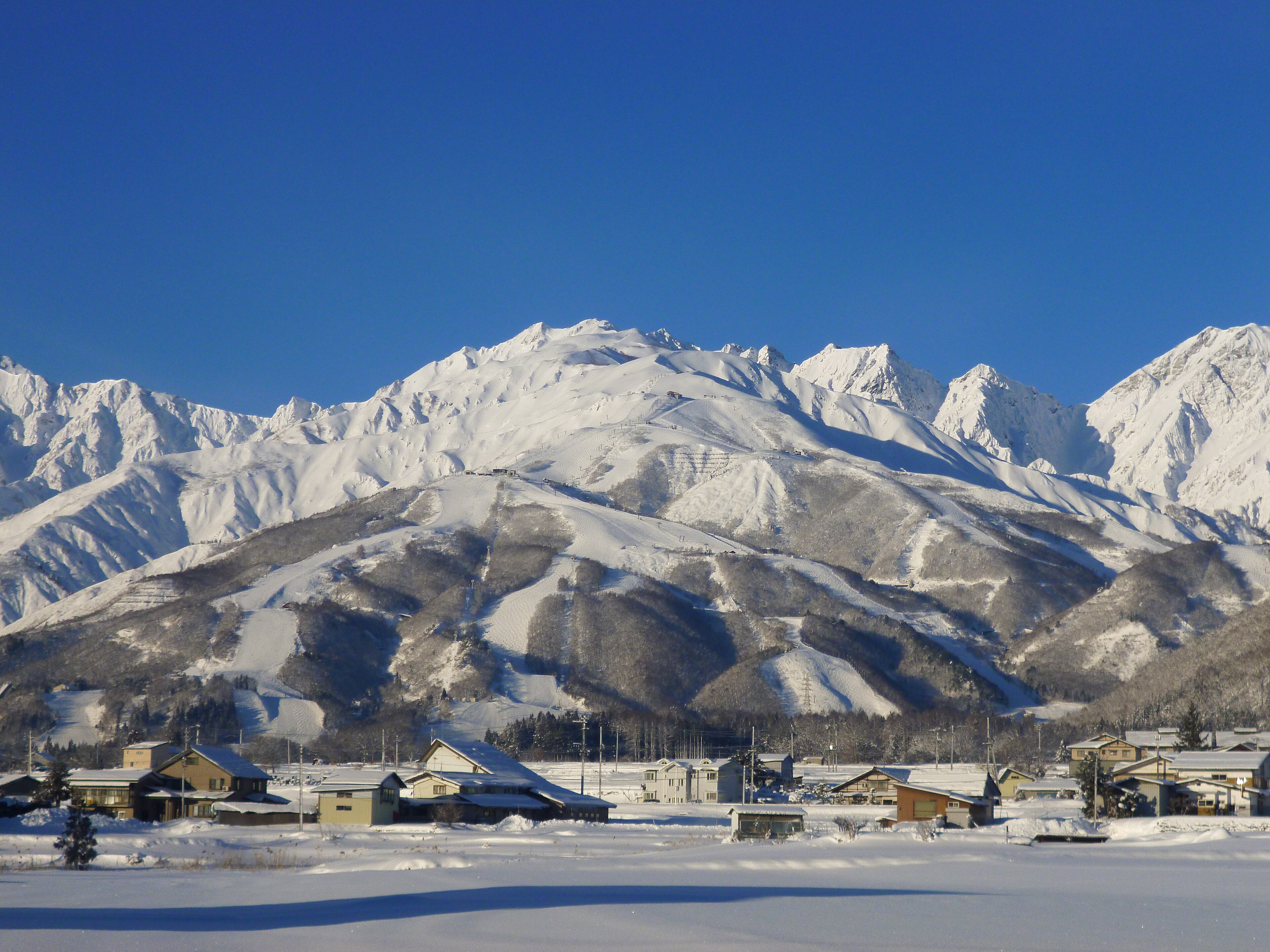
The gondola at Hakuba Iwatake tops out at 1,272 metres, and on a clear summer morning the cabin doors open onto a serrated horizon that includes Mt Yari, Mt Goryu and the rest of the Northern Japan Alps — the same skyline that framed downhill ski medals in 1998. Spin the bike around, drop into the dirt, and 521 vertical metres of forested singletrack unspool beneath the chairlifts. This is the most developed lift-served bike park in Japan, and it has quietly become the benchmark for what Asian mountain biking can look like when a ski resort takes the green season seriously.
Signature trails
Iwatake's bike park opened in 2015 and is built around two named descents that share the gondola but have almost nothing else in common.
The Alpine Downhill Course is the marquee line — 6.9 kilometres top to bottom, threading meadows, larch forest and bermed corners that ride more like a long XC flow trail than a true DH track. Most riders take 20 to 30 minutes per lap, and the grade sits comfortably in blue territory: an intermediate on a trail bike can ride it all day without feeling out of depth.
The Kamikaze Downhill Course is the counterweight. At 3.6 kilometres it covers the same vertical in roughly half the distance, which translates to genuinely steep pitches, tight switchbacks and committing jump sections. It is the closest thing in Japan to a European black DH run and rewards riders with bike-park reflexes; first-timers should sessions the upper steps before dropping in.
Around those two anchors sit a cross-country loop, a dual pump track, a beginner Fun Ride course and a structured seven-step Skill Up progression area that has done more for grassroots Japanese mountain biking than any other facility in the country.
Lift system and pricing
Access is via the Iwatake Gondola, which carries bikes from the base village to the summit station in roughly eight minutes. The park runs 09:00 to 16:00 daily through the green season, with the dedicated downhill window closing at 15:30.
- Day pass (all courses): 5,800 yen adult, 4,000 yen child
- Downhill 3-ride pass: 5,200 yen adult, 3,300 yen child
- Single downhill ride: 2,900 yen adult, 1,600 yen child
- Season pass: 51,000 yen adult
Hire bikes, helmets and body armour are available on-site, and the resort runs guided skills clinics in English through partners such as Evergreen Outdoor Center, which removes most of the language barrier for first-time visitors.
Getting there
One of Hakuba's structural advantages is how well it plugs into Japan's rail network — a meaningful sustainability point given that most Alpine bike parks still rely on private cars.
- Hokuriku Shinkansen from Tokyo Station to Nagano Station: roughly 80-95 minutes, around 8,000 yen one way.
- Alpico bus from Nagano Station east exit, stand 26, direct to Hakuba: roughly 75 minutes, 3,500 yen, departures hourly between 08:20 and 20:00.
The end-to-end Tokyo to Hakuba journey lands at about three hours for around 11,500 yen. A slower but transfer-free alternative is the JR Azusa Limited Express from Shinjuku direct to Hakuba Station, roughly four hours. Tokyo's Haneda and Narita airports both connect cleanly into the Shinkansen network; international riders typically fly into Haneda and reach the trails the same afternoon.
Season window and weather
The park typically opens in mid-May and runs through to early November (the 2025 season ran 16 May to 9 November). Within that window there are three distinct riding climates worth planning around.
- Late May to mid-June: tail end of snowmelt, cool temperatures, occasional muddy upper sections.
- Late June to mid-July: tsuyu, the East Asian rainy season, brings persistent drizzle and reduced visibility. Trails stay open but expect wet roots.
- Late July to October: the prime window. Tokyo swelters in the mid-30s while Iwatake's summit holds at 20-25°C. Autumn colour through late October is among the best riding backdrops in Asia.
Typhoon season peaks in September and can shut the gondola for a day or two at short notice — flexible itineraries handle this without drama.
Where to stay and ride culture
Hakuba village stretches several kilometres along Route 148 and offers everything from minshuku guesthouses at 6,000 yen a night to ski-season luxury lodges discounted heavily in summer. Wadano and Echoland are the most walkable bases for non-drivers; both sit on the free seasonal shuttle loop that links the bike park to the village. English is widely spoken in accommodation and rental shops thanks to Hakuba's long-established Australian and New Zealand seasonal community, but trail signage on the mountain remains primarily Japanese with pictographic difficulty grades.
Etiquette matters. Riders are expected to yield to hikers on shared upper sections, stick rigorously to marked trails (the resort sits inside a national park buffer zone), and pack out everything. Cash remains useful in smaller restaurants and onsen, though the resort itself takes cards and IC transit payments.
Verdict
Hakuba Iwatake is not trying to out-Whistler Whistler. What it offers instead is a well-built, lift-served bike park inside one of the most photogenic mountain ranges in Asia, reachable by bullet train from a megacity, and bolted onto a hospitality infrastructure that already knows how to host international visitors. For anyone planning a Japan riding trip, it is the obvious anchor.
A top-to-bottom run through Hakuba Iwatake MTB Park, showing the Alpine course's loamy switchbacks and the alpine panorama above the treeline.
Find a hotel in Hakuba
Same prices as Booking.com. 1 tonne CO₂ retired per stay. €5 credit on signup.
Search now →