Fujimi Panorama MTB Guide: Japan's Biggest Bike Park
Beneath the Yatsugatake range in Nagano, Fujimi Panorama Resort serves up 730 metres of lift-accessed vertical, sixteen graded trails and a summit panorama that frames Mt Fuji on the horizon. This is Japan's flagship bike park.
.jpg)
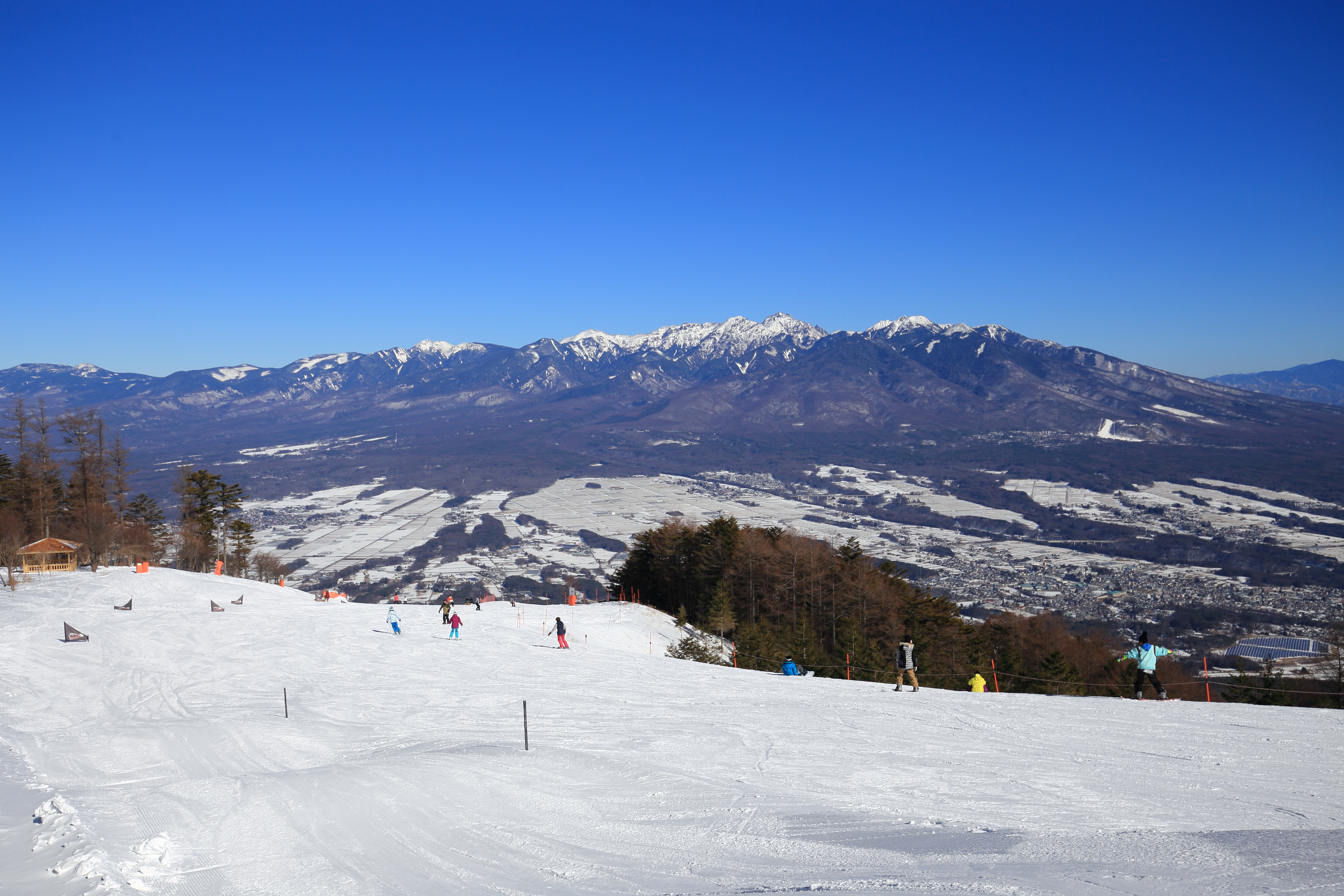
The gondola tops out at 1,780 metres, the cabin doors slide open onto a wooden deck, and on a clear morning the cone of Mt Fuji floats above the Yatsugatake foothills more than 80 kilometres to the south. Riders shoulder bikes off the rack, click into pedals on the ridgeline, and drop into the longest lift-served descent in Japan. Fujimi Panorama Resort, tucked beneath the Yatsugatake mountains in the Nagano village of Fujimi, is the country's flagship downhill park and the closest thing Japan has to an alpine bike-park culture.
The Trail Network: 16 Numbered Lines, One Trail Architect
Fujimi runs an unusual numbering system. Rather than named runs in the European tradition, the park's sixteen interconnecting trails are simply numbered 1 through 16 and grouped by difficulty. Trails 1, 2, 3, 5 and 14 form the beginner network: wide, flowing corridors through Japanese larch and birch with rounded rocks, smooth pebble sections and gentle tabletops. The intermediate group covers 6, 7, 9, 10 and 16, where the gradient steepens and the lines tighten into root-laced fall-line chutes punctuated by drops and step-downs. Trails 11, 12, 13 and 15 sit at the top of the expert pyramid, steepest and narrowest, threaded between volcanic rock gardens and the kind of mossed-up tree roots that define Honshu's mid-altitude forest floor.
The work bears the signature of Yuta Urashima, the Japanese trail builder whose portfolio also includes shapes in Austria and New Zealand. The result is a park that rides more European than Asian: pumped berms, sculpted lips, drainage that holds up under the region's summer rain.
The 8km Cross-Country Descent
The headline number is the 8-kilometre run from summit to base, advertised as the longest downhill in the country. It strings together cross-country style flow up top, traverses across the mid-mountain, and finishes on the steeper graded lines back to the gondola plaza. The vertical drop is 730 metres, from the 1,780m summit to the 1,050m base station.
Lift System and Skill Park
Uplift runs on a single eight-person gondola backed by two chairlifts, which means lap times stay short and queues stay manageable even on summer weekends. Operating hours are 09:00 to 16:00 from April through mid-October, dropping to 09:00 to 15:30 as the autumn season closes out. A day's gondola and chairlift pass currently costs ¥5,500 for adults and ¥2,800 for children. A dedicated Skill Improvement Area at the base, priced at ¥2,500 for the day, is the right place for first-timers to dial in body position on shaped rollers and small drops before queuing for the summit.
Rental bikes and protective kit are available on site, which matters: very few visiting riders arrive with a full DH rig, and the rental fleet covers everything from kids' bikes to full-suspension enduro and downhill platforms.
Getting There by Train
Fujimi is one of the rare bike parks in the world that can be reached entirely by public transport, and the sustainable-travel case is strong. From Tokyo's Shinjuku Station, the JR Chuo Line Limited Express Azusa runs direct to Fujimi Station in approximately two hours. A free shuttle bus runs from the station forecourt to the resort base in around ten minutes. Bikes travel either disassembled in a soft case (the standard Japanese rinko bag protocol on JR limited expresses) or, more practically for visitors, picked up from the on-site rental counter on arrival.
Drivers can reach Fujimi from Tokyo in roughly three hours via the Chuo Expressway, exiting at Suwa Minami IC.
Season Window and Weather Reality
The park opens in late April and closes in mid-November, with operating dates confirmed annually around the spring thaw. The clearest weather windows fall in early summer (June) and autumn (mid-September to early November). July and August are warm, humid and prone to afternoon thunderstorms, and the East Asian rainy front, tsuyu, can soak the trails for stretches of late June. Typhoon season runs August through September and occasionally forces closures.
The autumn shoulder is the connoisseur's choice: cooler air, lower humidity, deciduous larch turning gold across the Yatsugatake foothills, and the best odds of a clean Mt Fuji sightline from the summit deck.
Where to Base and What to Know
Most riders stay either at the resort's own lodging at the base or in the small town of Fujimi, where guesthouses and minshuku run from around ¥6,000 a night. The nearby city of Suwa, fifteen minutes by train, offers more hotel inventory and access to the Suwa onsen district for evening soaks after lift days. English signage at the park itself is reasonable; outside the resort, expect Japanese-only menus and the usual cash-preferred culture in rural Nagano. Carry yen, and a translation app.
Riding etiquette mirrors the wider Japanese outdoor culture: quiet trailheads, careful right-of-way at intersections, and a strong norm against littering or off-piste shortcutting. Trails are maintained meticulously, and visiting riders are expected to ride within their grade.
Why It Matters
Fujimi Panorama is not the Alps. The summit is lower, the season shorter, the network smaller than Whistler or Les Gets. What it offers instead is a fully lift-served, professionally shaped 730-metre vertical day, reachable from one of the world's largest cities by a single direct train, with a view of Mt Fuji from the top station. For a four-to-seven-day trip combining park laps with onsen evenings and the wider Nagano riding scene, it is the obvious anchor.
A full top-to-bottom lap down Fujimi Panorama's 8km descent, the longest lift-served downhill run in Japan.
Find a hotel in Fujimi Panorama
Same prices as Booking.com. 1 tonne CO₂ retired per stay. €5 credit on signup.
Search now →