Falls Creek MTB Guide: Flowtown, Skyline & the Victorian Alps
High above the Bogong High Plains, Falls Creek has quietly become Victoria's most considered gravity destination, swapping winter snow gums for fifty kilometres of World Trail-built singletrack and a 535-metre descent that finishes in the village.
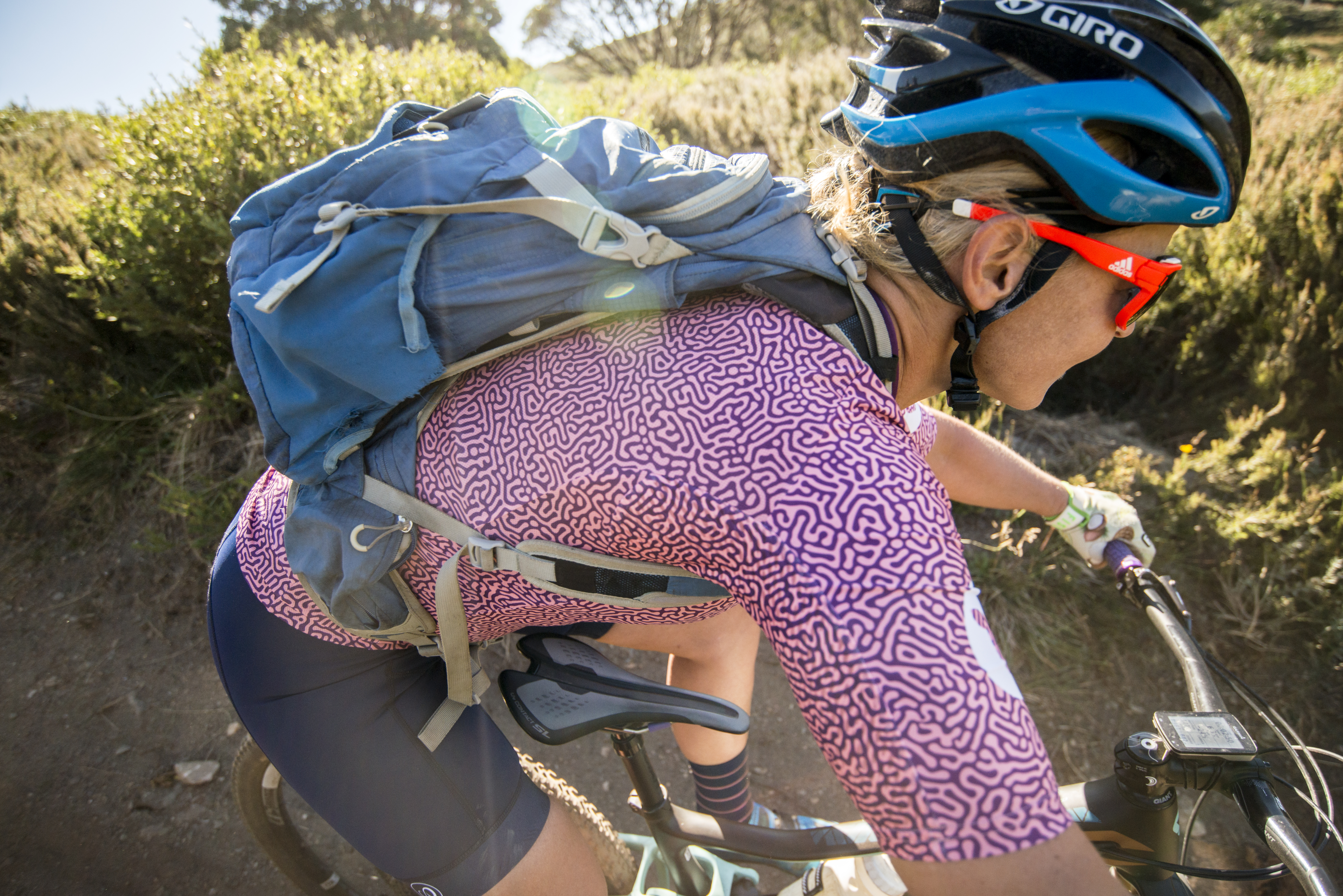
.jpg)
The defining moment at Falls Creek is the third minute of Flowtown. After a 5.1-kilometre roll down through snow gums on Skyline, the trail tips into a sequence of bermed s-curves so consistently cambered that riders can ride it like a pump track rather than a descent. It is the longest single trail in the resort, and it is the trail every visitor is sent down first.
Falls Creek sits at 1,600 metres on the edge of the Bogong High Plains in Victoria's Alpine National Park. In winter it is one of Australia's two largest ski resorts. In summer the lifts give way to a shuttle service and roughly 50 kilometres of purpose-built singletrack, the majority of it shaped by World Trail, the Queensland firm behind Derby and Maydena. The combination of alpine altitude, granite substrate and a network designed almost entirely for descending has put Falls Creek alongside Thredbo and Maydena in the conversation about Australia's strongest gravity destinations.
Flowtown, Skyline and the 535-metre descent
The signature lap stitches three trails into one continuous gravity run from the resort summit to the village ticket box: High Voltage (black), Wishing Well (blue) and Flowtown (blue). The total is roughly 10 kilometres of trail dropping 535 vertical metres, which is the longest unbroken gravity descent in Victoria.
Above that, Skyline is the showpiece. Built by World Trail across the 2021/22 summer, it runs around five kilometres top-to-bottom, with hand-built berms, machine-cut rollers and rock features that get progressively more committing the closer it gets to its link onto Flowtown. Riders chasing more technical terrain can branch off into Heavy Metal, Thunderbolt and Induction, the black-graded trails clustered on the resort's steeper north-east face.
Beginners and intermediates
Roughly a quarter of the network is green, and around 10 kilometres of trail is purpose-built for first-time mountain bikers. Jumpstart and the lower village loops are short, flat and shuttle-free, which makes Falls Creek a genuine family destination rather than a gravity-only resort.
How the shuttle works
Falls Creek does not run a chairlift in summer. Instead, Blue Dirt operates a vehicle shuttle that runs Thursday through Monday during the season, picking up at the Village Hub and at the bottom of Flowtown and dropping riders at the resort's high point near the Summit. Day, multi-day and season passes are sold online or at the Village Bike Cafe. Outside shuttle days the network is still rideable as pedal access, and several of the cross-country loops were designed with that in mind.
Season window and conditions
The bike park officially runs from early November to late April, bookending the Australian snow season. February and March offer the most settled weather and the driest dirt; November and early December can still deliver afternoon snow showers at 1,800 metres. By late April the trails dry out hard and the resort begins shifting back to winter operations. Anyone planning a trip should check the official trail report before driving up, as alpine storms can close the network at short notice.
Getting there
Falls Creek is around 390 kilometres north-east of Melbourne, roughly a 4.5-hour drive via the Hume Freeway and the Kiewa Valley Highway. The closest regional centres are Mount Beauty (30 minutes below the resort) and Albury-Wodonga (about two hours). V/Line operates a train-and-coach combination from Southern Cross Station to Mount Beauty, where a connecting shuttle finishes the climb to the village; the rail-plus-coach option takes about six hours but removes the need for a hire car and is meaningfully lower-carbon than driving alone. The nearest airport with regular flights is Albury (ABX).
Peak versus shoulder
The shoulders either side of January carry real advantages. Mid-November to mid-December brings long days, cool nights and the lowest accommodation rates of the summer. Late February through March is the connoisseur's window: stable high-pressure systems, firm dirt, and the Easter long weekend often coinciding with the season's busiest shuttle days. January sits in the middle of the school holidays and books out months ahead.
Where to stay
The resort itself is compact and ski-in, ski-out by design, which translates to walk-to-trail in summer. Most accommodation sits within five minutes of the Village Hub, so a bike, a helmet and a coffee are all within the same square kilometre. Quieter alternatives sit down the mountain in Mount Beauty and Tawonga, both of which offer cheaper beds, dinner options away from the resort and an easy morning drive back up the Bogong High Plains Road to the trailhead.
Practical notes
- Bike hire, tools, wash bays and water are all available at the Village Bike Cafe.
- The network sits inside Alpine National Park; trails are signposted and grades follow the standard IMBA green-blue-black system.
- Alpine UV is intense even on overcast days; sunscreen and full-finger gloves are essentials.
- Mobile coverage on the upper trails is patchy and worth planning around.
What sets Falls Creek apart is the architecture of the network. The trails were not retrofitted from ski runs or fire roads. They were drawn from scratch onto an alpine plateau by a single builder over a decade, with Flowtown as the anchor and Skyline as the most recent statement of intent. The result reads less like a bike park and more like a continuous, considered descent.
POV of Flowtown, the 5.1km flow finale that links the Skyline descent back into Falls Creek village.
Find a hotel in Falls Creek
Same prices as Booking.com. 1 tonne CO₂ retired per stay. €5 credit on signup.
Search now →