Crans-Montana MTB Guide: Cry d'Er, Flowtrails & Valais Lifts
High on a sun-soaked Valais plateau, Crans-Montana stitches a tight downhill park onto 139 km of certified enduro and a 9 km flowtrail that runs all the way to the Rhone vineyards. Here is how to ride it.
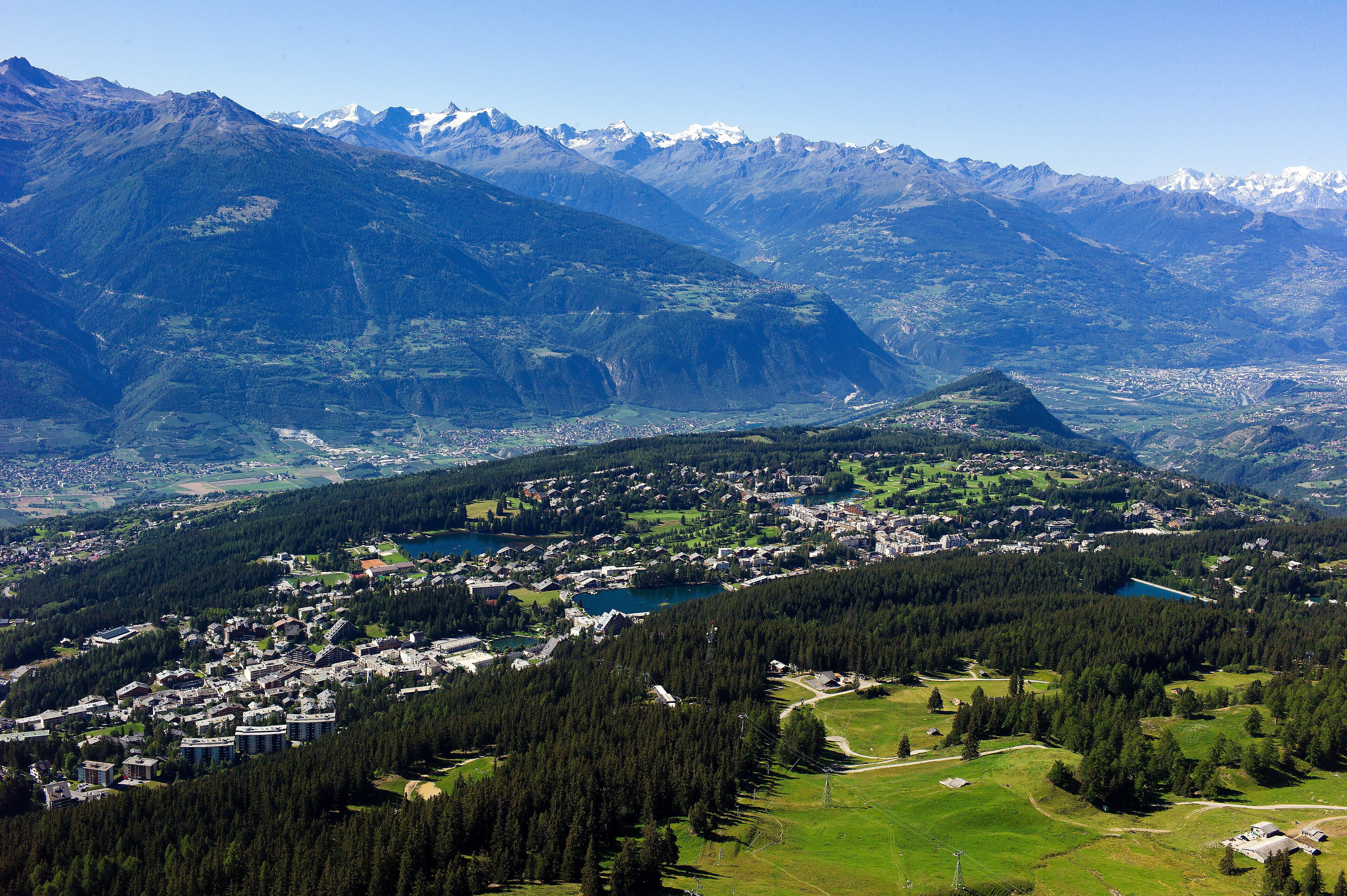
The Cry d'Er cable car sets riders down at roughly 2,260 metres, a sun-baked balcony above the Rhone Valley where the bike park's red trail drops 531 vertical metres in just over three kilometres of loam, roots and panoramic switchbacks. That single descent says most of what there is to say about Crans-Montana: high enough to feel alpine, short enough to lap until the legs give out, and pitched at the rider who wants more than blue-flow boredom but is not yet chasing World Cup gradients.
Unlike the sprawling Portes du Soleil to the west, Crans-Montana runs a compact, lift-served park stacked above a south-facing plateau resort. The reward for that smaller footprint is repetition: a competent rider can put eight or ten full descents into a day without queuing, then roll out onto a 139-kilometre network of signposted enduro and cross-country routes for the kind of all-day loop that defines Valais riding.
The three downhill tracks off Cry d'Er
The bike park is built around three graded descents, all served by the Crans-Cry d'Er cable car:
- Merbé (blue) — 2.24 km with 411 m of vertical, rollable berms and gentle takeoffs. A genuine learner track rather than a token blue.
- Cry d'Er (red) — 3.07 km and 531 m, the park's centrepiece. Fast open turns up top give way to forested rock and root sections, finishing with a Northshore and skills park near the mid-station.
- Chetseron (black) — 2.89 km and 490 m of steep, technical loam. Sections of this run featured in the Enduro World Series Pro Stage when the circuit visited Crans-Montana.
Flowtrails and the Sierre descent
Two flowtrails extend the park's reach. The Arnouva Flowtrail is a 2.5-kilometre blue dropping 180 metres, built for families and progressing riders. The headline ride, though, is the Crans-Montana-Sierre Flowtrail: nine kilometres and 905 vertical metres of bermed descent that leaves the plateau, threads larch forest and finishes in the vineyards of Sierre. The funicular brings riders straight back up for another lap.
Beyond the lifts: 139 km of marked enduro
The wider Crans-Montana network covers around 139 kilometres of certified and signposted enduro and cross-country routes, totalling roughly 2,350 metres of cumulative vertical. A complete signage refresh aligned with SuisseMobile standards is scheduled for spring 2026, which should make navigating between the eleven principal routes considerably less guesswork. Highlights include long ridge traverses with views across to the Weisshorn and a string of high-altitude lakes that justify a packed-lunch day rather than a shuttle lap.
Getting there without flying
Crans-Montana is one of the easier alpine bike destinations to reach by rail. SBB intercity trains run from Geneva Airport, Zurich Airport, Bern, Basel and Lausanne to Sierre/Siders, where a five-minute walk along the marked red line on the pavement leads to the funicular. The fully renewed funicular, opened in 2022, climbs 927 metres over 4.2 kilometres in 13 minutes and carries bikes for a small supplement. Geneva Airport to bike-park base is realistically achievable inside three and a half hours on public transport, which makes Crans-Montana a genuine alternative to driving an SUV the length of France.
Shoulder versus peak season
The bike park's main lift-served window typically runs from mid-June through October, with July and August offering the most consistent dry-loam conditions on the upper Cry d'Er and Chetseron tracks. September is the connoisseur's month: cooler temperatures, empty lifts, the larches starting to turn and the Sierre flowtrail riding at its tackiest. Late spring can be deceptive on the high ground; lower valley routes are rideable from March, but the plateau trails generally come good from May and the upper bike park later still. Always cross-check live lift status before travelling at either end of the season.
Where to base yourself
Crans and Montana sit as a continuous plateau village around 1,500 metres, with the cable car station within walking distance of most central accommodation. Riders prioritising lift access tend to stay near the Cry d'Er base or the Grand-Place area; those planning more enduro than park days often prefer the quieter Plans-Mayens or Aminona ends of the plateau. A handful of properties carry the Swiss Bike Hotels designation, which usually means secure storage, a wash bay and a workshop on site.
Sustainability notes
Train-and-funicular access genuinely works here, which is rare for an alpine bike destination of this calibre. Riders who can stretch a trip to three or four days will offset the rail journey far more efficiently than a fly-in weekend, and the Sierre flowtrail's point-to-point structure means lift laps replace shuttle vehicles. As snowlines move and summer water becomes a recurring conversation across the Alps, choosing higher-altitude resorts like Crans-Montana for late-season riding also reduces pressure on lower trail networks already showing wear from longer, hotter shoulder seasons.
POV down the red Cry d'Er track, the bike park's signature 3 km descent off the cable car.
Find a hotel in Crans-Montana
Same prices as Booking.com. 1 tonne CO₂ retired per stay. €5 credit on signup.
Search now →