Chamonix MTB Guide: Bike Park, Trails & Mont-Blanc Lifts
Six lift systems, more than 2,000 metres of rideable vertical, and switchbacks scratched into the granite under Mont Blanc. Chamonix is alpine downhill at its most technical, and it is reachable by train from Geneva.
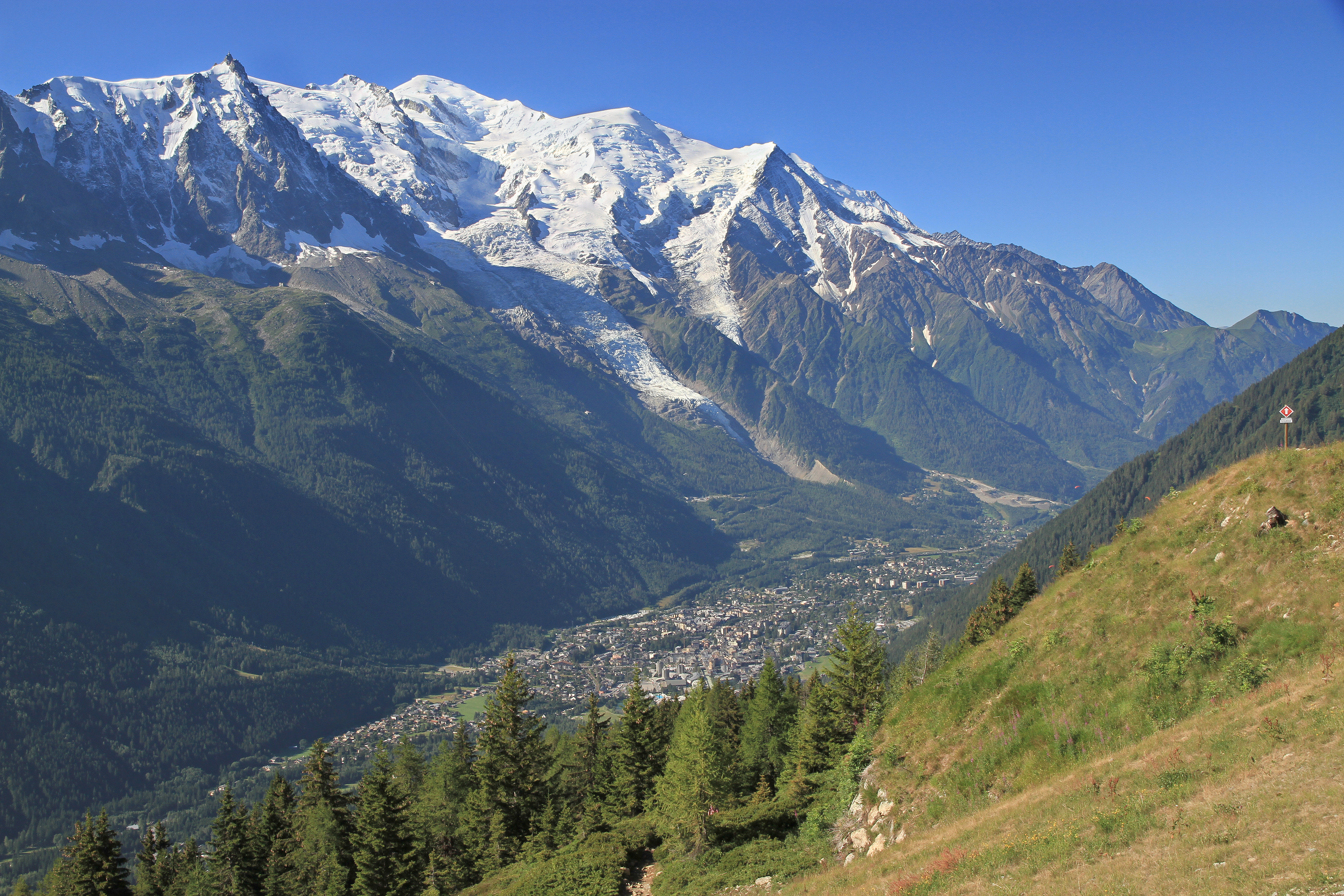

The descent from Planpraz starts in scree. A few metres below the Brévent mid-station, the trail narrows into a rocky couloir, dives through a sequence of tight, man-made berms, then plunges into larch forest above the town. There is no warm-up, no flow section, no easing in. That single trail, more than any brochure, explains what mountain biking in Chamonix actually is: alpine terrain, lift-served, rarely groomed, and unrelentingly steep.
Sitting at the head of the Arve valley in Haute-Savoie, Chamonix is better known for ski touring and the Aiguille du Midi cable car than for bikes. But beneath the Mont-Blanc massif sits a network of six lift systems and a rideable vertical range of more than 2,000 metres, spread across five linked sectors. It is not a manicured bike resort in the Whistler mould. It is a working alpine valley with downhill trails carved into it.
The signature descents
The headline trail is Brévent, accessed by the Brévent cable car from the centre of town to Planpraz at roughly 2,000 metres. From there the trail drops into a rocky, exposed singletrack with tight switchbacks before easing into wooded sections above Chamonix. It is rated black on Trailforks and is approximately 5 km long. The neighbouring Flégère sector offers a similar character of narrow, rooty alpine singletrack, though bikes are not permitted on the L'Index chair higher up.
On the opposite side of the valley, Les Grands Montets above Argentière is reached by the Lognan cable car. Two main trails drop from the mid-station, one famous for its near-endless series of switchbacks down to the valley floor, the other running out at the village of Lavancher. Bikes are not allowed on the upper Grands Montets lift to 3,300 metres, so riding starts at Lognan around 1,970 metres.
Bike parks proper
For riders who prefer marked, graded laps, two sectors function as dedicated bike parks:
- Les Houches at the valley's western end runs three graded trails (blue, red, black) accessed via the Prarion gondola and the Bellevue cable car.
- Le Tour / Balme at the eastern end offers four trails accessed via the Charamillion gondola and the Autannes chairlift, including a green-graded run, a blue and two reds. The Piste rouge des Cerfs and Piste bleue des Marmottes are local favourites.
Lift season and what's open when
The Chamonix bike-park lifts run a short window. First lifts generally open in the second week of June, with most lifts closing by mid-September. July and August deliver the most reliable conditions and full lift coverage. Early June can mean lingering snow on upper trails; September offers cooler temperatures, thinner crowds and harder-packed dirt, but progressively fewer lifts as closing dates stagger across sectors. Riders are advised to check the official cable-car timetable before travel, as dates shift annually.
Getting there without flying
Chamonix is one of the more train-accessible alpine bike destinations in Europe. From Geneva, Léman Express line L3 runs to Saint-Gervais-les-Bains-Le Fayet, where riders change to the Mont Blanc Express, the narrow-gauge SNCF line that calls at Les Houches, Chamonix, Argentière and Vallorcine. Bikes travel free on French TER services, including the Mont Blanc Express, subject to space.
That matters for more than carbon arithmetic. Arriving by train places riders directly at the foot of the Brévent or Les Houches lifts without a hire car, and the same line shuttles them between sectors during the trip. For travellers flying in, Geneva is the nearest international airport, roughly 90 minutes by road; Lyon-Saint-Exupéry is a longer alternative.
Shoulder season versus peak
Mid-July to mid-August is the peak window: every sector turning, long daylight, and warm valley temperatures that can push afternoon riding above 30°C in town. The trade-off is busy lift queues at Brévent and crowded trails on weekends. Early July and the first half of September offer the strongest balance of open lifts, dry trails and quieter slopes. Late September riding is possible at lower elevations but should not be planned around lift access.
Where to base
Chamonix town is the obvious base for Brévent and Flégère riders and for anyone using the train as a shuttle. Argentière, four train stops north, places riders directly under Grands Montets and within easy reach of Le Tour. Les Houches, two stops south, is the quietest base and sits at the foot of its namesake bike park. All three villages are on the Mont Blanc Express, which makes multi-sector trips simple regardless of where riders sleep.
What Chamonix is, and isn't
Chamonix is not the place for first lift-served laps. Trails are technical, often rocky, frequently steep, and grading runs harder than at French flow-park destinations further north. It rewards intermediate-to-expert riders who want alpine character, big descents and one of the most recognisable mountain backdrops in Europe, and who can plan around a short, weather-dependent lift season.
A rider's POV of the Brévent descent from Planpraz, the trail that gives Chamonix its reputation for technical, rock-strewn singletrack.
Find a hotel in Chamonix
Same prices as Booking.com. 1 tonne CO₂ retired per stay. €5 credit on signup.
Search now →