Bad Kleinkirchheim MTB Guide: Flow Country Trail, Carinthia
Europe's longest Flow Country Trail drops 910 metres from the Kaiserburg ridge without ever steepening past eight percent. A practical guide to riding Bad Kleinkirchheim's bike park, lifts and shoulder-season windows.
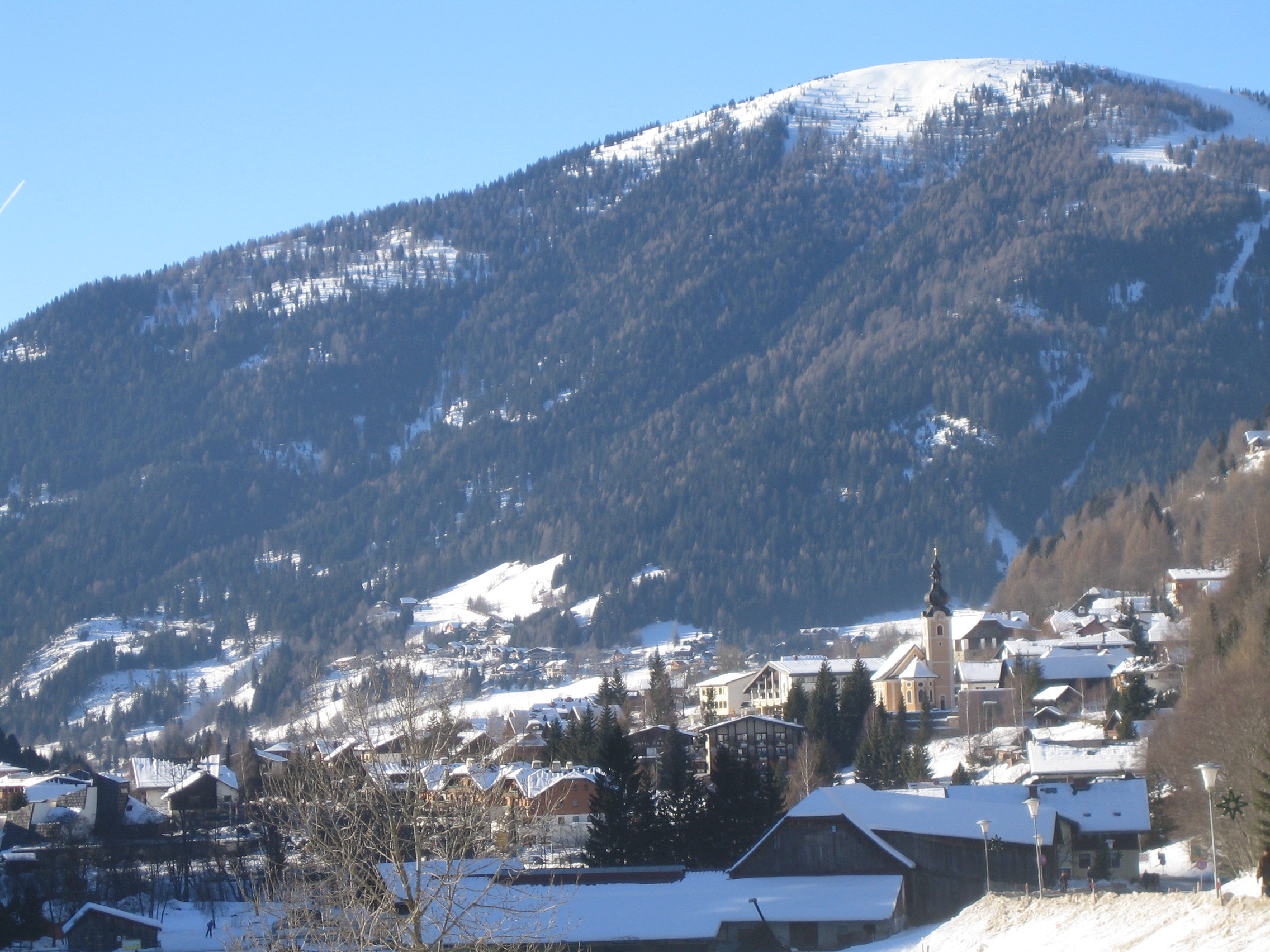

At 2,100 metres on the shoulder of the Kaiserburg, the top station of the Kaiserburgbahn opens onto a ribbon of dirt that drops 910 vertical metres without ever exceeding an eight-percent gradient. That ribbon is the Flow Country Trail: 15 kilometres of rollers, berms and sweeping arcs that, when it opened in 2013, was widely cited as the longest continuously flowing descent of its kind in Europe and one of the early Flow Country builds on the continent.
More than a decade later, Bad Kleinkirchheim remains a spa village best known for its thermal baths and a former Franz Klammer downhill ski course. Through summer it quietly reinvents itself as one of Austria's most accessible bike destinations, anchored inside the UNESCO Biosphere Reserve Nockberge.
The signature descent
The Flow Country Trail is the headline act, and it earns its reputation by being legible. The gradient is gentle enough for a confident intermediate on an all-mountain bike, but the line choices, doubles and high berms give experienced riders room to push. The trail is split into four named sections so groups can regroup between segments, and overtaking zones are built into the design rather than improvised.
Two of those sections connect directly into the Nock-Lake-Trails, a series of singletrack lines including the T1 Bachweg and T20 Alter Almweg that drop riders all the way to the shoreline of Lake Brennsee in Feld am See. The result is one of the few Alpine descents that ends, plausibly, with a swim.
The bike park around it
The Bad Kleinkirchheim bike area is structured around two lifts. The Kaiserburgbahn is the gravity workhorse, serving the Flow Country Trail and most of the technical lines. The Brunnachbahn, on the opposite side of the valley, accesses longer cross-country tours and links to the Nockberge high-alpine network.
At the Kaiserburg valley station riders find roughly 1,000 square metres of bike park infrastructure: a beginner flow line, a pump track, a kids' parcours and rental and wash facilities. The wider area lists 15 mountain bike tours and seven signed singletracks spanning blue, red and black grades. A day ticket with bike transport on the Kaiserburgbahn runs €55 for adults and €33 for children in 2026, and the resort is part of the Gravity Card network covering 31 European bike parks.
Season window
Lifts run from 4 June to 18 October 2026. July and August deliver the most reliable trail conditions and longest operating days; early June can still hold snow above 1,800 metres on the upper Kaiserburg sections, and late September into October brings the larch turn and dramatically quieter trails. Afternoon thunderstorms are common at altitude in mid-summer, so first lifts at 09:00 are worth the early alarm.
Getting there without a car
The realistic train arrival is Spittal-Millstättersee, on the main ÖBB north-south line between Salzburg and Villach. From Munich the journey runs around four and a half hours via Salzburg; Vienna is closer to five hours; Villach is roughly 45 minutes south on regional services. From Spittal, regional bus line 5103 runs to Bad Kleinkirchheim in around 50 minutes, and the resort participates in the regional Kärnten Card guest-card scheme which includes public transport for staying visitors.
For riders flying in, Klagenfurt (KLU) and Ljubljana (LJU) are the closest airports at roughly 90 minutes by road, with Salzburg and Venice both reachable in three hours. The rail option is meaningfully lower-impact for European travellers and the resort delivers bikes from the station to several partner hotels.
Shoulder versus peak
Peak summer in Bad Kleinkirchheim is busy but never frenetic by Alpine standards; queues at the Kaiserburgbahn rarely exceed a single cabin cycle. Shoulder weeks immediately after the lift opens and through the second half of September are the sweet spot. Trails are tacky, huts are quieter and accommodation rates drop noticeably outside the Austrian school holidays.
Where to stay
The village itself runs from the lower thermal-spa quarter up to St. Oswald, with bike-friendly pensions and hotels clustered within walking distance of the Kaiserburg valley station. Several properties offer secure bike storage, a wash bay and laundry for kit; a handful run shuttle services to the Brunnachbahn or out to the Nock-Lake trailheads. Staying inside the village rather than down in St. Oswald or in Feld am See gives the easiest lift-and-spa rhythm: morning laps, an afternoon in the Therme, evening trail beers.
Sustainability note
The Nockberge is a UNESCO Biosphere Reserve and the trail network is built around existing forestry roads and ski infrastructure rather than new alpine scars. Combined with direct rail access from most of Central Europe, Bad Kleinkirchheim is one of the easier Alpine bike trips to argue for on a carbon basis — particularly if the Therme replaces a second flight to somewhere further afield.
Top-to-bottom POV of the full 15km Flow Country Trail descent from the Kaiserburg top station.
Find a hotel in Bad Kleinkirchheim
Same prices as Booking.com. 1 tonne CO₂ retired per stay. €5 credit on signup.
Search now →