Alpe d'Huez MTB Guide: Megavalanche, Bike Park & DH Trails
Above Bourg d'Oisans, the Pic Blanc cable car lifts riders to 3,330m for a 2,600m descent into the Romanche valley. A guide to Alpe d'Huez Bike Park's signature lines, season window and low-carbon approach via Grenoble.
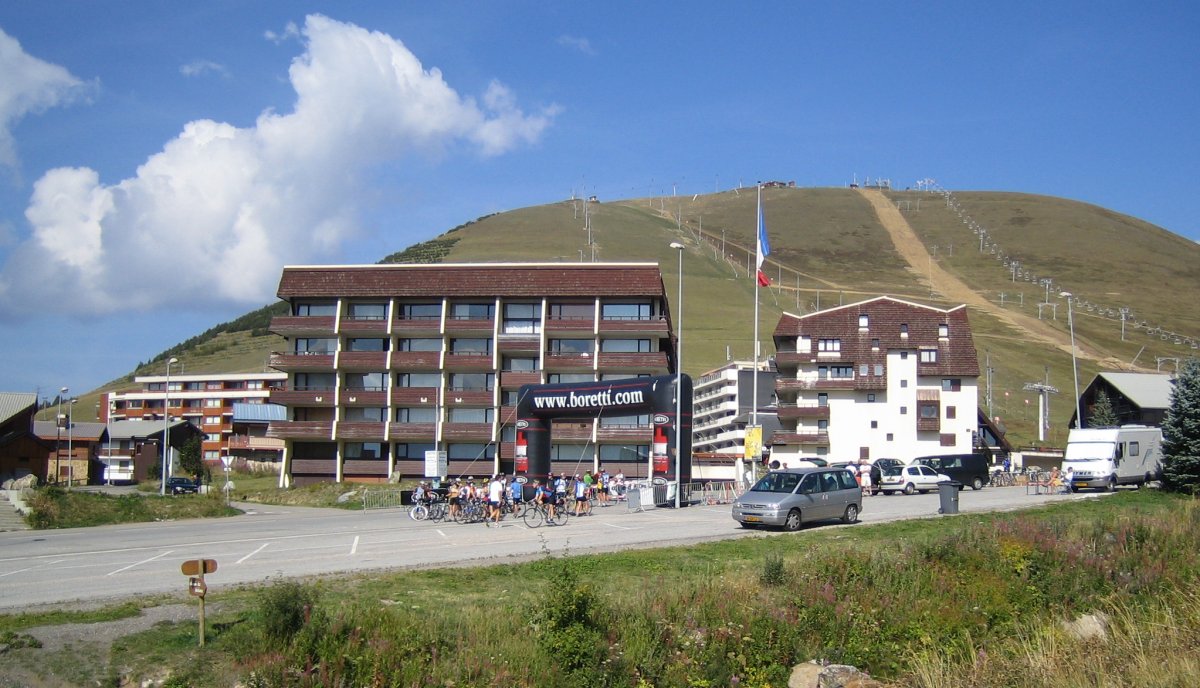

The Pic Blanc cable car tops out at 3,330 metres, and on a clear July morning the queue at the top station is mostly riders in body armour shuffling toward a snow ramp. From there, the Sarenne glacier drops away toward Allemond at 720 metres, a 2,600-metre vertical line that ranks among the longest lift-served descents in the Alps. This is the upper third of the Megavalanche course, and the rest of the year it is simply the most committing way down from one of Isère's biggest bike-park networks.
The signature descent: Pic Blanc to the valley floor
Alpe d'Huez markets 309 kilometres of waymarked mountain-bike trails across the wider Grandes Rousses massif, with 45 certified itineraries split between downhill, enduro, cross-country and discovery routes. Of those, the 16 downhill runs (around 35 kilometres in total) cluster around the DMC gondola and the upper Pic Blanc lift. The black-graded Les Chamois drops 3.7 kilometres from the DMC mid-station back to resort level on natural, rooty terrain. Rock and Wood (red) packs raised wooden sections into 1.8 kilometres of intermediate riding, while the blue Les Vaches gives newer riders a 250-metre descent to find their feet before stepping up.
The numbered DH trails — DH1 through DH16 — fan out across the resort, with the higher numbers reaching into Oz-en-Oisans and Vaujany. DH3 above Oz strings together 3.5 kilometres and 530 metres of descent through alpine forest, a useful proving ground before committing to the upper glacier sections.
Lift system and bike-park structure
The lift network is anchored by the DMC gondola out of the resort centre and the Pic Blanc cable car, which together unlock the full vertical. Satellite lifts at Oz, Vaujany and Auris-en-Oisans extend riding into neighbouring valleys, with marked liaison trails linking them. Trail-network maps published by the resort show four pump tracks and a dedicated flow trail aimed at families and progression riders.
Lift dates shift slightly each summer. For 2026, the Bike Park is scheduled to run daily from 4 July to 29 August, with the wider lift system open from late June through the end of August. The Poutran and Rif Nel lifts are out of service for renovation this summer, so trip planning should confirm which lifts are turning on the planned riding days.
Megavalanche week
The Megavalanche, run by UCC Sport Event, has used Alpe d'Huez since 1995. The 2026 edition is scheduled for 10-12 July, with a mass start on the Sarenne glacier at 3,330 metres and a finish in Allemond, roughly 30 kilometres and 2,600 vertical metres below. Mega week brings several thousand riders to the resort and significantly tightens lift queues; riders not entered should consider arriving the week after for quieter laps.
Beyond the Mega, the calendar typically includes the Megavalanche qualifiers, the MegaChallenger support race, and various enduro events through July and August.
Getting there without the car
Alpe d'Huez sits 90 minutes by road above the Romanche valley. The closest mainline station is Grenoble SNCF, served by TGV from Paris (about 3 hours) and Lyon (around 1h20). From Grenoble bus station — directly adjacent to the railway station — the regional Itinisère network runs line T75 to Bourg d'Oisans (about 1h30) with a connection onto line T76 up the 21 hairpins to Alpe d'Huez. Reinforced summer timetables make the train-plus-bus combination realistic for riders carrying a bike bag.
For travellers coming from further afield, Lyon-Saint-Exupéry is the most rail-connected airport, with a direct rail link into central Lyon and onward TGV to Grenoble. Choosing rail over a short-haul flight materially reduces the carbon footprint of a bike-park week, particularly relevant in a resort whose snow-fed glacier descent is itself sensitive to warming summers.
Shoulder versus peak season
Peak conditions land in mid-July through mid-August, when every lift is turning, the upper snowfields are rideable and après terraces stay open late. The trade-off is volume: Mega week and the French school holidays in early August are the busiest dates of the season.
The shoulder weeks — late June into early July, and the last week of August — offer thinner crowds and cooler upper-mountain temperatures, with the caveat that some lifts may not be running yet or may close earlier. Late-season visits also catch the alpine meadows turning, which makes the long enduro liaisons through Vaujany and Oz especially worthwhile.
Where to stay
Bedding down in resort puts riders within rolling distance of the DMC and Pic Blanc lifts, which matters when a typical day involves multiple full-vertical laps. Bourg d'Oisans in the valley is a quieter base with easier car-free access from Grenoble and a shorter morning bus up the hairpins. Vaujany and Oz-en-Oisans, both connected to the lift network, suit riders prioritising the enduro liaisons over the headline downhill runs.
A full POV run of the 2021 Megavalanche from the Pic Blanc glacier to Allemond, hitting over 100 km/h on the upper snowfields.
Find a hotel in Alpe d'Huez
Same prices as Booking.com. 1 tonne CO₂ retired per stay. €5 credit on signup.
Search now →