UEFA Euro 2028 Qualifiers: Your Guide to Late 2026 Fixtures Across the UK & Ireland
The final stretch of qualifying for UEFA Euro 2028 unfolds across late 2026, with fixtures yet to be confirmed but stadiums already polished and ready. England, Scotland, Wales, Northern Ireland and the Republic of Ireland will play host as nations vie for tournament places, turning cities from London to Dublin into temporary footballing capitals. Unlike the seamless choreography of a finals tournament, qualifiers scatter across calendars and venues, meaning you book once your fixture drops. The reward? Cheaper tickets, fuller pubs, and the raw thrill of a result that genuinely matters. Whether you're following your own side or simply chasing atmosphere, the late-2026 window will offer a dozen chances to experience match-day Britain and Ireland at full roar.
Why Qualifiers Matter More Than You Think
Tournament finals get the glory, but qualifiers deliver the jeopardy. A single dropped point in Cardiff or Belfast can derail eighteen months of preparation. Nations outside the automatic five hosts—England, Scotland, Wales, Northern Ireland, Republic of Ireland—will descend with travelling support that fills entire neighbourhoods, turning ordinary Tuesday evenings into carnival. Even home fixtures crackle differently: fans know they're watching something consequential, not a friendly exercise.
Late 2026 fixtures will likely cluster in September through November, the crunch months when tables crystallise and play-off mathematics sharpen. Stadiums that hosted group games back in qualification's earlier rounds—Hampden Park, the Aviva, Cardiff's Principality, Windsor Park in Belfast, Wembley—will stage again, but you'll also see rotation into venues prepping for Euro 2028 itself. Expect higher ticket availability than finals, lower hotel premiums, and the odd bonus: a qualifier double-header weekend if two home nations play the same matchday.
The atmosphere skews local rather than corporate. You'll drink alongside season-ticket holders who've seen forty years of heartbreak, not hospitality guests nursing warm lager. Pubs near grounds open early, singing starts on concourses, and the away end—often a full allocation—delivers noise that echoes long after the final whistle. If you've only experienced international football at a major tournament, a qualifier will feel rawer, closer, more genuinely tribal.
London: The Likely Anchor for England's Big Nights
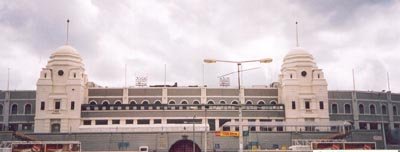
Wembley remains England's default home, and late-2026 qualifiers will almost certainly see Gareth Southgate's successor (or Southgate himself, if still in post) bring a decisive fixture to north-west London. The stadium holds ninety thousand, yet qualifiers rarely sell out weeks in advance—you can often grab tickets a fortnight before kick-off if the opponent isn't a traditional rival. Wembley Way fills from mid-afternoon with replica-shirt pilgrims, flag vendors, and the percussive thud of fan zones.
London around match day splits into three zones of energy. Central districts—Soho, Covent Garden, Leicester Square—host the earliest arrivals, where pubs show pre-match build-up and foreign fans mingle with English supporters in uneasy camaraderie. Wembley Park itself becomes a bottleneck of noise and overpriced food stalls, best navigated early or avoided entirely until thirty minutes before kick-off. Then there's the overspill: Kilburn, Harrow, even Watford pull crowds who prefer a quieter pint before riding the Metropolitan line in.
If you're staying for more than the match, London delivers a week's worth of distractions. The British Museum, Tate Modern, Borough Market, the South Bank—none of it football-specific, all of it worth your time if you arrive a day early or linger after. The city's scale means you can escape match-day chaos entirely: book a hotel in Bloomsbury or Shoreditch, and you'll barely register that Wembley's hosting thousands unless you glance at the Tube map.
Glasgow, Cardiff, Belfast, Dublin: The Other Fortress Grounds
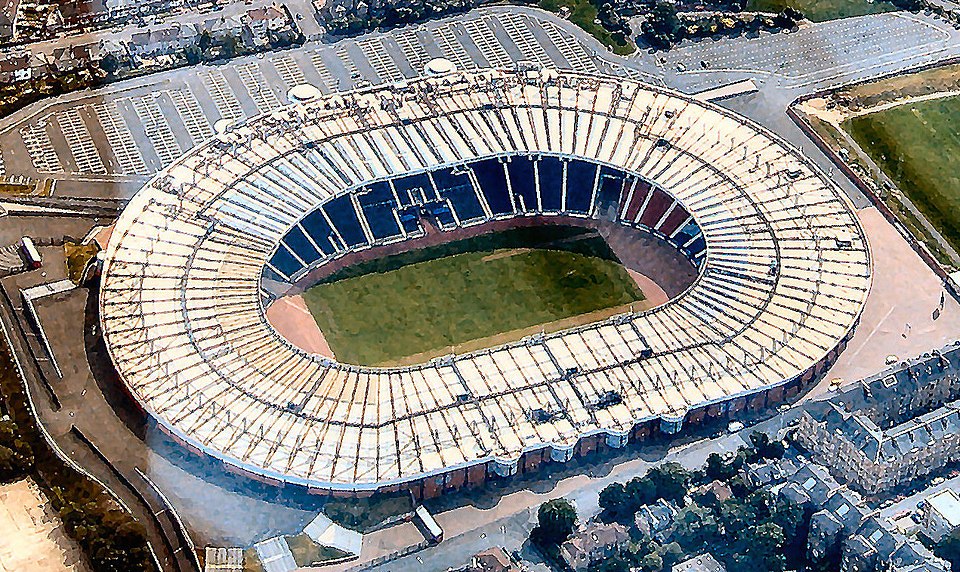
Hampden Park in Glasgow carries a reputation that exceeds its fifty-thousand capacity. Scotland's qualifier nights—especially under floodlights against a rival—generate an intensity you won't find in friendlies. The Tartan Army fills Mount Florida's pubs from lunchtime, and by evening kick-off the stadium's bowl traps sound like a physical force. If you've never experienced it, prepare for ninety minutes of relentless noise, win or lose.
Cardiff's Principality Stadium offers a different geometry: a retractable roof, eighty-thousand seats, and a city-centre location that turns match day into a pedestrian takeover of Westgate Street and St Mary Street. Wales qualifiers draw an older, more family-heavy crowd than club rugby, and the singing—'Hen Wlad Fy Nhadau' before kick-off—raises hairs even on neutral necks. Book early if Wales face a play-off decider; the city's hotel stock drains fast.
Belfast's Windsor Park sits tight in a residential south Belfast neighbourhood, holding eighteen thousand in a compact, steep-sided bowl. Northern Ireland fixtures feel communal rather than grand-spectacle, and the city's compact core means you can walk from hotel to ground via the Cathedral Quarter's pubs in under forty minutes. The crowd skews older and more working-class than you'll find at Wembley, and away supporters often remark on the warmth of pre-match pub banter.
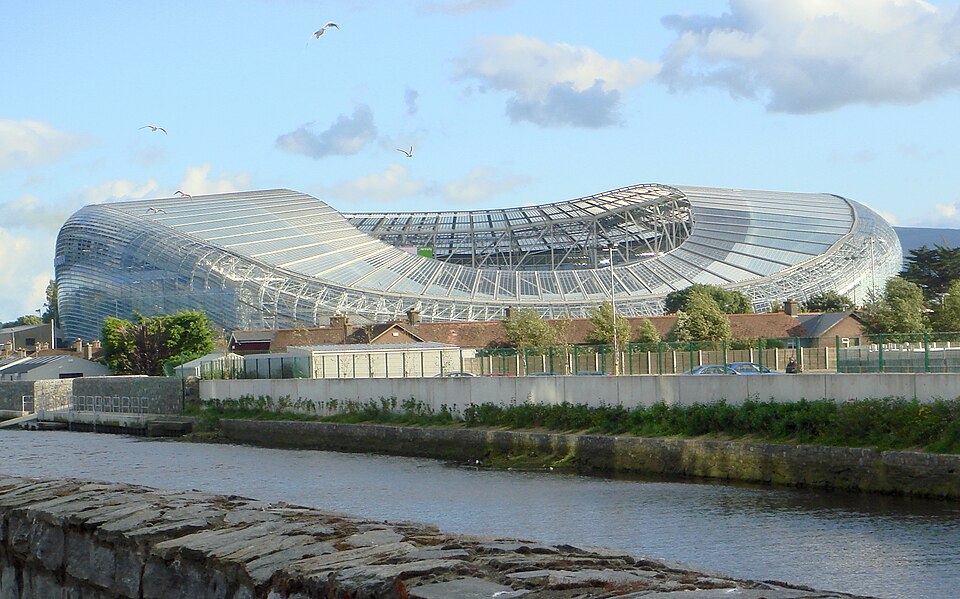
Dublin's Aviva Stadium, shared by football and rugby, holds fifty-one thousand and sits a ten-minute walk from the city centre along the Dodder. Republic of Ireland qualifiers attract diaspora returnees from across Europe and North America, lending match day a festival edge. Lansdowne Road's old ghosts linger—older fans still call the ground by its previous name—and post-match pints in Ballsbridge or back toward Temple Bar stretch well past midnight if the result goes Ireland's way.
Manchester and Beyond: The Rotation Cities
England qualifiers occasionally rotate out of Wembley into Old Trafford, the Etihad, or St James' Park in Newcastle, especially for lower-stakes fixtures where the FA wants to reward regional fanbases. Manchester in particular offers twin advantages: huge hotel capacity and a football culture so deep that even a Thursday-night qualifier feels like an event. Pubs around both grounds know how to handle fifty thousand visitors; you'll find smoother service and less price-gouging than in London.
If a late-2026 qualifier lands in Manchester, treat it as an excuse to explore a city that's rebuilt itself twice over the past three decades. The Northern Quarter's independent coffee bars and record shops, the revitalised waterfront at Salford Quays, the John Rylands Library's gothic reading room—none of it requires football fandom, all of it rewards an extra day either side of the match. Manchester also serves as a staging post for the Lake District or North Wales if you're weaving a longer UK trip around the fixture.
Newcastle, should it host, offers rawer charm: a night out on the Quayside, St James' Park lit like a cathedral on the hill, and Geordie locals who'll debate football philosophy until the Metro stops running. The city's smaller scale means match-day atmosphere saturates every corner; you can't avoid it, and frankly you shouldn't try.
Tickets, Timing, and the Fixture-Announcement Dance
UEFA publishes qualifier schedules in waves, often confirming matchdays (September 4, October 9, etc.) months before announcing actual fixtures and venues. You'll know your nation's opponent roughly eight weeks before kick-off, and tickets typically go on sale six weeks out via each federation's official portal—FAI, FAW, IFA, SFA, or the FA. Away allocations vary: England might grant three thousand, Scotland five, Wales the full ten percent if reciprocity applies.
Touts and resale platforms proliferate closer to kick-off, but qualifier tickets rarely spike to tournament prices unless it's a winner-takes-all decider. Face value ranges from thirty pounds for upper-tier seats at Windsor Park to ninety for category-one Wembley. Corporate hospitality exists but feels incongruous at a qualifier; you're better off buying a standard ticket and spending the saved money on a decent restaurant afterward.
Travel logistics hinge on fixture confirmation. Budget airlines add capacity once dates firm up, but fares climb weekly as kick-off nears. If you're flying into Dublin for an Aviva fixture, book the moment Ireland's opponent is announced. Train travel within the UK offers more flex: Advance tickets release twelve weeks out, and even Anytime fares stay tolerable for daytime journeys. Build at least one buffer day if you're connecting from Europe—autumn weather and rail strikes both specialise in wrecking tight schedules.
The Matchday Rituals You'll Want to Know
Each city has its rhythms. In London, serious fans avoid Wembley's official fan zone (overpriced, under-atmospheric) and instead hold court in Baker Street or Marylebone pubs, arriving by 2 p.m. for a 7:45 kick-off. In Glasgow, the pre-match pilgrimage runs from city centre south via Pollokshields, picking up volume as you near Mount Florida. Cardiff's ritual centres on Westgate Street, a hundred-metre stretch of wall-to-wall pubs that becomes impassable by 6 p.m.
Away fans congregate separately—often in designated pubs that local police prefer for logistical reasons. If you're travelling with your nation's support, check fan-federation forums a week before; someone will post the unofficial meeting point. Colours stay friendly outside genuine rivalry fixtures, and you'll find home fans happy to share recommendations for post-match food or late bars.
Post-match, stadiums empty fast but transport chokes: Wembley's Metropolitan and Jubilee lines queue for thirty minutes, Hampden's train platforms back up to the concourse, Cardiff's station funnels fifteen thousand people through four ticket gates. The savvy move? Linger in the ground's environs for forty minutes, find a pub with space, let the crush dissipate, then travel. You'll reach your hotel only marginally later and in vastly better humour.
What to Do If Your Fixture Isn't Confirmed Yet
Late 2026 means exactly that: UEFA hasn't locked matchdays, let alone opponents or venues. If you're reading this before fixture confirmation, subscribe to your federation's newsletter and set a calendar reminder for the expected announcement window—likely late spring or early summer 2026. Hotel availability in host cities remains fluid until six weeks before any confirmed match, so early booking mostly just locks you into a cancellation dance.
One smart alternative: monitor neutral fixtures. If you're a completist or simply love the qualifier atmosphere, pick a match that doesn't involve your own nation—say, a Scotland-Portugal decider at Hampden—and book that instead. You'll dodge the partisan stress, enjoy lower prices, and still get the full matchday theatre. Neutral attendance at qualifiers is rarer than at finals, which means you'll often have your pick of seats and hotels.
IMPT Travel's platform will list each qualifier fixture as soon as UEFA confirms it, with live hotel availability and the same carbon-neutral booking model: one tonne of UN-verified CO₂ retired per stay, five percent Goodness rewards, free cancellation on most properties. Set an alert for your preferred cities, and you'll be notified the day inventory opens.
Where to stay — chosen for character
The Ned
Former Midland Bank headquarters reimagined as a members' club with public rooms, where 1920s banking-hall grandeur meets sleek bedrooms. Perfect if you want old-City atmosphere before heading north-west to the match.
Kimpton Fitzroy London
Edwardian terracotta palace on Russell Square, moments from the British Museum. Rooms blend period bones with mid-century furniture; the ground-floor bar draws a publishing-industry crowd that won't talk football unless you start it.
The Hoxton, Southwark
Brick-and-timber interiors, compact rooms with rain showers, and a lobby that doubles as co-working space by day, wine bar by evening. Younger vibe, walkable to Borough Market and Tate Modern.
Blythswood Square Hotel
Georgian square turned spa hotel, where Regency proportions meet contemporary Scottish art. The basement spa offers post-match refuge, and the square itself remains one of Glasgow's quietest pockets despite sitting a hundred metres from Buchanan Street.
Dakota Deluxe Glasgow
Low-slung modern build with aviation-themed interiors—dark leather, steel fixtures, porthole mirrors. Rooms feel more Manhattan studio than Glasgow tenement, and the grill restaurant does serious steaks if you're carb-loading before the match.
Voco St. David's Cardiff
Glass-and-steel waterfront block with floor-to-ceiling windows overlooking the bay. Functional rather than charming, but proximity to both the stadium and the Wales Millennium Centre makes logistics effortless on match day.
The Merchant Hotel
Victorian former bank turned into Belfast's most opulent stay, with gilt mirrors, marble floors, and a rooftop hot tub that overlooks the city. The cocktail bar in the old vault rivals anything in Dublin or London.
The Marker Hotel
Cantilevered glass tower with a rooftop bar that surveys the docklands and Dublin Bay beyond. Interiors run to jewel tones and statement art; rooms are generously sized by Irish capital standards.
Getting There, Getting Around, Getting Home
Each host city operates differently. London rewards early Tube travel—Wembley Park and Wembley Central stations both serve the stadium, and off-peak fares stay cheap if you tap in before 4 p.m. Glasgow's train network funnels supporters from Central Station to Mount Florida or King's Park in under fifteen minutes, though queues build after 6 p.m. Cardiff's compact core makes walking viable from most hotels; only if you're staying in Cardiff Bay will you need the shuttle bus or a brief taxi. Belfast and Dublin both favour foot traffic, though Dublin's Luas red line also runs close to the Aviva if you're staying west of the city centre.
Inter-city travel depends on your fixture. London to Manchester by train takes two hours ten; book Avanti West Coast Advance tickets at least a fortnight ahead and you'll pay under fifty pounds return. Flying Glasgow to Dublin or Belfast to Cardiff rarely saves time once you add airport margins, though Ryanair and easyJet often undercut rail on price. If you're weaving multiple qualifiers into one trip—say, Scotland home then Wales away the following week—consider an open-jaw flight: into Edinburgh, out of Cardiff, and train the segments between.
Match-day parking near stadiums is either extortionate or non-existent. Wembley's surrounding boroughs enforce resident-only zones for miles; Hampden sits in a residential grid with similar restrictions; the Principality Stadium occupies central Cardiff where there are no public car parks within half a mile. If you must drive, research park-and-ride schemes each city runs on event days, or book a private car park online well in advance.
Post-match transport mirrors pre-match but with sharper edges: everyone leaves at once, tempers run higher if the result went badly, and the last trains or airport coaches won't wait. Budget at least ninety minutes from final whistle to hotel bed if you're using public transport, two hours if you're aiming for an airport. Taxis surge-price and vanish fast; ride apps mitigate some chaos but not all.
Questions readers ask
When will late-2026 qualifier fixtures be announced?
UEFA typically confirms matchdays four to six months in advance, with exact fixtures and kick-off times following eight to ten weeks before each window. Subscribe to your national federation's alerts and check uefa.com regularly from spring 2026 onward.
Can I buy tickets before knowing the opponent?
No. Federations release tickets only after fixtures are confirmed, usually six weeks before kick-off. Membership schemes (England Supporters Club, Scotland Supporters Club, etc.) often grant priority windows, but even members wait for fixture confirmation.
Do hotels near stadiums increase prices on match days?
Yes, though qualifier premiums are milder than tournament finals. Expect rates to climb fifteen to thirty percent within a five-mile radius of Wembley, Hampden, or the Principality once fixtures confirm. Booking immediately after announcement limits the damage.
Is it safe to wear away colours in the home city?
Generally yes, especially outside genuine rivalry fixtures. British and Irish football culture has softened considerably; you'll encounter banter but rarely hostility. That said, avoid isolating yourself in boisterous home pubs immediately before or after the match.
Which airport serves each host city best?
London: Heathrow or Gatwick for international, Luton or Stansted for budget Europe. Glasgow: Glasgow International or Prestwick. Cardiff: Cardiff Airport (small) or Bristol (larger, one hour by bus). Belfast: George Best Belfast City or Belfast International. Dublin: Dublin Airport, twelve kilometres north of the Aviva.
Can I visit multiple qualifier cities in one trip?
Absolutely. UK and Irish geography compresses well: London to Edinburgh by train is four hours thirty, Glasgow to Belfast by ferry two and a half hours, Dublin to Cardiff via Holyhead ferry and train about six hours. If fixtures align across a week, you can follow your nation or sample different match-day atmospheres.
Do pubs near stadiums require reservations?
Rarely, but the popular ones fill by mid-afternoon. Walk-ins usually find space if you arrive by 2 p.m. for an evening kick-off. Post-match, expect queues or closed doors at the immediate stadium pubs; walk ten minutes in any direction and availability improves drastically.
What's the typical kick-off time for qualifiers?
Weeknight fixtures usually start 7:45 p.m. local time; weekend matches range from 3 p.m. to 8 p.m. depending on broadcast schedules. UEFA confirms times when fixtures are announced, but budget for evening starts if you're planning transport.
Are qualifier tickets cheaper than tournament finals?
Significantly. Face-value qualifier seats range from thirty to ninety pounds depending on category and venue, versus one hundred fifty to three hundred for group-stage finals and higher for knockouts. Resale markups also stay smaller unless it's a decisive play-off.
How does IMPT Travel retire carbon on my booking?
Every hotel stay booked via app.impt.io funds the retirement of one tonne of UN-verified carbon credits—Gold Standard or Verra-certified projects removing or avoiding CO₂. You pay the same rate as booking direct, enjoy free cancellation on most properties, and earn five percent back in Goodness rewards.
Qualifiers lack the bunting and fan-zone pyrotechnics of a summer finals, but they deliver something rarer: consequence that hangs in the air long after the final whistle. Whether you're following your nation's campaign across three cities or picking one decisive fixture to witness, the late-2026 window will scatter footballing drama across the British Isles in a way that won't repeat until the next cycle begins. Book once fixtures confirm, build in a day either side to explore the host city properly, and prepare for ninety minutes that feel rawer and more urgent than anything a tournament can offer. The hotels, the trains, the pubs will all be waiting; the only variable is whether your team delivers when it counts.