FIFA World Cup 2026: Where to Stay Across 16 North American Host Cities
When the whistle blows on 11 June 2026, the FIFA World Cup will unfold across sixteen cities in three countries — a continental tournament on a scale never attempted. From Vancouver's glass towers to Mexico City's volcanic plateau, the month-long festival will scatter ninety million spectators across time zones, cultures and climates. Unlike the compact footprint of a European or Middle Eastern edition, this World Cup demands strategic thinking: match schedules won't be finalised until late 2025, hotel inventory swings wildly by host city, and a Dallas semi-final commands different rates than a Toronto group match. What follows is a city-by-category guide to finding character, value and sanity in the largest logistical puzzle football has ever staged.
Why This World Cup Is Different — And Why That Matters for Your Hotel
Every previous World Cup played in a single nation or a tight cluster of neighbours. The 2026 edition scatters forty-eight teams across a landmass the size of Europe, with host venues separated by six-hour flights and two-hour time-zone swings. Canada contributes Vancouver and Toronto; Mexico brings Mexico City, Guadalajara and Monterrey; the United States fields eleven cities from coast to coast. FIFA will release the match schedule in late 2025, meaning travellers booking now gamble on which cities host which fixtures.
That uncertainty ripples through hotel pricing. A city hosting the final or semi-finals will see rates triple; a city hosting three group matches involving less-followed teams may stay relatively calm. Early bookers face a paradox: lock in now and risk overpaying for a city that draws weak fixtures, or wait for the schedule and face sold-out inventory. The smart middle path is flexible cancellation — most properties on IMPT's platform offer free cancellation until a few days before arrival, letting you pivot once the match calendar drops.
Geography also fractures the traditional World Cup rhythm. In Qatar or Russia, fans hopscotched between cities by train or short flight, catching three matches in four days. In 2026, a fan following England might fly Los Angeles to New York to Kansas City in a week — each move burning a travel day and doubling accommodation costs. Choose a single base city and treat the tournament as a long festival stay, not a frantic road trip.
The Coastal Power Trio: New York / New Jersey, Los Angeles, San Francisco
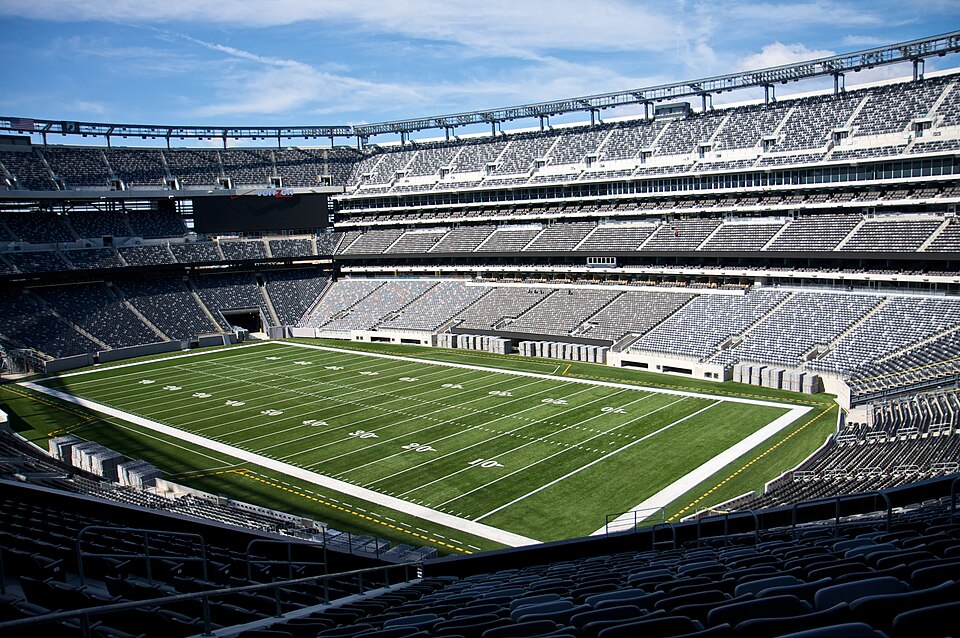
MetLife Stadium in East Rutherford — technically New Jersey but universally branded as New York — will host the final on 19 July. Expect the most severe price pressure of any host city, with Manhattan rooms climbing past rates seen even during peak UN General Assembly weeks. The saving grace is New York's depth: Brooklyn, Jersey City and even Newark offer credible alternatives with PATH or NJ Transit links to the stadium. Look for boutique properties in Williamsburg or Long Island City if you prize neighbourhood texture over Midtown convenience.
Los Angeles plays at SoFi Stadium in Inglewood, a fifteen-minute rideshare from LAX but inconveniently distant from most visitor neighbourhoods. Santa Monica and Venice offer beach atmosphere but add forty minutes each way; Downtown LA puts you closer but still requires a car. The smartest compromise is Culver City or Playa Vista — walkable restaurant scenes, half the price of the beach, twenty minutes to the stadium. LA's sprawl means hotel rates stratify less sharply than in compact cities, but match-day traffic will be murderous.
San Francisco's matches play at Levi's Stadium in Santa Clara, an hour south in the heart of Silicon Valley. Staying in San Francisco proper means a Caltrain commute each match day; staying in Palo Alto or Mountain View puts you walking distance from the stadium but marooned in suburban tech-campus blandness. The best of both worlds: book San Francisco for atmosphere, accept the train ride, and use non-match days to explore wine country or the coast.
The Midcontinent Quartet: Dallas, Kansas City, Houston, Atlanta
Dallas hosts at the hundred-thousand-seat AT&T Stadium in Arlington, equidistant between Dallas and Fort Worth. The Metroplex hotel market is enormous and car-dependent; without a vehicle you're stranded. Uptown Dallas offers walkable dining and nightlife but requires a thirty-minute drive to the stadium. Arlington itself is chain-hotel suburbia, efficient but charmless. The compromise: stay in Fort Worth's Sundance Square district, enjoy a real urban neighbourhood, and accept the twenty-minute drive east on match days.
Kansas City's games play at Arrowhead Stadium, famous for NFL noise records and easier logistics than most host cities. Downtown Kansas City sits fifteen minutes north via I-70; the Crossroads Arts District and Power & Light entertainment zone provide density and dinner options rare among Midwestern host cities. Hotel inventory is ample, rates are among the most reasonable of any host venue, and the city's barbecue-and-jazz culture offers a distinct flavour absent from coastal stops.
Houston uses NRG Stadium, south of downtown in a medical-centre zone heavy on hospitals and light on sidewalks. Montrose and the Heights offer genuine neighbourhood character — Victorian bungalows, independent cafés, humid-night street life — but require a car or long rideshare to the venue. Downtown Houston is denser than Dallas but less walkable than you'd hope; Midtown splits the difference. Expect heat and afternoon thunderstorms: late June in Houston is a test of will.
Atlanta's Mercedes-Benz Stadium sits downtown, a genuine rarity among American host venues. You can walk from Midtown hotels in twenty minutes, ride MARTA in ten, or explore the BeltLine trail network between matches. Atlanta's hotel market skews business-traveller but includes enough historic properties — converted mansions in Inman Park, jazz-age towers on Peachtree — to reward those hunting character. Summer humidity rivals Houston's; plan indoor museum hours between match and dinner.
The Northern Corridor: Toronto, Vancouver, Seattle, Boston, Philadelphia
Toronto hosts at BMO Field, a lakeside stadium in the Exhibition grounds west of downtown. The city's hotel spine runs along the Yonge Street subway line from Union Station north through Yorkville; any property near a Line 1 or Line 2 station puts you within thirty minutes of the venue. Toronto in late June is festival season — Pride, jazz, theatre — so the World Cup overlaps peak demand. Book early or look to Leslieville and the Beaches, residential east-end neighbourhoods with streetcar links and half the price.
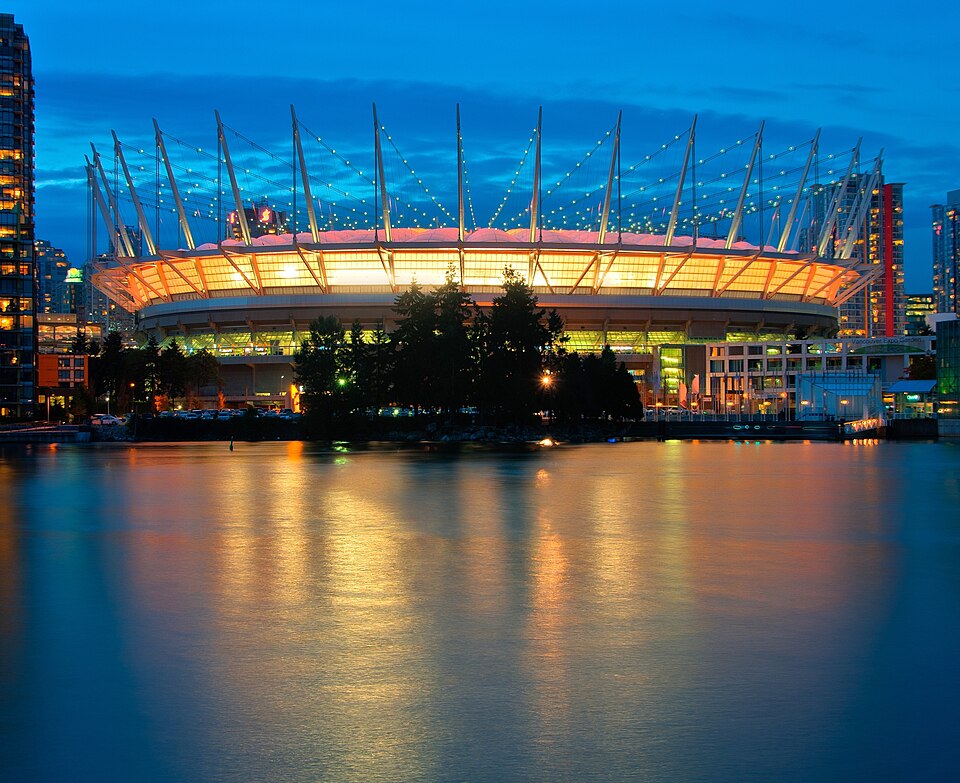
Vancouver plays at BC Place, a downtown dome walkable from most visitor hotels. The city's compactness is a blessing: Gastown, Yaletown, the West End and Kitsilano all sit within a short SkyTrain or bus ride of the stadium. Vancouver's hotel market trends expensive year-round — oceanfront geography and limited supply keep rates high — but the walkability means you'll spend less on transport. Late June brings long daylight and mild temperatures, ideal for Stanley Park mornings and Granville Island afternoons between matches.
Seattle's Lumen Field, like Vancouver's BC Place, sits in the urban core with light-rail access from the airport and walking distance from Pike Place Market and the waterfront. Pioneer Square and Capitol Hill offer neighbourhood density; Fremont and Ballard reward those willing to bus fifteen minutes for local breweries and canal-side paths. Seattle hotel rates spike less violently than coastal California but climb steadily through June as summer tourism peaks.
Boston and Philadelphia both host at NFL stadiums in less-than-charming surroundings — Gillette Stadium sits thirty miles southwest of Boston in Foxborough; Lincoln Financial Field occupies a South Philadelphia sports-complex zone. In both cities, staying downtown and commuting to the match makes more sense than chasing stadium proximity. Boston's Back Bay and Cambridge, Philadelphia's Rittenhouse and Old City, provide walkable bases with real urban texture. Both cities reward pre- or post-tournament extensions: colonial history, coastal day trips, dense restaurant cultures.
The Mexico Trio: Mexico City, Guadalajara, Monterrey
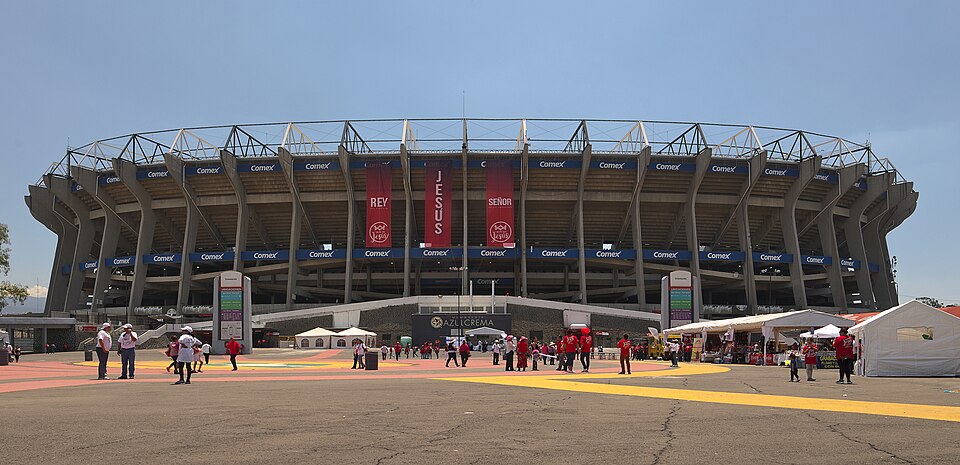
Mexico City will host at the legendary Estadio Azteca, the only stadium in history to stage two World Cup finals and now preparing for a third tournament. The stadium sits in the southern suburb of Tlalpan, an hour from central neighbourhoods like Roma, Condesa or Polanco on a good-traffic day — which match days are not. Stay centrally for museums, markets and dining, and allow two hours each way via metro or rideshare. Mexico City hotel rates are lower than any US host city, quality is high, and the city's June rainy-season pattern means afternoon thunderstorms that usually clear by evening.
Guadalajara, Mexico's second city, plays at Estadio Akron in the eastern suburb of Zapopan. The city's historic centre and Tlaquepaque artisan district sit west, a thirty-minute drive or longer in traffic. Guadalajara lacks the international hotel inventory of Mexico City but offers boutique colonial properties and neighbourhood guesthouses at remarkable value. The city invented mariachi and tequila; non-match days reward cultural exploration.
Monterrey hosts at Estadio BBVA, a modern venue in the northern suburb of Guadalupe. The city is Mexico's industrial and business capital, less obviously tourist-friendly than Mexico City or Guadalajara but surrounded by dramatic Sierra Madre peaks. Barrio Antiguo, the old quarter, concentrates nightlife and dining; San Pedro is affluent suburbia with luxury hotels. Monterrey in late June is scorching — expect temperatures over thirty-five Celsius — but dry heat, not coastal humidity.
The Wild Cards: Miami, Denver, Kansas City
Miami plays at Hard Rock Stadium in Miami Gardens, north of the city proper and inconveniently positioned between downtown and the beach. South Beach offers iconic atmosphere but a forty-minute drive to the venue; Brickell and Wynwood put you closer but in glass-tower districts with less personality. Miami's hotel market is expensive year-round, and late June sits at the edge of hurricane season — expect afternoon heat and sudden downpours. The upside: world-class dining, multilingual street energy, and easy escapes to the Keys or Everglades on rest days.
Denver's Empower Field at Mile High sits just west of downtown, closer than most NFL venues to the urban core. The stadium's name is prosaic but the setting is anything but: the Front Range looms west, downtown's LoDo district is walkable, and the altitude — exactly one mile above sea level — makes June evenings cool and luminous. Denver hotel rates are moderate by coastal standards, and the city's craft-beer and green-chilli culture provides a distinct Rocky Mountain flavour. Non-match days invite mountain day trips or exploration of Boulder and Fort Collins to the north.
How IMPT Works — And Why It Matters for a Multi-City Tournament
Every booking made through IMPT's app retires one tonne of UN-verified carbon credits, funded by the commission the platform earns from hotels. You pay the same rate as booking directly — IMPT has negotiated parity agreements with properties worldwide — and receive 5 per cent back in Goodness rewards redeemable against future stays. Free cancellation applies to most inventory, critical for a tournament whose match schedule won't be finalised until late 2025.
For a six-city World Cup itinerary, those tonnes accumulate: if you book Vancouver, Seattle, San Francisco, Los Angeles, Dallas and Miami over five weeks, you retire six tonnes of verified offset before you board a plane. The platform's app-first model also consolidates confirmations, cancellations and itinerary changes in one place — useful when juggling half a dozen cities and a dozen match tickets. The carbon model is designed to meet corporate Scope 3 reporting requirements, but leisure travellers benefit from the same infrastructure without needing to understand CSRD or GHG Protocol.
Where to stay — chosen for character
The Whitby Hotel
Kit Kemp's New York outpost wraps contemporary art and bold textiles around a surprisingly intimate scale. The location — West 56th, a block from MoMA — puts you in the thick of Midtown without the canyon-echo of Sixth Avenue.
Proper Hotel Downtown LA
Kelly Wearstler interiors meet a restored 1920s Gothic tower in the heart of DTLA's renaissance. Rooftop pool, Arts District walkability, and a lobby bar that feels like a cabinet of curiosities.
Hotel Drover
Opened in 2021 in the heart of Fort Worth's renovated Stockyards district, this Autograph Collection property leans into cowboy heritage without tipping into theme-park territory. Brick courtyards, leather details, walkable honky-tonks.
The Kimpton Saint George
A converted 1900s bank building on King Street East, blending original marble and bronze with mid-century furnishings. The Financial District location means weekend quiet and direct transit to the waterfront stadium.
Rosewood Hotel Georgia
A 1927 heritage tower restored to art-deco splendour, anchoring the corner of West Georgia and Howe. The lobby's coffered ceilings and the Hawksworth restaurant next door make this Vancouver's most graceful base.
Thompson Seattle
Positioned at the top of Pike Street with Elliott Bay views, this property balances boutique scale with full-service amenities. The rooftop bar overlooks the ferry terminal and Olympic Mountains beyond.
Hotel Marlowe
A bold, colour-saturated Kimpton on the Cambridge side of the Charles River, walking distance from MIT and Kendall Square. The stadium commute is inconvenient, but Cambridge rewards the trade-off with neighbourhood texture Boston proper often lacks.
Las Alcobas
A serene modernist sanctuary in the heart of Polanco, wrapped in local stone and floor-to-ceiling glass. The neighbourhood's tree-lined avenidas, galleries and Chapultepec Park access make this the smartest Mexico City base despite the stadium distance.
Getting Around a Three-Country Tournament
Flying between host cities is unavoidable for anyone following a team through multiple rounds. Book domestic segments early — summer 2026 will see route-by-route sellouts as match schedules firm up — and prioritise morning departures to avoid afternoon thunderstorm delays in the South and Midwest. Dallas, Houston, Atlanta and Miami all see daily summer convective activity; plan buffer days between city moves.
Most US host cities depend on cars. Only New York, Boston, Philadelphia, Seattle, Vancouver and to some extent San Francisco offer genuine public-transit access to stadiums. In Dallas, Houston, Los Angeles, Denver, Miami and Kansas City, you'll need rideshare or rental. Stadium-event surge pricing can triple rideshare costs; budget accordingly. Mexico City's metro is extensive but crowded; Guadalajara and Monterrey reward rental cars for flexibility.
Arrive at least two days before your first match to absorb jet lag and time-zone shifts. A traveller flying London to Los Angeles to attend an evening match the next day will perform poorly; human circadian biology needs forty-eight hours to adjust five or more time zones. Use early-arrival days for neighbourhood walks, museum visits, and meal-rhythm resets. The football is better enjoyed rested.
Airport transit times vary wildly. Vancouver, Seattle, San Francisco and Philadelphia offer fast rail links downtown; Los Angeles, Dallas, Houston and Miami do not. Boston's Logan sits close but traffic is unpredictable; Toronto's Pearson is distant but the UP Express train runs every fifteen minutes. Mexico City's airport is undergoing major expansion; allow extra time. In every city, match-day traffic to stadiums will be worse than normal — double your expected travel time.
Questions readers ask
When will FIFA release the full match schedule?
FIFA typically releases the match schedule twelve to eighteen months before kickoff, meaning late 2024 or early 2025 for the 2026 tournament. The schedule will assign specific fixtures to specific cities and stadiums, at which point hotel-demand patterns will crystallise. Until then, booking is educated guesswork.
Which cities are likely to host knockout matches?
FIFA has confirmed MetLife Stadium will host the final. Semi-finals, quarter-finals and round-of-16 matches will likely go to the largest-capacity venues: AT&T Stadium in Dallas, SoFi in Los Angeles, MetLife, and possibly Estadio Azteca in Mexico City. Smaller venues like Seattle, Boston and Philadelphia will skew toward group-stage fixtures.
Can I realistically visit multiple host cities without a car in the US?
Only if you're comfortable with flying between cities and using rideshare or public transport within each. The distances are too vast for trains or buses — Dallas to Atlanta is a two-hour flight but a fourteen-hour drive. Once in each city, New York, Boston, Seattle, San Francisco and Vancouver are walkable; the rest require cars or rideshare.
How do hotel prices in Mexico compare to US and Canada?
Mexico City, Guadalajara and Monterrey offer significantly lower rates for comparable quality. A four-star boutique property in Mexico City's Roma neighbourhood might cost half the rate of a similar hotel in Seattle or Toronto. The trade-off is longer stadium commutes and, in some cases, language barriers, though English is widely spoken in upscale hotels.
What's the weather like across host cities in June and July?
Highly variable. Vancouver and Seattle are mild and dry, typically twenty to twenty-five Celsius. Toronto, Boston and Philadelphia are warm and humid, sometimes reaching thirty. Dallas, Houston, Miami and the Mexico cities are hot — often above thirty-five in Texas — with afternoon thunderstorms. Los Angeles and San Francisco are dry and temperate, ideal conditions.
Do I need a visa to travel between the US, Canada and Mexico during the tournament?
UK passport holders can enter all three countries visa-free under existing arrangements (ESTA for the US, eTA for Canada, tourist card for Mexico), but you must clear immigration each time you cross a border. Flying Vancouver to Mexico City means two border crossings; budget extra airport time. Regulations may change before 2026; check current requirements.
Will there be fan zones or public viewing areas in host cities?
Every recent World Cup has featured official fan zones in host cities, offering big screens, food vendors and live entertainment. Expect similar in 2026, though locations won't be confirmed until closer to the tournament. Unofficial pub and plaza screenings will be widespread, especially in cities with strong football cultures like Seattle, Portland and Toronto.
How far in advance should I book hotels?
For maximum choice, book as soon as you have rough travel dates — even before the match schedule drops — provided you secure free cancellation. This locks in pre-surge rates while preserving flexibility. If you wait until the schedule is released, expect widespread sellouts in cities hosting high-demand matches.
Can I use public transport to reach stadiums on match days?
In some cities, yes: Vancouver, Seattle, Atlanta, New York and Toronto all have rail or metro links to stadiums, though expect severe crowding. In most US cities — Dallas, Houston, Los Angeles, Miami, Kansas City — public transport is either absent or impractical. Plan for rideshare, rental cars or organised shuttle services, and budget match-day surge pricing.
What happens if my team is eliminated early and I've booked later-round hotels?
Free cancellation is essential. Most properties on IMPT's platform allow cancellation until a few days before arrival, letting you pivot if your team exits or your schedule changes. Read cancellation terms carefully when booking; some heavily discounted rates lock you in without refund.
Are there any health or vaccination requirements for travelling between the three host countries?
As of 2024, no special vaccinations are required for UK travellers entering the US, Canada or Mexico beyond routine immunisations. COVID-19 policies have largely been lifted, but check current guidance closer to departure. Standard travel insurance covering medical emergencies is advisable, especially in the US where healthcare costs are high.
How does IMPT's carbon offset work, and does it cost extra?
Every booking through IMPT retires one tonne of UN-verified carbon credits, funded from the commission IMPT earns from hotels. You pay the same rate as booking directly — no markup. You also earn 5 per cent Goodness rewards redeemable on future stays. The offset is automatic; no action required beyond booking through the app.
The 2026 World Cup will test logistical stamina as much as it rewards football passion. Sixteen cities, three countries, and a month of summer heat, thunderstorms and time-zone leaps make this the most sprawling tournament in the competition's century-long history. But sprawl also means variety: you can watch a group match in the shadow of the Rockies, a round-of-sixteen tie beside the Pacific, and a quarter-final in the city that never sleeps, all within a fortnight. The trick is not chasing every fixture but choosing a rhythm that suits your tolerance for airports and your appetite for the continent's wild geographic range. Book early, keep cancellation rights, and remember that the best World Cup memories often happen in the quieter hours between matches — the taco stand in Monterrey, the seawall in Vancouver, the jazz club in Kansas City — when the tournament's continental scale becomes not a burden but a gift.